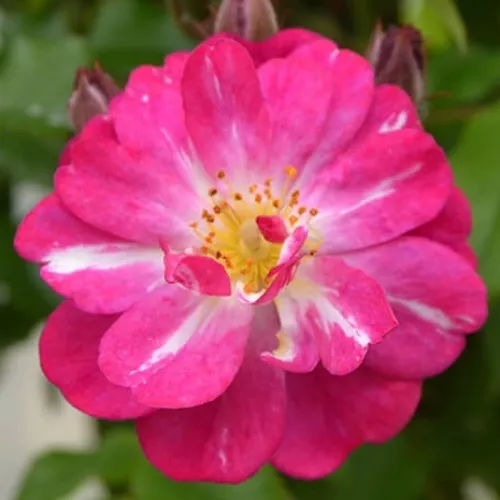
DENTELLE DE BRUXELLES – carmine-red rambler climbing rose – Lens
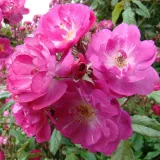
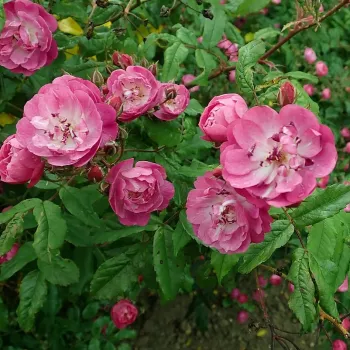
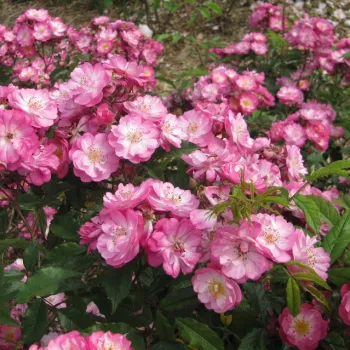
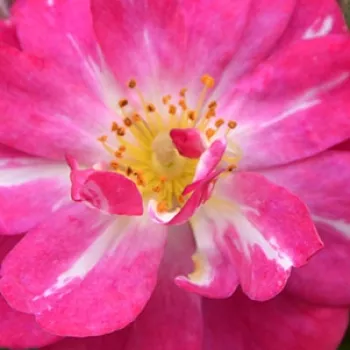
With its airy clusters of small carmine-red blooms, DENTELLE DE BRUXELLES quickly creates a romantic arch or cottage-style wall, coping steadily even where gardens face brisk coastal winds and driving rain. This own-root form is bred for longevity, giving you a stable, well-anchored plant that thickens year by year with minimal fuss. Semi-double flowers open in clusters, their stamens easy for bees to reach, and petals fading through soft pink to a lilac-tinted centre for a natural, storybook palette. Once established, it flowers in generous flushes, then tidies itself as spent blooms drop, easing your summer maintenance. Dense mid-green foliage clothes the canes down to the ground, helping this rambler hide sheds, fences or an arbour frame with effortless coverage, while autumn brings strings of small red hips for a second season of charm. In a typical family garden it will grow steadily from rooting well in the first year, to building strong shoots in the second, before reaching its full ornamental presence by the third, giving you room to shape its habit around seating areas and kitchen-garden structures.
Usage options
| Target area | Reasoning |
|---|
| Family seating area pergola |
Trains readily over pergolas and arbours, creating a light, flower-laced canopy that suits afternoon tea corners. Abundant clusters of small blooms give colour without feeling heavy or oppressive above head height. Own-root vigour supports a long-lived overhead framework with relatively modest care needs, ideal for those wanting lasting structure. Perfect for beginners. |
| Cottage-style house wall or fence |
Strong, bushy growth provides generous coverage on wires or trellis, softening brick, render or fencing with a romantic, traditional look. Flowers along the length of the stems help avoid bare gaps, while medium maintenance needs suit routine weekend care. Own-root resilience means it re-shoots well after hard pruning or weather damage. Ideal for homeowners. |
| Kitchen garden boundary or arch |
Semi-double, bee-attracting flowers support pollinators around fruit and vegetables, while the compact cluster size keeps the look light and informal. The rose’s repeat flowering offers colour through much of the growing season, complementing herbs and edibles. Own-root durability fits permanent kitchen-garden structures. Recommended for hobby-gardeners. |
| Small urban garden screen |
Reliable repeat flowering and dense foliage make it effective for screening neighbouring windows or utility areas without overwhelming a smaller plot. Its moderate overall height is manageable on townhouse fences, and own-root anchoring helps in exposed, windy spots. Occasional pruning is usually enough to keep it tidy. Suited to busy-urban-owners. |
| Mixed cottage border backdrop |
Colour progression from deep carmine to soft pink tones weaves easily into pastel cottage schemes and contrasts well with perennials. The airy flower clusters allow underplanting to shine through without looking stiff. Own-root stability provides a long-term backdrop so border layouts can mature gracefully. Ideal for cottage-lovers. |
| Raised beds on heavier soils |
Performs well when given reasonable drainage, making it a good option for raised beds where heavier clay needs support; the robust root system anchors deeply as it matures. Its bushy habit then spills gently over edging, softening hard corners. Own-root plants cope better with renovation pruning if growth gets congested. Practical for family-gardens. |
| Low-maintenance, long-term feature rose |
Medium maintenance requirements suit gardeners wanting a dependable, not demanding, feature. Self-cleaning flowers reduce deadheading, while repeat flushes extend enjoyment beyond a single peak season. Own-root construction underpins a long lifespan and reliable regrowth, providing a stable focal point that improves each year. Best for time-poor-owners. |
| Seasonal wildlife interest area |
Semi-double blooms provide accessible pollen for bees during flowering, then many small red hips follow in autumn, adding food and visual interest. This shift from flowers to hips maintains decorative value as days shorten, particularly around seating or paths. Own-root health supports this seasonal cycle consistently over time. Appealing to wildlife-enthusiasts. |
Styling ideas
- LACEWORK-ARBOR – Train it over a simple wooden arbour with white-painted furniture beneath, combining with soft pink foxgloves for a storybook tea corner – ideal for romantic traditionalists.
- COUNTRY-FENCE – Weave canes along a rustic post-and-rail fence, underplanting with catmint and ladies’ mantle to echo its soft colour changes – suited to relaxed cottage-garden fans.
- KITCHEN-GATEWAY – Arch it over the entrance to a kitchen garden and pair with lavender and chives so bees move naturally between flowers and crops – perfect for edible-plot gardeners.
- CITY-SCREEN – Use it on tensioned wires along a small patio boundary, with terracotta pots of herbs at the base, to create privacy without heaviness – good for compact urban spaces.
- AUTUMN-HIPS – Let it scramble more freely on a back fence with ornamental grasses and late asters, highlighting its red hips against tawny seedheads – appeals to wildlife-focused gardeners.
Technical cultivar profile
| Property | Data |
|---|
| Name and registration |
DENTELLE DE BRUXELLES, registered as LENkivi, a rambler-type climbing rose in the Climbing rose collection; exhibition category climbing rose, shrub/rambler group, verified cultivar authenticity. |
| Origin and breeding |
Bred by Louis Lens in Belgium from ‘Kiftsgate’ × ‘Violet Hood’; breeding and registration in 1986, introduced 1988 by Lens Roses and Pépinières Louis Lens SA as a garden and landscape climber. |
| Growth and structural characteristics |
Bushy rambler habit reaching about 180–280 cm high and 120–200 cm spread, with moderately thorny, well-foliated canes bearing dense, mid-green, slightly glossy leaves that emerge reddish when young. |
| Flower morphology |
Semi-double, small cup-shaped flowers in generous clusters, each bloom typically 13–25 petals and about 0.5–1.5 inches across, repeating well with a particularly abundant second flush in suitable conditions. |
| Colour data and phenology |
Deep carmine-red with subtle violet tinge; buds dark carmine, opening vivid crimson then fading to pale pink with whitish-lilac centre, very good colour retention, providing luminous, multi-tonal effects through each flush. |
| Fragrance and aroma |
Mild, subtle rose fragrance; scent is present but not overpowering, complementing seating and dining areas where strong perfume might be too intense, while still attracting bees to its semi-double, open blooms. |
| Hip characteristics |
Produces many small spherical hips, around 6–10 mm diameter, coloured carmine-red; hips add autumn and early winter ornamental interest and may be appreciated by birds in wildlife-friendly garden settings. |
| Resistance and winter hardiness |
Hardy to approximately −32 to −29 °C (RHS H7, Swedish Zone 5, USDA 4b); moderate drought and disease tolerance, usually needing watering in extended dry periods and occasional protection in high disease pressure. |
| Horticultural recommendations |
Suitable for beds, parks, specimen use and urban green spaces; plant roughly 150 cm apart in groups, 140 cm in hedges or 240 cm as specimens, with 0.4–0.5 plants/m² depending on layout and design. |
DENTELLE DE BRUXELLES offers romantic repeat flowering, dependable coverage and graceful seasonal hips on a durable own-root framework; consider it if you would like a long-lived, easygoing climber for your family garden.