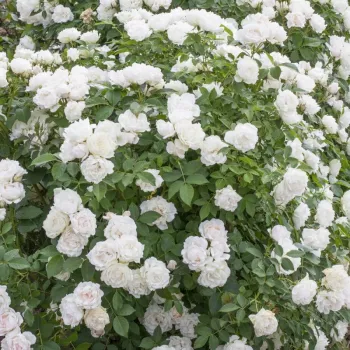
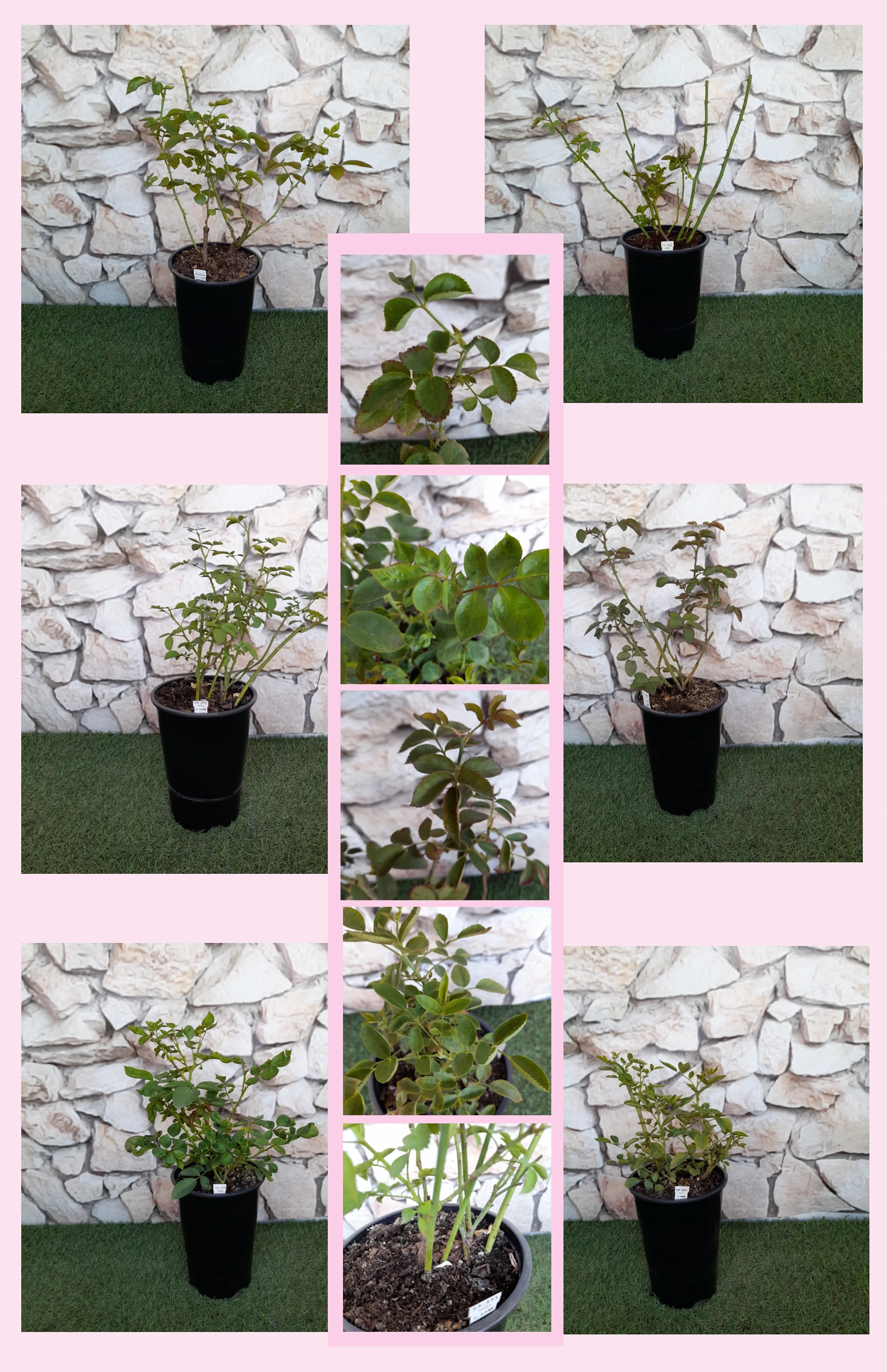
CREME CHANTILLY® – white bedding floribunda rose – Radler
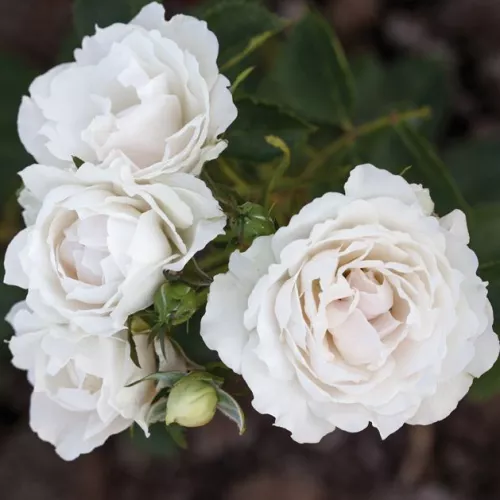
With its softly cupped white blooms and relaxed, bushy habit, CREME CHANTILLY® creates a romantic, storybook feel in everyday family gardens. Bred for dependable health and very high disease resistance, it keeps its foliage neat even in damp UK summers, coping reliably with exposed sites where coastal breezes and driving rain ask more of garden plants. The bush builds up steadily on its own roots, giving long-lived structure with excellent ability to regenerate after harsh winters or renovation pruning. In flower, it delivers generous, repeat-flowering display across the season, the large, very double clusters of blooms holding their creamy-white colour well in both heat and cool spells. Low-maintenance by nature, it suits busy gardeners who prefer basic, occasional tasks rather than constant fussing, and will thrive in well-prepared borders, raised beds on clay, or sizeable containers. Planted once with a little initial care, CREME CHANTILLY® develops strong roots in the first year, bushing out with fuller growth in the second and reaching its full, romantic ornamental impact by about the third summer.
Usage options
| Target area | Reasoning |
|---|
| Front to mid border in a family cottage-style bed |
The compact, bushy shape and generous clusters of large, creamy-white flowers create a reliable focal point at the front or middle of a border, without overwhelming smaller gardens. Its season-long repeat flowering provides a calm, bright anchor among pastels and herbs for romantic-cottage gardeners. |
| Low, traditional hedge along paths or driveways |
Planted at hedge spacing, the dense, leafy habit knits into a continuous, low barrier that frames paths and driveways elegantly. The structure remains attractive even between flushes, and the long-lived own-root framework recovers well from harder trims, suiting practical-family homeowners. |
| Mixed rose and shrub planting in suburban gardens |
The excellent disease resistance and strong general health make this variety a dependable choice among other roses and shrubs, particularly in humid, disease-prone suburbs. It keeps foliage clean with minimal spraying, fitting the needs of busy-urban gardeners. |
| Raised beds and borders on heavier or clay soils |
In raised beds or improved clay borders, its sturdy bush form and resilient root system anchor well and cope with typical British weather, including those periods when winds and rain feel more coastal than inland. This steady performance reassures beginner-gardeners. |
| Larger containers on patios, terraces or balconies |
In a minimum 40–50 litre container with quality compost, the compact yet full habit gives an abundant, long-season display close to seating areas. Occasional deadheading and watering are usually enough to maintain the show, appealing to time-pressed city-dwellers. |
| Small specimen rose near seating or front door |
Used singly, its rounded form and constant succession of soft white blooms create a welcoming, informal focus beside a bench, arbour or doorway. The restrained scent is unobtrusive, making it ideal for everyday use areas favoured by low-maintenance enthusiasts. |
| Urban green spaces and shared communal gardens |
The cultivar’s proven tolerance of urban conditions, from reflected heat to occasional neglect, combines with very good disease resistance to reduce maintenance inputs. It keeps beds looking smart and consistent for community-minded residents. |
| Cut flowers from a kitchen or cutting corner |
The large, very double blooms on clustered stems lend themselves to informal jugs and vases, bringing the cottage-garden mood indoors. Regular cutting encourages further flowering, rewarding even light attention from home-florist gardeners. |
Styling ideas
- Cream-and-green hedge – Line a front path with a low hedge of CREME CHANTILLY®, underplanting with soft green alchemilla and spring bulbs for a calm, ordered look – ideal for traditional-family homes.
- Patio tea corner – Grow one or two plants in large terracotta pots (40–50 litres) beside a bistro table, pairing with scented herbs in smaller containers – perfect for busy couples wanting instant charm.
- Cottage tapestry – Weave this white floribunda through a border of foxgloves, hardy geraniums and lavender to create a layered, romantic tapestry – suited to lovers of relaxed cottage style.
- Urban white garden – Combine CREME CHANTILLY® with panicle hydrangeas and variegated foliage in a small city plot for a cool, light-reflecting palette – appealing to design-aware urban gardeners.
- Kitchen-garden edge – Use as a neat, flowering edge to a vegetable or herb area, softening beds while still allowing easy access – a good choice for practical kitchen-garden keepers.
Technical cultivar profile
| Parameter | Data |
|---|
| Name and registration |
Floribunda bedding rose, registered as MEIradena, marketed as Creme Chantilly® Bedding rose MEIradena; also known in exhibitions as Icecap™, classified as an exhibition floribunda bush rose. |
| Origin and breeding |
Bred by William J. Radler from an unknown Meilland seedling × ‘RADsweet’, breeding completed in 2007; introduced in France and the USA from 2015 by Meilland International and Star Roses & Plants. |
| Awards and recognition |
Highly decorated bedding rose with major awards: SNHF Grand Prix 2014, multiple Barcelona Gold Medals and special prizes 2013, Saverne and Rose Hills Gold Medals, plus a Silver Medal in Rome. |
| Growth and structural characteristics |
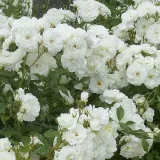
Bushy, compact plant 60–90 cm tall and 90–120 cm wide, with dense, dark green, matte foliage and moderate prickles; forms a full, rounded shrub suitable for bedding, borders and low hedging. |
| Flower morphology |
Very double, cup-shaped blooms with 40+ petals, produced mainly in clusters; extra-large flowers around 9 cm across, repeating freely with a strong second flush when deadheaded or lightly trimmed. |
| Colour data and phenology |
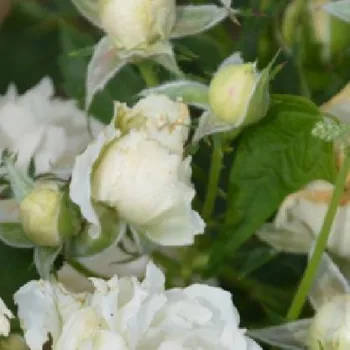
Soft off-white petals with a subtle creamy tint, ARS white, RHS 155C–155D; buds creamy with greenish-pink tips, opening eggshell white and later fading to matt white or slightly papery ivory in heat. |
| Fragrance and aroma |
Very weakly scented, with no strong or persistent perfume; grown primarily for its visual effect, flower form and garden performance rather than for fragrance, making it unobtrusive near seating. |
| Hip characteristics |
Due to the dense double blooms, hips form only occasionally; when present they are small, spherical, 5–8 mm across, and orange-red, offering limited wildlife or decorative interest in most seasons. |
| Resistance and winter hardiness |
Exceptionally robust foliage with high resistance to black spot, powdery mildew and rust; reliably hardy to about −32 °C (RHS H7, USDA 4b, Swedish Zone 5) and tolerant of heat with moderate drought. |
| Horticultural recommendations |
Best in full sun with well-drained soil; plant 65–115 cm apart depending on use, 1.9–2.1 plants/m² for bedding. Low maintenance: basic feeding, watering in drought and routine deadheading are sufficient. |
CREME CHANTILLY® offers a healthy, compact, long-lived own-root shrub with generous repeat flowering and dependable disease resistance, making it an excellent, easy-care choice for those wishing to invest in a lasting garden feature.