CORALINE – apricot climbing rose – Eve
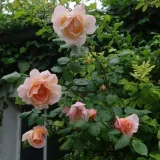
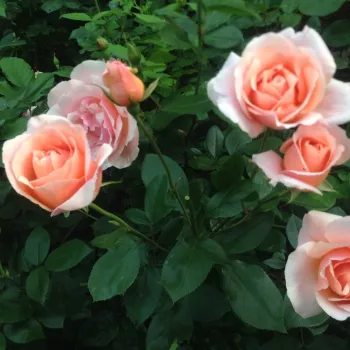
With its warm peachy blooms and romantic climbing habit, CORALINE is ideal for creating a storybook arch, arbour or cottage-style pergola where petals glow softly in evening light and stems stand steady even in blustery coastal weather. This own-root climber is bred for steady growth, building a dependable framework rather than demanding constant attention, and its remontant flowering brings generous colour back after the first flush. Semi-double petals open to reveal stamens for visiting pollinators, adding gentle life around a family seating area, while the mid-green, slightly glossy foliage gives relaxed country charm against fences, walls or trellis. Once planted, the plant’s natural ability to regenerate from its own roots supports an impressively long lifespan with stable ornamental value, so you can keep pruning simple and allow it to fill its space at an unrushed pace. In a typical garden it settles in quickly and, with basic seasonal care, forms the sort of climbing structure that turns an ordinary corner into a cosy retreat for unhurried afternoon tea and family memories.
Usage options
| Target area | Reasoning |
|---|
| Small family pergola or arbour |
CORALINE’s climbing habit and manageable height let you cover a modest pergola or arbour with soft peach blooms without overwhelming a small garden. It builds a permanent framework that returns reliably each year, ideal for those who want a romantic seating nook with minimal effort for the busy homeowner. |
| Fence and property boundary |
The moderately dense foliage and repeat-flowering salmon–peach blooms dress up plain fencing while remaining easy to keep within bounds at the suggested spacing. Own-root plants anchor well and regenerate if cut back, so the boundary planting stays attractive over many seasons for the long-term planner. |
| Wall-trained cottage feature |
Trained on horizontal wires or an obelisk near a wall, CORALINE’s semi-double flowers create a traditional cottage look with a soft, shifting peach-to-pink palette. Medium maintenance needs and moderate disease resistance suit typical UK walls and courtyards for the relaxed gardener. |
| Pillar or obelisk focal point |
The climber’s vertical habit and repeat flowering make it excellent for wrapping a pillar or metal obelisk as a tall accent in a mixed border. Its moderate thorniness and controllable growth allow straightforward tying-in and winter pruning for the practical beginner. |
| Informal cottage border with perennials |
Warm peach flowers combine beautifully with soft pinks and airy whites, echoing classic English cottage borders while the semi-double form adds lightness. Steady repeat flowering through the season supports a long display alongside anemones and Gypsophila for the romantic traditionalist. |
| Part-shaded family seating corner |
Suitable for partial shade, CORALINE brings colour and foliage structure to the dappled edges of patios or lawn seating areas. The delicate, close-range fragrance and moderate pollinator interest make it a gentle companion where children and guests gather for the cosy host. |
| Large container near terrace (40–60 litres) |
Planted in a 40–60 litre container with good drainage, this own-root climber settles into a stable root system that supports long-term flowering with straightforward watering and feeding. It is well suited to terraces and small urban gardens for the space-conscious owner. |
| Coastal or exposed garden corner |
Once anchored into the soil or a large planter, the climbing framework and moderate thorniness cope well with tying-in and shaping, settling into a reliable presence even where winds are frequent and brisk. Over time this creates shelter and softness for the seaside gardener. |
Styling ideas
- Tea-Arbour – Train CORALINE over a small wooden arbour with a bistro set beneath, pairing it with soft pink windflowers for a storybook afternoon-tea corner – ideal for cottage-style romantics.
- Peach-Soft – Combine its salmon–peach blooms with white Gypsophila and pale foxgloves along a fence, keeping pruning light to emphasise natural curves – perfect for lovers of informal borders.
- Kitchen-Nook – Let CORALINE climb a pergola by a kitchen garden, mingling with herbs and runner beans so flowers and produce share the same frame – suited to rural kitchen-garden owners.
- Coastal-Frame – Use it on a sturdy trellis in breezier gardens, underplanting with low grasses and silver foliage to soften edges while the climber provides height – good for practical seaside households.
- Courtyard-Pillar – Grow it around a metal obelisk in a large pot, teaming with lavender and dwarf anemones for colour through the season – designed for busy urban gardeners with limited ground space.
Technical cultivar profile
| Parameter | Data |
|---|
| Name and registration |
Climbing rose marketed as CORALINE – apricot climbing rose – Eve; large-flowered climber class with exhibition name Coraline; part of the Rambling rose collection for pergolas and structures. |
| Origin and breeding |
Bred by André Eve in France and introduced in 1976 by Clause; parentage is not recorded, but selection focused on decorative climbing use and reliable repeat bloom in temperate gardens. |
| Growth and structural characteristics |
Strong climber reaching about 250–400 cm high with a 150–260 cm spread; moderately thorny, with moderately dense, mid-green, slightly glossy foliage forming a flexible yet stable framework. |
| Flower morphology |
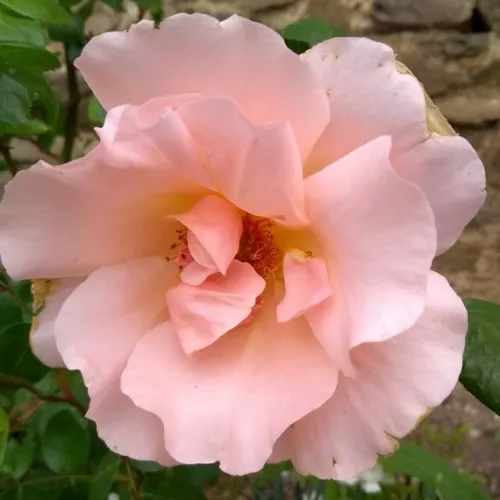
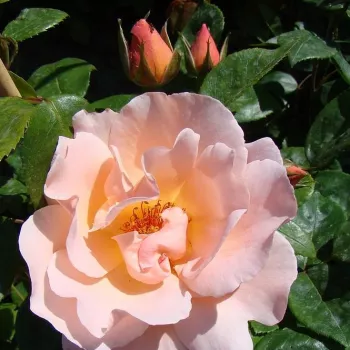
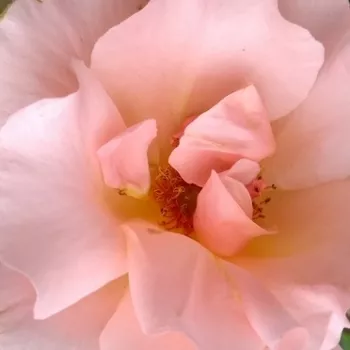
Semi-double, flat blooms with around 13–25 petals, mostly borne singly; large flower size approximately 7–10 cm, remontant with a plentiful second flush, and moderate self-cleaning with some hips. |
| Colour data and phenology |
Warm salmon–peach buds open with brighter orange centres, then soften to even peach with pale pink outer petals; finally fade toward pastel pink with creamy edges, especially in strong sunshine. |
| Fragrance and aroma |
Very light fragrance of classic rose character, noticeable only at close range; best appreciated in sheltered seating areas or when cut for the vase rather than relied upon as a strong scent feature. |
| Hip characteristics |
Produces moderate quantities of ovoid, orange-red hips, typically 12–18 mm in diameter; decorative in autumn, especially when stems are tied onto pergolas, arches or cottage-style boundary supports. |
| Resistance and winter hardiness |
Hardy to approximately −21 to −18 °C (RHS H7, Swedish zone 3, USDA 6b); disease resistance is moderate for black spot, mildew and rust, so routine monitoring and timely treatment are beneficial. |
| Horticultural recommendations |
Best on pergolas, fences, walls or pillars at about 140–220 cm spacing; suitable for partial shade, needs irrigation in prolonged drought, and occasional pest or disease control in humid seasons. |
CORALINE combines warm peach repeat flowering, adaptable climbing structure and dependable longevity in an own-root form that repays simple care with years of cottage-garden atmosphere, making it a thoughtful choice for your next family planting.