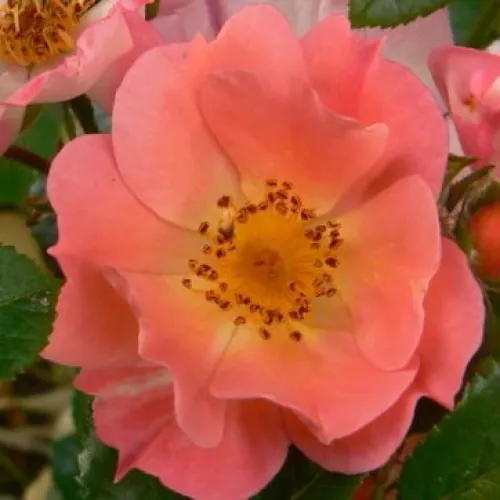
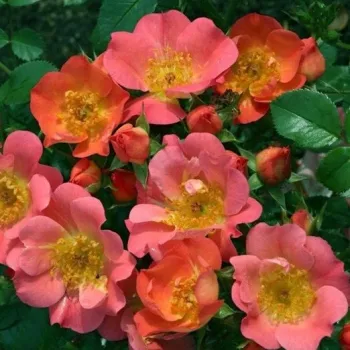
COCO ® – salmon-pink dwarf mini rose – Kordes
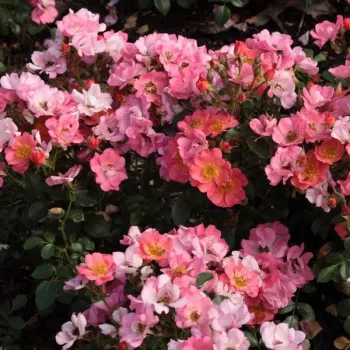
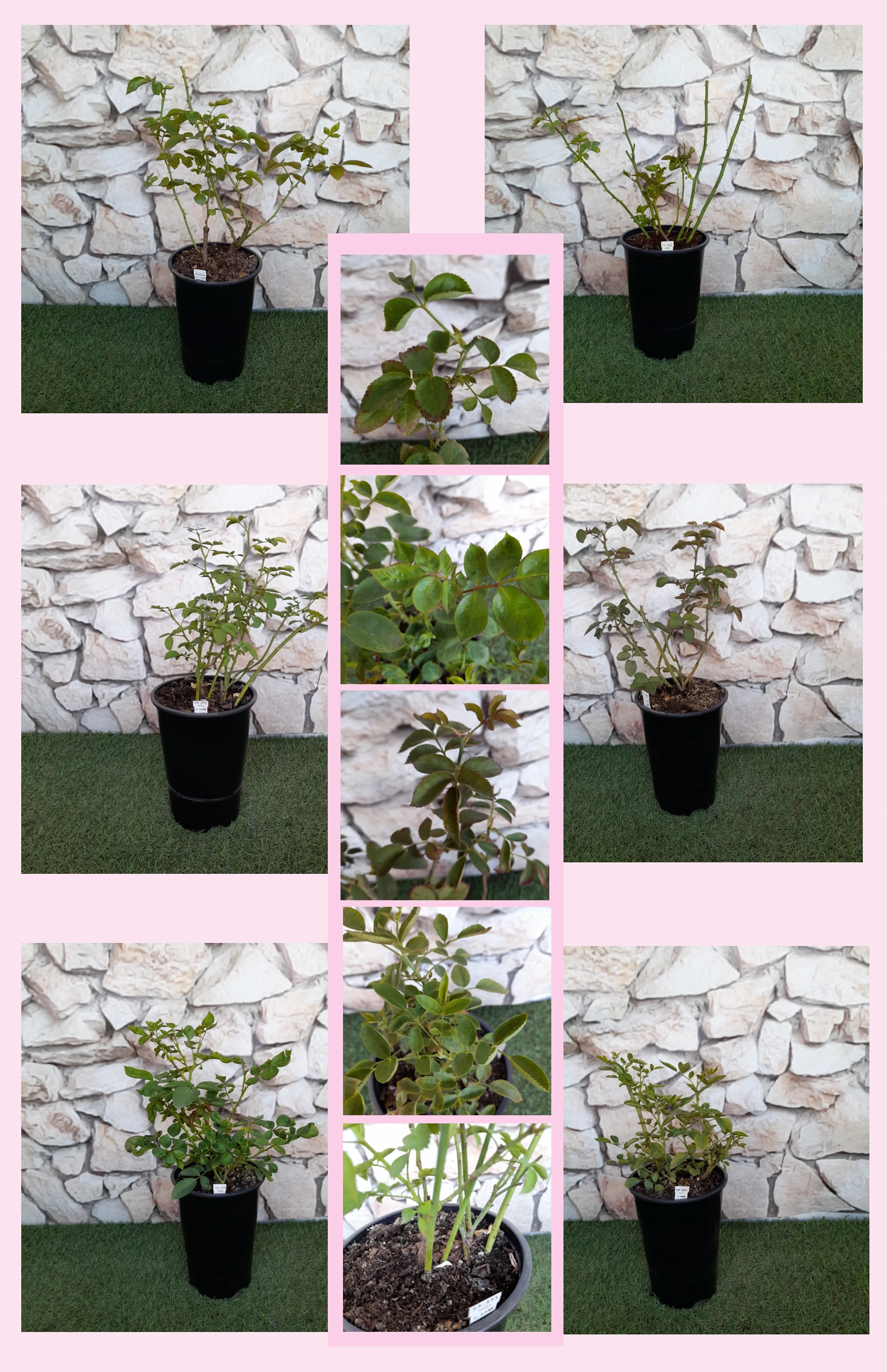
Bring a touch of storybook charm to a small family garden with Coco, a compact miniature rose that fits beautifully beside a kitchen path or beneath a cottage-style arbour. Its warm salmon-pink blooms appear in generous clusters, delivering reliable colour from early summer well into autumn, even where breezy, damp weather and heavier soils demand good planting preparation. As a neat, upright shrub around 35–45 cm tall, Coco works equally well in borders or large containers, giving you long-term structure without overwhelming tighter spaces. Own-root growing ensures steady regrowth, resilience after pruning and a naturally long lifespan, so once planted, this little rose will quietly knit itself into your cottage-style garden for years.
Usage options
| Target area |
Reasoning |
| Front of cottage-style border |
Coco’s compact 35–45 cm habit creates a low, colourful edging that frames paths and vegetable beds without shading them. Repeating salmon-pink clusters lend gentle structure and a tidy, well-kept look with modest maintenance, ideal for beginners. |
| Patio or terrace in large containers |
This dwarf rose is perfect for pots of 40–50 litres or more, where its neat size and upright growth give a balanced display without constant pruning. Own-root resilience helps it recover from winter or repotting, reassuring for busy-urban-owners. |
| Family garden play and seating areas |
With only slight prickliness and a low, rounded form, Coco sits safely at the front of mixed beds near lawns, benches or play spaces. Its consistent flower production adds colour all summer, pleasing for family-gardeners. |
| Sunny, heat-exposed corners |
Good heat tolerance means Coco copes well in warm, sun-trapping spots, as long as it receives watering during very dry spells. This makes it a reassuring choice for south-facing patios and small front gardens tended by time-poor-owners. |
| Pollinator-friendly cottage planting |
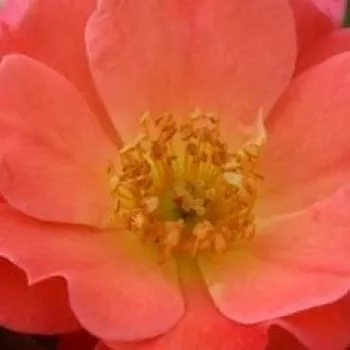
The single, open flowers with clearly visible stamens are easy for bees and other pollinators to use, adding wildlife value to romantic planting schemes. Light, airy clusters mix naturally with herbs and perennials valued by wildlife-lovers. |
| Low-maintenance seasonal colour |
Remontant flowering provides a dependable second flush, so borders do not look bare after the first summer show. With routine deadheading and simple winter pruning, Coco delivers steady colour for . |
| Coastal or breezier gardens |
Its dense, glossy foliage and compact framework help it stand firm where gardens feel more exposed, coping well in changeable conditions with occasional strong winds and persistent showers, which is reassuring for coastal homeowners. |
| Long-term garden structure |
As an own-root rose, Coco builds strength gradually below ground, then above, reaching its full ornamental character over the first few seasons and settling in as a durable, reliable presence appreciated by traditionalists. |
Styling ideas
- Kitchen-border ribbon – Plant Coco in a soft salmon-pink line along the edge of a vegetable or herb plot for a low, romantic border that stays neat and productive-looking – ideal for cottage-vegetable enthusiasts.
- Patio-teacup trio – Group three 40–50 litre containers with Coco and soft grasses beside a bistro set to evoke relaxed afternoon tea on the terrace – for small-garden balcony owners.
- Front-garden welcome – Use Coco in repeated clusters by the front path, mixed with lavender and white perennials, to greet visitors with a classic English look – suited to lovers of traditional entrances.
- Wildlife corner – Combine Coco with pollinator-friendly herbs and airy perennials to form a small wildlife strip near a seating area, where bees can be watched safely – perfect for nature-curious families.
- Mini-hedge edging – Plant at 25–30 cm intervals to create a low, flowered hedge defining lawns or play spaces, adding softness without creating a visual barrier – for practical family planners.
Technical cultivar profile
| Parameter |
Data |
| Name and registration |
Miniature dwarf shrub rose, registered as KORcoeinf, marketed as Coco ® Lilliputs®. Belongs to the Lilliputs® collection, classified as a mini dwarf rose for garden and container use. |
| Origin and breeding |
Bred by W. Kordes & Sons in Germany around 1995, introduced and registered in 2006. Parentage is unknown; originally distributed by W. Kordes’ Söhne in Germany for wider garden planting. |
| Awards and recognition |
Bronze medal at the 2006 Baden-Baden Rose Trials in Germany, acknowledging its ornamental value, garden performance and overall consistency compared with other miniature and patio-type roses. |
| Growth and structural characteristics |
Compact, upright shrub typically 35–45 cm in height and spread, with dense, glossy, dark green foliage and light prickliness. Forms a rounded, well-branched plant suited to edging, bedding and containers. |
| Flower morphology |
Small single flowers, approximately 0.5–1.5 inches across, produced in clusters. Petal count generally 5–12, flat flower form. Remontant habit with a strong second flush following the initial main flowering. |
| Colour data and phenology |
Warm salmon-pink blooms with a subtle orange hue; newly opened flowers vibrant, ageing to softer salmon-pink and rosy-peach tones. Colour holds moderately well, lightening slightly towards petal edges over time. |
| Fragrance and aroma |
No noticeable fragrance; classified as a scentless rose. Visual and structural qualities, together with repeat flowering and compact size, are the primary ornamental features rather than perfume contribution. |
| Hip characteristics |
Produces small, spherical orange-red hips, around 5–7 mm in diameter, in moderate quantities. Hips add a discreet touch of autumn interest without significantly affecting the plant’s compact appearance. |
| Resistance and winter hardiness |
Rated H7, hardy to approximately −26 to −23 °C, USDA zone 5b, Swedish zone 4. Disease resistance moderate for black spot, mildew and rust; generally reliable with basic care and protection in very humid spells. |
| Horticultural recommendations |
Best in sunny positions with regular watering during dry weather. Suitable for borders, beds and containers; recommended spacing 25–45 cm depending on use, with 12.8–14.7 plants/m² for mass or hedge planting. |
COCO ® – salmon-pink dwarf mini rose – Kordes offers compact structure, repeat flowering and reliable heat tolerance in a long-lived own-root form that will reward patient, relaxed gardeners for many seasons; consider it where space and time are both limited.