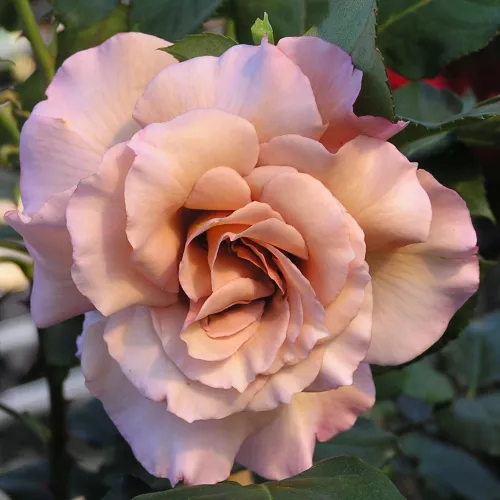
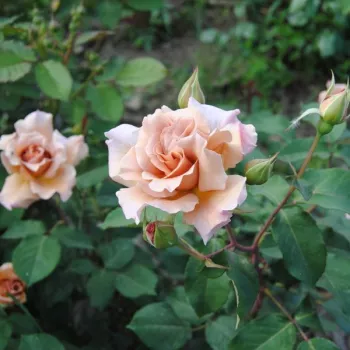
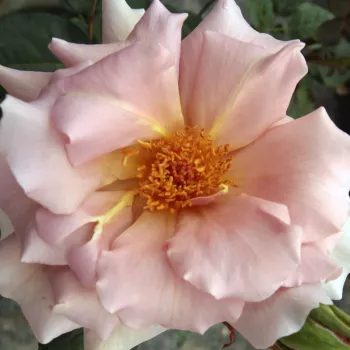
CHOCOLATE ROSE™ – light coffee-brown tea-hybrid rose – Tysterman
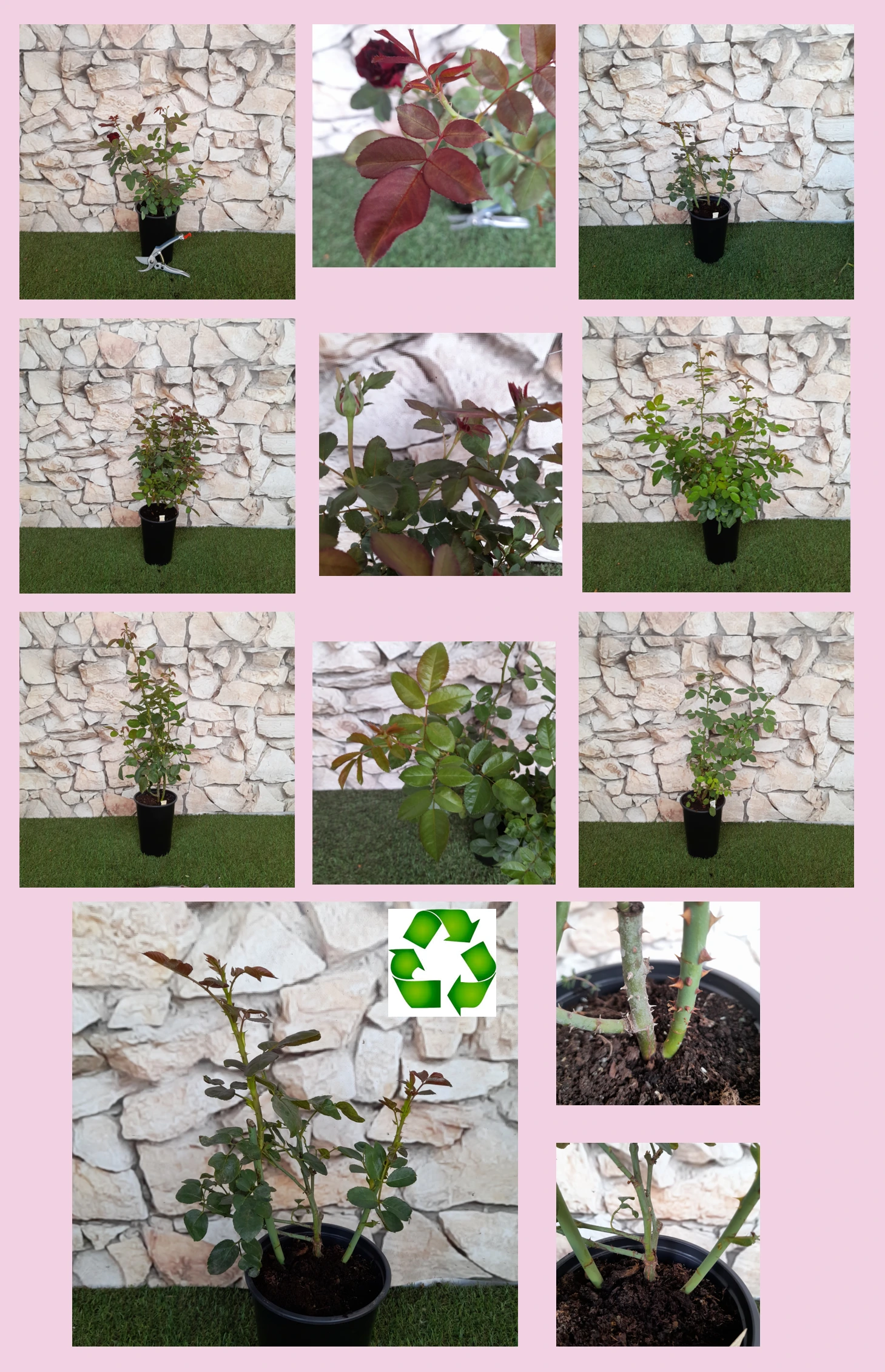
Romantic, parchment-toned petals and a soft, discreet fragrance make Chocolate Rose™ an evocative choice for afternoon tea corners and cottage-style borders. This hybrid tea offers reliable rebloom, sending up elegant, long-stemmed blooms for the vase and garden from early summer onwards. Its compact, upright habit slips easily into smaller family gardens or a large container, while robust disease resistance keeps leaves glossy with minimal spraying, even where damp breezes and summer showers are frequent along exposed coasts. As an own-root plant, it develops steadily into a long-lived, stable feature with strong regrowth after pruning or weather setbacks. Over time, you can enjoy the natural progression from quietly establishing roots, to bolder leafy growth, to the full romantic display that becomes part of your garden’s gentle rhythm.
Usage options
| Target area |
Reasoning |
| Feature rose for a small front garden |
The compact, upright habit and 70–95 cm height make Chocolate Rose™ easy to place near doors, paths or bay windows without overwhelming the space. Showy, individually held flowers read clearly from the street, yet the muted coffee-and-caramel shades remain tasteful. Own-root vigour supports a long-lived front-garden accent with only light seasonal pruning, ideal for the time-poor yet style-conscious homeowner. |
| Romantic cottage-style mixed border |
The unusual parchment, coffee and rosy hues blend seamlessly with soft pinks, mauves and cream perennials, giving a storybook cottage feel among lavender, Mexican daisies or herbs. Repeat flowering keeps the border lively through summer, while good disease resistance means foliage stays attractive among densely planted companions even in showery, humid weather. This suits relaxed, flower-rich borders for the traditional cottage-gardener. |
| Cutting patch and home bouquets |
Long, straight stems with solitary, cupped blooms make this an excellent cutting rose for kitchen-table vases and gifts. The refined, antique colour palette partners beautifully with grasses and seed heads for informal arrangements, while the mild scent suits indoor use. Own-root plants regenerate well after regular cutting, giving a dependable crop for the enthusiastic but busy florist-amateur. |
| Large patio container or roof terrace |
In a 40–50 litre container, the moderate size and upright growth create a neat vertical accent beside seating, doors or balcony railings. Glossy, dark green foliage with a reddish tint frames the distinctive blooms, offering a sophisticated focal point in confined spaces. With modest watering and feeding, the own-root structure remains stable over years, fitting the needs of the urban container-gardener. |
| Easy-care family flower bed |
Chocolate Rose™ offers low maintenance with strong resistance to black spot, mildew and rust, reducing the need for spraying in busy family gardens. Children and adults alike can enjoy the changing flower tones through the season, while routine deadheading is the main task required. The dependable constitution of an own-root plant suits those who prefer simple, once-a-year pruning, making life easier for the time-limited parent-gardener. |
| Season-long colour in sunny borders |
This remontant hybrid tea gives generous repeat flowering, providing waves of caramel-brown and parchment blooms that bridge gaps between perennials. In full sun with regular watering, plants respond with new flushes after each light prune, helping the border look “in flower” for much of summer and early autumn. It is an effective choice for the colour-focused border-planner. |
| Sheltered coastal or windy sites |
The sturdy, upright structure and moderate height help it stand up to brisk breezes without sprawling, while its disease resistance keeps foliage presentable where salty, moist air and sudden showers are common along exposed coasts. With decent soil preparation and mulching, own-root anchoring ensures plants stay put and recover well after storms, which reassures the climate-conscious seaside-gardener. |
| Long-term planting in a family garden |
As an own-root hybrid tea with hardy H7 rating and good disease resistance, Chocolate Rose™ is well suited to long-term positions in family gardens, coping with typical UK winters and regular pruning. Over the years it forms a reliable, stable framework that responds well to rejuvenation cuts and recovers even if frosted to low buds, making it a sound investment for the forward-looking planner-gardener. |
Styling ideas
- Tea-for-two – Plant Chocolate Rose™ near a bistro set with dwarf lavender and sweet alyssum underplanting for a scented, romantic tea corner – ideal for couples who enjoy quiet garden moments.
- Kitchen-border – Thread it through a kitchen garden edge with herbs and soft pink cosmos to echo vintage florists’ tones – perfect for home cooks who like cutting a few stems for the table.
- Cottage-ribbon – Line a path with staggered plants at 60–90 cm, interspersed with Mexican daisies, for a relaxed cottage “ribbon” of colour – suited to those favouring informal, storybook styling.
- Patio-focus – Place a single plant in a 50 litre terracotta pot with trailing alyssum for a focal point beside French doors – good for flat dwellers or small-garden owners seeking one standout rose.
- Subtle-spectrum – Combine Chocolate Rose™ with dusky purples, creams and grasses in a mixed border to create a sophisticated, muted colour scheme – appealing to gardeners who dislike overly bright displays.
Technical cultivar profile
| Parameter |
Data |
| Name and registration |
Hybrid Tea group; registered as Julia's Rose, marketed as Chocolate Rose™ Hybrid tea rose Julia's Rose; ARS exhibition name Julia’s Rose; female given-name cultivar, own-root 2-litre form. |
| Origin and breeding |
Bred by William E. Tysterman, Wisbech Plant Co Ltd, United Kingdom; cross of ‘Blue Moon’ × ‘Dr. A.J. Verhage’; introduced and registered in 1976 as a garden and exhibition hybrid tea. |
| Awards and recognition |
Decorated exhibition hybrid tea with strong show credentials: Baden‑Baden Gold Medal 1983, Montreal/CRS Best Flowering Award 1993, and Rosexpo Montreal Best Cycle of Bloom 1999 for sustained performance. |
| Growth and structural characteristics |
Compact, upright plant 70–95 cm tall and 50–70 cm wide, with moderately dense, glossy dark green foliage flushed reddish; moderately thorny stems; poor self-cleaning so spent blooms benefit from regular deadheading. |
| Flower morphology |
Semi-double, cupped blooms with 13–25 petals, typically borne singly on stems; large-flowered hybrid tea class (approx. 7–10 cm diameter), remontant with a generous second flowering and further repeats in good conditions. |
| Colour data and phenology |
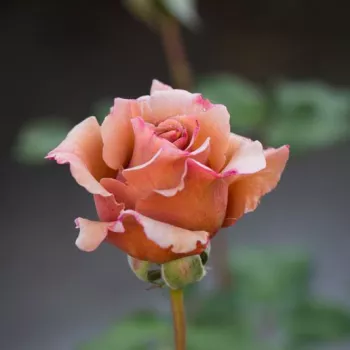
Light coffee-brown with copper and rosy tones (RHS 165A outer, 164D inner); buds deep copper-brown; newly open flowers parchment beige-coffee, maturing to silky caramel-brown and eventually fading towards parchment in strong sun. |
| Fragrance and aroma |
Mild, discreet fragrance of classic rose character; not overpowering for close seating or indoor use, yet present enough to lend charm to cut stems and intimate seating areas around patios or sheltered garden rooms. |
| Hip characteristics |
Semi-double flowers and routine deadheading mean hips are usually few; if allowed, forms small ovoid hips 10–14 mm, ripening from green to red and adding modest late-season interest without dominating the plant. |
| Resistance and winter hardiness |
Displays good resistance to major rose diseases including powdery mildew, black spot and rust; hardy to approximately −23 to −21 °C (RHS H7, Swedish Zone 3, USDA 6a), suitable for most temperate UK garden conditions. |
| Horticultural recommendations |
Best in a sunny position with fertile, well-drained soil and regular watering during prolonged dry spells; recommended spacings 50–90 cm depending on use, planting 2.8–3.2 plants/m² for massing, also performs well in large containers. |
Chocolate Rose™ Hybrid tea rose Julia's Rose offers romantic, repeat flowering, compact habit and strong disease resistance on a durable own-root framework; consider it if you seek a distinctive yet undemanding feature rose.