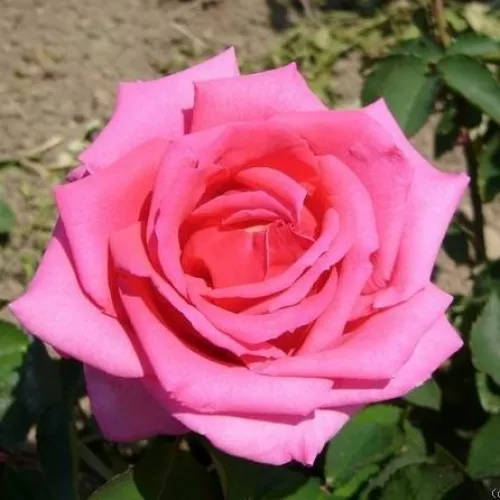
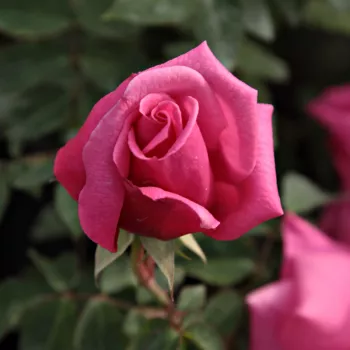
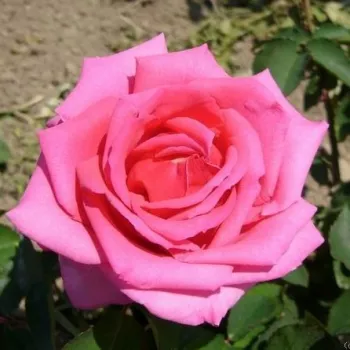
CHIC PARISIEN – coral-pink bedding floribunda rose – Delbard-Chabert
Imagine late-summer afternoon light over a cottage border as CHIC PARISIEN settles into your garden, its coral-pink clusters giving a soft, romantic glow and coping calmly even where breezes drive in damp, salt-tinged air from the coast. This compact, bushy floribunda has a naturally tidy habit that suits family-sized plots, edging paths or framing a small lawn without constant clipping. Own-root plants grow steadily and reliably, building a sound framework that regenerates well if cut back harder after a bad winter, supporting a pleasing arc of development from firm roots through stronger shoots to full ornamental impact over three seasons. Semi-double blooms in relaxed clusters open to a soft, rosy fragrance that suits evening tea on the patio, while its medium disease resistance and good flowering rhythm keep everyday care pleasantly simple.
Usage options
| Target area |
Reasoning |
| Front-of-border in a family cottage garden |
The compact, bushy growth and moderate height make it ideal for the front or mid-front of a traditional mixed border, where its coral-pink clusters read clearly without overwhelming nearby perennials; own-root plants knit in gradually, keeping the display reliable for years with minimal intervention for the busy gardener. |
| Low flowering hedge along a path or drive |
Regular repeat flowering and a naturally even outline allow you to create a soft, low hedge that frames paths or drives without formal clipping; spacing at around 40–50 cm ensures a continuous ribbon of colour while own-root durability means gaps from winter losses are far less likely for the family buyer. |
| Mass planting in a small urban front garden |
When planted at 4–4.6 plants per square metre, the uniform habit and self-cleaning flowers give a dense, carpet-like effect that reads well from the street; medium disease resistance suits typical urban humidity, so you get showy colour with only occasional spraying or deadheading for the time-poor owner. |
| Large container on terrace or balcony |
In a 40–50 litre container, the moderately deep root system and rounded shape stay in proportion, giving a neat, flowering “shrub in a pot” that fits small terraces; own-root resilience means it tolerates renewal pruning if it ever becomes leggy, making long-term container culture realistic for the balcony gardener. |
| Mixed cottage-style bed with perennials |
The refined coral-pink combines gently with whites, mauves and silvers, while the semi-double flowers keep the look light rather than heavy; pairing with low companions such as sweet alyssum or creeping bugle helps cover the soil and accentuates the rose’s colour without crowding it for the cottage-garden lover. |
| Kitchen garden or potager edging |
Its moderately thorny, bushy framework creates a soft boundary around vegetable or herb beds, providing summer colour and some light structure in winter; the mild, rosy fragrance feels at home beside herbs, and own-root stamina suits areas where soil is regularly improved and disturbed for the potager enthusiast. |
| Exposed or breezy suburban plots |
The sturdy, branching framework anchors well once established, giving a stable shrub that copes with ordinary garden winds, including conditions where frequent rain and wind combine to challenge many roses, provided you give sensible soil preparation and drainage for the practical homeowner. |
| Partially shaded family seating area |
Tolerance of partial shade allows planting near pergolas or seating where the rose receives only part-day sun; colour remains readable even in softer light, while own-root vigour helps it maintain flowering and framework despite competition from nearby shrubs or fences for the relaxed host. |
Styling ideas
- Cottage-Front Border – repeat CHIC PARISIEN along the front edge with lavender and catmint for a soft, humming, pastel drift – ideal for cottage-style homeowners seeking easy rhythm and colour.
- Coral-Tea Corner – place a large container by a bistro set, underplanted with white sweet alyssum, to enjoy blooms and fragrance during afternoon tea – suited to balcony and patio users wanting romance in small spaces.
- Kitchen-Garden Frame – edge a potager bed with a loose row, interplanting chives and thyme to blur flower and herb lines – appealing to home cooks who like ornamental structure around productive plots.
- Pastel-Drift Mass – fill a front lawn island bed with a dense group, softening edges with low creeping bugle – for family gardens needing a high-impact, low-fuss focal point.
- Urban-Classic Entrance – flank a front door with twin pots of CHIC PARISIEN and a small juniper behind each for evergreen contrast – perfect for townhouses wanting a traditional, welcoming look.
Technical cultivar profile
| Parameter |
Data |
| Name and registration |
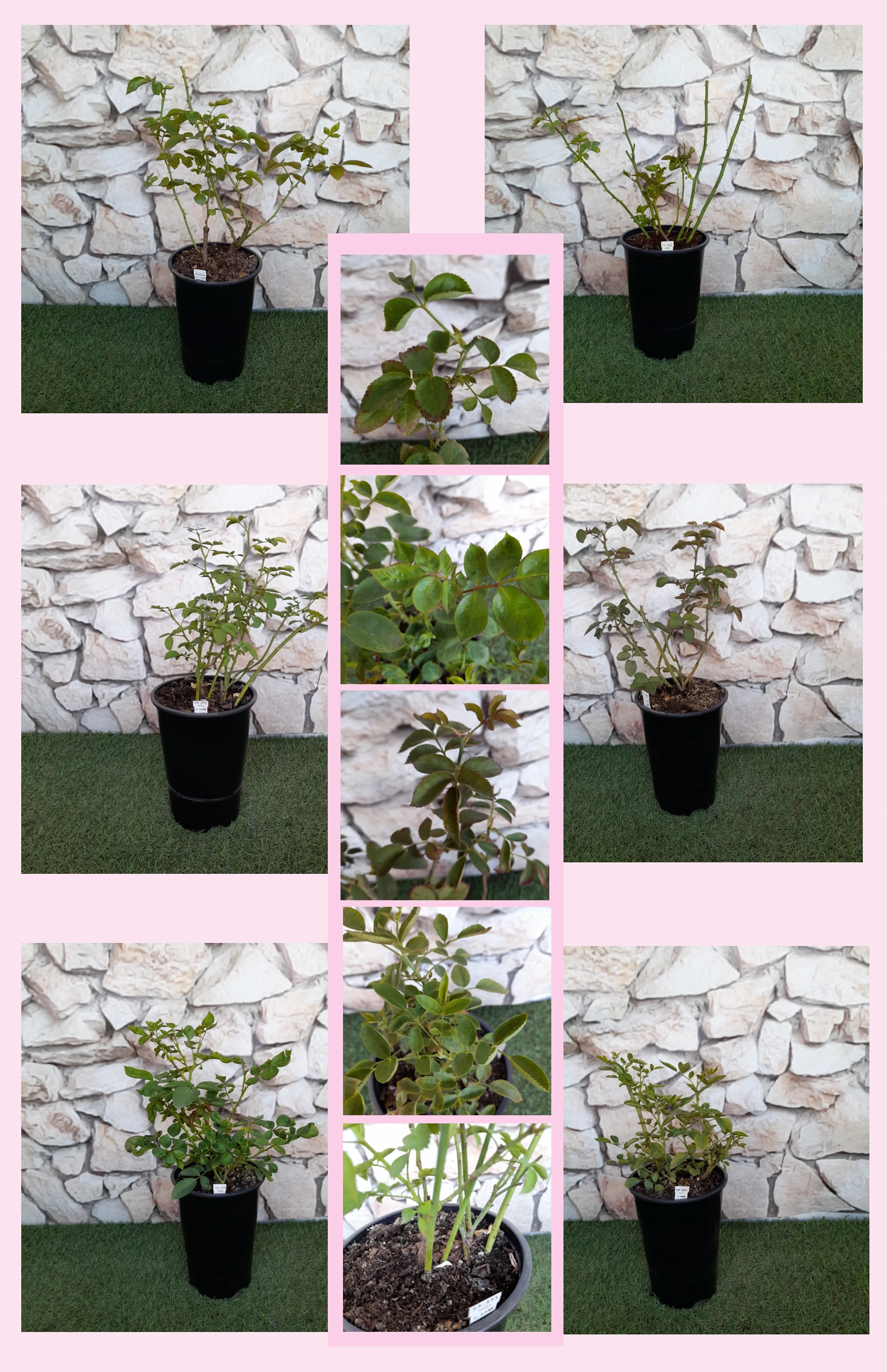
Floribunda bed rose; registered cultivar name DELtorche, trade name Chic Parisien Bedding rose DELtorche; American Rose Society exhibition name Chic Parisien; own-root, 2-litre container-grown form. |
| Origin and breeding |
Bred by André Delbard-Chabert, Pépinières & Roseraies Georges Delbard, France, around 1956; introduced in France the same year; parentage not recorded but typical of mid-century floribunda breeding. |
| Growth and structural characteristics |
Compact, bushy shrub 80–100 cm high and 60–80 cm wide, with moderately dense, slightly glossy dark green foliage and moderate prickles; branching habit suitable for beds, edging and lower informal hedges. |
| Flower morphology |
Semi-double, goblet to cup-shaped blooms with 13–25 petals, borne in clusters on floribunda-type trusses; medium-sized flowers approximately 4–7 cm across, self-cleaning is moderate so light deadheading is beneficial. |
| Colour data and phenology |
Coral-pink overall; buds reddish-coral, opening bright coral with slightly deeper centres, then fading to pastel coral and pale pink edges; colour holds better in cooler weather, fading faster in strong sun yet remaining harmonious. |
| Fragrance and aroma |
Mild, restrained scent with a soft rosy character; noticeable at close range rather than distance; best appreciated near paths, seating or in containers where short visits and evening use bring you close to the blooms. |
| Hip characteristics |
Produces moderately abundant, spherical orange-red hips around 8–12 mm across; hips add late-season colour and modest wildlife interest but are not usually a primary decorative feature in formal planting schemes. |
| Resistance and winter hardiness |
Hardy to about –21 to –18 °C (RHS H7, Swedish Zone 3, USDA 6b); medium overall disease resistance, generally resistant to powdery mildew and black spot, but rust may need occasional monitoring and treatment. |
| Horticultural recommendations |
Prefers well-drained but moisture-retentive soil; suitable for beds, edging, parks and urban planting; tolerates partial shade and moderate heat and drought but not prolonged dryness; allow 40–80 cm spacing depending on use. |
CHIC PARISIEN unites compact, bushy flowering, refined coral-pink colour and dependable own-root longevity, making it a cultured choice for long-term structure and romance in a modest family garden; you may wish to reserve it now for future seasons of enjoyment.