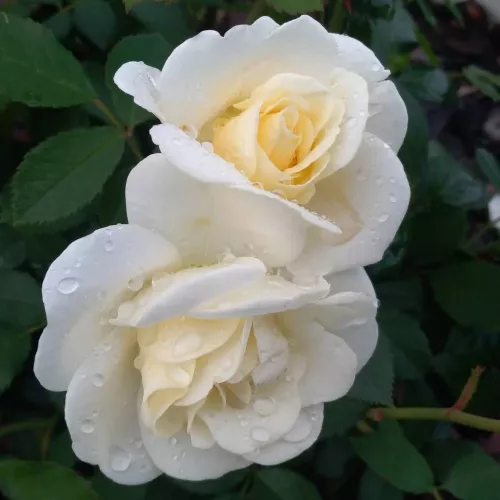
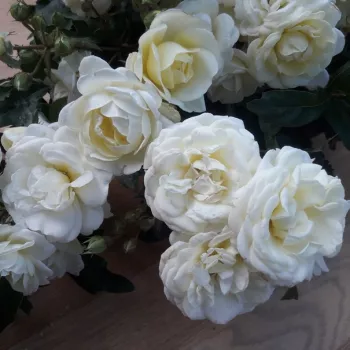
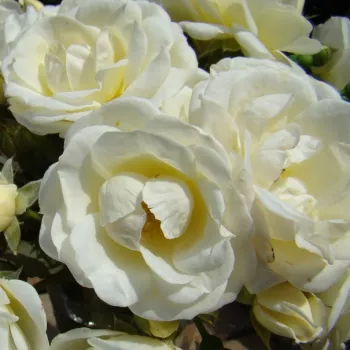
CHÂTEAU DE MUNSBACH – pale yellow park rose – Boudolf & Velle
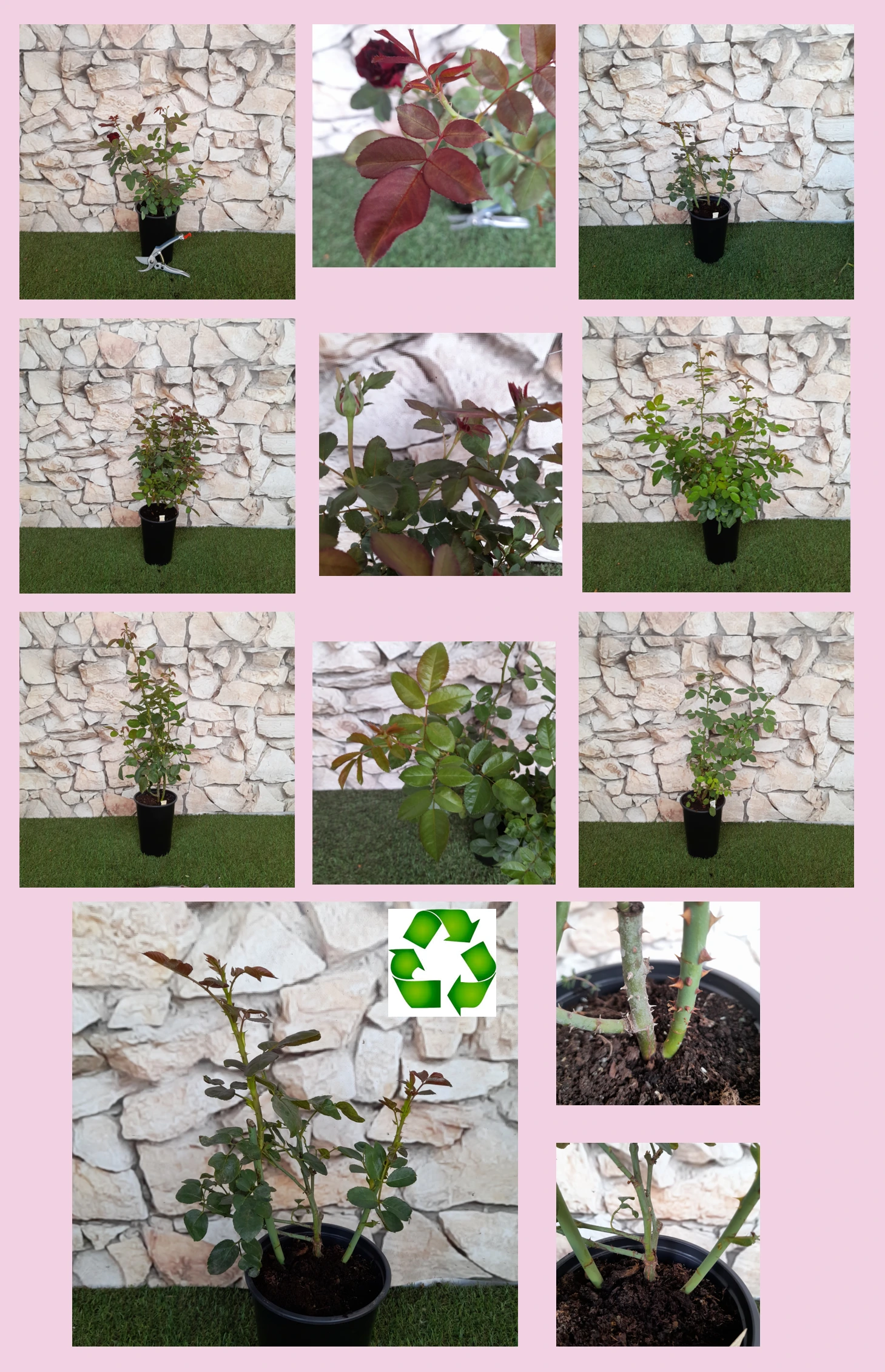
Understated and romantic, CHÂTEAU DE MUNSBACH settles gently into a family garden, bringing buttery flowers in soft clusters over a long season on upright, bushy growth. Its semi-double, cup-shaped blooms open to reveal golden stamens that quietly support pollinators, while the dark, glossy foliage gives a reliable backdrop to cottage-style perennials and kitchen-garden plantings. As an own-root shrub, it builds a deep, resilient framework for a genuinely long-lived planting, tolerant of cooler, exposed sites with good anchoring in blustery coastal weather. You can enjoy it as a free-standing feature or weave it into mixed hedges and borders for a storybook cottage look. Planted as an already established, 2-litre shrub, it quickly takes hold, with the well-known arc of year one for root-building, year two for more generous top growth, and year three revealing its full ornamental charm and dependable flowering rhythm.
Usage options
| Target area |
Reasoning |
| Cottage-style mixed border in a family garden |
The upright, bushy habit and dense, dark foliage give a graceful structure that slots easily into a mixed border without demanding precise pruning, creating an effortless romantic focus for beginners. |
| Loose flowering hedge along a boundary or path |
Regular clusters of pale yellow flowers and healthy, leafy growth form a soft, storybook-style screen that is easy to shape with light annual trimming rather than strict hedge cutting, ideal for a relaxed look for traditionalists. |
| Specimen shrub near terrace or seating area |
Planted singly at the recommended spacing, it develops into a rounded, airy shrub that gives season-long colour with minimal upkeep, especially when sited in a raised bed to cope better with heavier soils for homeowners. |
| Part-shaded corner of a small to medium garden |
Its tolerance of partial shade allows planting where many roses sulk, bringing soft light tones and reliable flowering even where the house or taller shrubs cast shade for several hours a day for urbanites. |
| Own-root rose for long-term, low-fuss planting |
Being on its own roots, it recovers well from winter damage or accidental hard pruning, rebuilding from below ground without graft failures and keeping a stable shape and colour year after year for planners. |
| Kitchen-garden edge with beneficial wildlife interest |
Semi-double blooms with exposed stamens offer accessible pollen, so the shrub supports visiting bees while still reading as ornamental, tying the productive and decorative parts of the garden together for nature-lovers. |
| Large container on patio or balcony (40–50 litre minimum) |
In a generous container with regular watering, its upright framework and modest spread create a neat vertical accent, giving cottage-garden charm where border space is limited and maintenance time is short for balcony-owners. |
| Wind-exposed, cooler UK sites needing reliable structure |
The robust shrub form anchors well in the soil and, once established, copes reliably with breezier, cooler positions common in many gardens, even where conditions feel quite open and coastal for pragmatists. |
Styling ideas
- Cottage-Romantic Border – Combine with catmint and low lavender for a dreamy, pastel edge to a lawn or path – ideal for lovers of soft English countryside style.
- Kitchen-Garden Frame – Plant as corner markers around raised veg beds, underplanted with herbs, to blur the line between productive and ornamental – suited to home cooks who value beauty and utility.
- Pastel-Hedge Drift – Create a loose hedge, adding white foxgloves and pink campion between shrubs for a gently woven boundary – perfect for families who prefer an informal, storybook garden.
- Courtyard Focus – In a 50-litre pot with trailing periwinkle, use near seating to soften paving and brick – appealing to busy urban gardeners wanting romance in limited space.
- Wildlife-Friendly Nook – Group three shrubs with catmint and ornamental grasses to offer movement, pollen and year-round structure – for nature-minded gardeners seeking calm, low-effort planting.
Technical cultivar profile
| Parameter |
Data |
| Name and registration |
CHÂTEAU DE MUNSBACH – pale yellow park rose; shrub, Hybrid Musk type. Registered as VEL11mreal, within the Park – shrub rose commercial group, suitable for both garden and cutting use. |
| Origin and breeding |
Bred by Ann Velle Boudolf and Rudy Velle, Lens Roses, Belgium. Seedling from unknown parentage, bred around 2013 and introduced in 2018, distributed initially by Lens Roses in European markets. |
| Awards and recognition |
Recognised at international rose trials, including a Silver Medal at the 2022 Warsaw Rose Trials and Best Shrub at the Rome Rose Trials in 2013, confirming strong ornamental garden performance. |
| Growth and structural characteristics |
Upright, bushy Hybrid Musk shrub, 110–170 cm high and 75–120 cm wide, with dense, dark green, glossy foliage and relatively sparse thorns, giving good garden presence and comfortable handling. |
| Flower morphology |
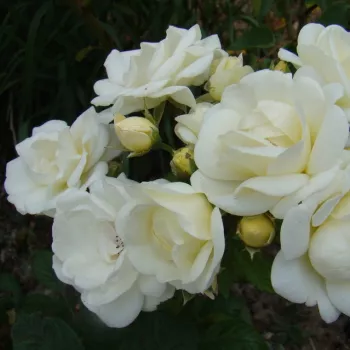
Semi-double, cup-shaped blooms with 13–25 petals, carried in clusters on branching stems. Small flower size (about 0.5–1.5 inches) but produced in generous numbers, with remontant repeat flowering in summer. |
| Colour data and phenology |
Pale, buttery yellow blooms (ARS LY; RHS 4C inner, 158D outer) that fade to creamy white with a subtle yellow eye; colour softens more quickly in strong sun, giving a gentle, variable pastel effect over time. |
| Fragrance and aroma |
Classic rosy fragrance character, but very light in strength and often barely noticeable in the garden; selected more for visual impact and garden performance than for strong scent, suiting fragrance-sensitive settings. |
| Hip characteristics |
Occasional small hips, about 5–9 mm, spherical and orange-red when ripe. Decorative effect is modest but can add a fine-textured autumn detail and light wildlife interest if spent flowers are left unpruned. |
| Resistance and winter hardiness |
Hardy to approximately −21 to −18 °C (RHS H7; USDA 6b; Swedish Zone 3). Disease resistance is medium to powdery mildew, black spot and rust, calling for periodic monitoring in humid seasons. |
| Horticultural recommendations |
Best in fertile, well-drained soil with regular watering during dry spells. Suitable for mass planting, hedges and specimens at 80–150 cm spacing, and for partial shade; medium maintenance with occasional health checks. |
CHÂTEAU DE MUNSBACH offers long-season clusters of pale yellow blooms, reliable shrub structure and own-root resilience, making it a thoughtful, enduring addition to a relaxed, romantic family garden.