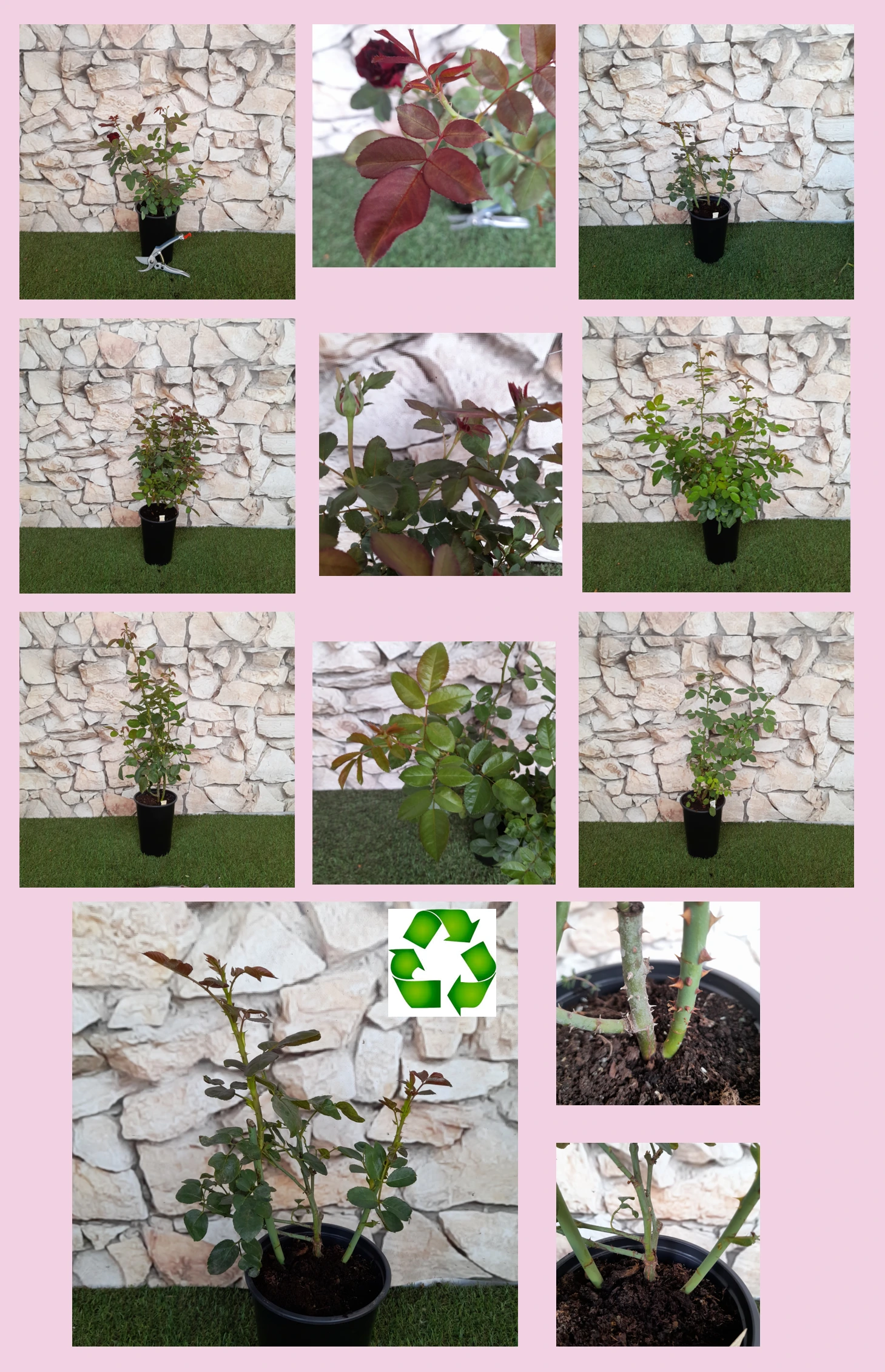
CARMINIA – purple-pink bedding floribunda rose – Vissers
Choose CARMINIA when you want romance and colour in a small family garden without demanding maintenance. This compact, bushy floribunda knits neatly into beds and borders, flowering in generous lilac-pink clusters from early summer onwards, with a fresh, strong, citrus-floral fragrance that carries across a patio. Its dense, slightly glossy foliage and tidy, upright habit give a planted-from-pot look within months, then steadily build into a stable, long-lived structure that suits traditional cottage-style schemes. Being own-root, it quietly regenerates from below ground after harsh winters, supporting an impressively long lifespan and dependable ornamental value year after year. You can plant it throughout the season, even where conditions are challenging, provided you allow for improved drainage on heavy clay and similar difficult soils. In raised beds or large containers it anchors well, making it a reliable choice for exposed suburban plots. Its medium height fits beneath windows, along paths or around a lawn seating area, creating a soft, storybook backdrop to afternoon tea. Expect roots to establish first, then stronger shoots, and by the third year a fully developed display that brings relaxed cottage charm with minimal effort.
Usage options
| Target area |
Reasoning |
| Front-of-border bedding in a small family garden |
The compact, bushy habit and 80–105 cm height make CARMINIA ideal for the front or mid-front of mixed borders, where its clustered lilac-pink blooms create a soft, romantic focus without overwhelming nearby plants; especially suitable for the busy homeowner. |
| Low cottage-style rose hedge along paths or drives |
Planted at 25–30 cm spacing, its dense foliage and repeated flowering form a low, continuous hedge that frames paths and driveways with traditional charm while remaining easy to trim and refresh, appealing to those seeking a classic look with modest upkeep families. |
| Large containers on patios, terraces and balconies |
In a 40–50 litre or larger pot with good compost, CARMINIA maintains a neat outline and reliable flowering, bringing scent and colour close to seating areas where ground space is limited, suiting urban gardeners who want high impact from a single rose beginners. |
| Mixed cottage beds with perennials and herbs |
The medium height and cup-shaped blooms blend naturally with daylilies, hardy geraniums and kitchen-garden herbs, providing a romantic focal point that repeats through the season and ties planting together for those who enjoy informal English countryside borders cottage-lovers. |
| Sunny, heat-prone spots near walls or paving |
Good tolerance to heat and moderate drought means CARMINIA copes better than many roses beside south-facing walls or paving, where reflected warmth can be an issue, particularly useful for homeowners dealing with increasingly hot summers yet wanting reliable roses planners. |
| Partial-shade corners and east-facing aspects |
Suitability for partial shade allows planting where the rose gets morning or dappled light rather than full sun all day, extending your options in built-up plots and small gardens while still providing repeat flowering for those maximising limited borders urbanites. |
| Low-maintenance family beds with simple care routines |
Moderate disease resistance and medium maintenance needs mean routine dead-heading, feeding and occasional protection are usually enough; own-root plants recover well after pruning or weather damage, ideal for busy households wanting colour without complex regimes time-poor. |
| Exposed or heavier-soil sites in typical UK gardens |
With H6 hardiness and a robust, well-anchored root system, CARMINIA establishes reliably even on more challenging plots when planted in improved soil, making it a trustworthy choice where wind, cold and drainage can be problematic for many ornamentals practical-gardeners. |
Styling ideas
- Cottage-Ribbon – run a low edging of CARMINIA along a lawn or path, underplanting with soft catmint and pink hardy geraniums for a storybook cottage border – for lovers of relaxed traditional gardens.
- Tea-Terrace – plant one or two specimens in 50 litre terracotta pots by a seating area, with trailing thyme and ivy, so the citrus-floral scent drifts around afternoon tea – for patio-focused homeowners.
- Pastel-Panel – group three to five plants in a rectangular bed with cream roses, pale foxgloves and lavender for a pastel panel of colour that repeats all summer – for fans of coordinated, gentle palettes.
- Kitchen-Companion – mix CARMINIA among herbs such as sage, chives and oregano beside a veg plot, echoing cottage kitchen gardens while keeping the rose easy to reach for light pruning – for rural and allotment gardeners.
- Clay-Corner – in a raised bed over heavier soil, combine with daylilies and evergreen dwarf honeysuckle to create a resilient, textural corner that softens fences and sheds – for those improving difficult garden spots.
Technical cultivar profile
| Parameter |
Data |
| Name and registration |
Floribunda bed rose registered as Carminia, marketed as CARMINIA – purple-pink bedding floribunda rose – Vissers; ARS exhibition name Carminia; shrub rose within the bedding rose collection. |
| Origin and breeding |
Bred by Martin Vissers in Belgium in 2008 from Sweet Blondie × Outta The Blue; introduced and registered in 2020 by Viva International with initial distribution via Jan Spek Rozen BV. |
| Growth and structural characteristics |
Compact, bushy shrub to about 80–105 cm high and 30–50 cm wide; dense, medium-green, slightly glossy foliage; moderately thorny shoots; suited to beds, edging and container culture in average gardens. |
| Flower morphology |
Fully double, cup-shaped blooms with 26–39 petals, medium flower size in clustered inflorescences; remontant with generous repeat, including an abundant second flush, giving sustained decorative value in season. |
| Colour data and phenology |
Closed buds deep lavender; opening to lilac-pink with silvery edges; gradually fade to pale silvery lilac; ARS medium, RHS 75C outer and 75B inner petals; colour retention medium over the life of each bloom. |
| Fragrance and aroma |
Strong, far-scented fragrance of fresh citrus-floral character, noticeable around seating areas; densely petalled form reduces pollen access, so the cultivar is mainly ornamental rather than pollinator-supportive. |
| Hip characteristics |
Hips are sparse and occasional, small spherical fruits about 5–8 mm across, orange-red (RHS 40A) when formed; ornamental effect is minor, and seed production is limited in normal garden conditions. |
| Resistance and winter hardiness |
Hardy to approximately −21 to −18 °C, RHS H6, Swedish Zone 3, USDA 6b; moderate resistance to powdery mildew, black spot and rust; tolerates heat and moderate drought when well established and mulched. |
| Horticultural recommendations |
Use for beds, edging, containers, parks and cutting; plant at 25–45 cm depending on effect; prefers fertile, well-drained soil with regular feeding and occasional plant protection under high disease pressure. |
CARMINIA combines compact structure, repeat lilac-pink flowering and strong fragrance with the resilience and easy renewal of an own-root rose, making it a thoughtful choice for long-lived, romantic planting you can select with confidence.