BUDAI LINA EMLÉKE – pale pink groundcover rose - Győry
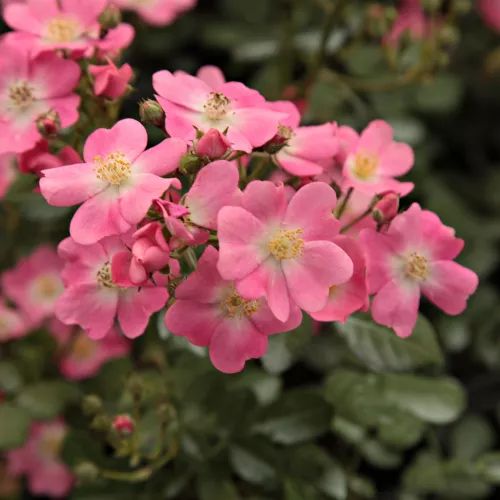
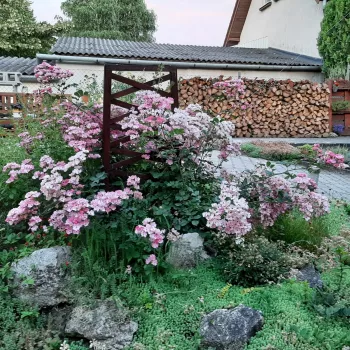
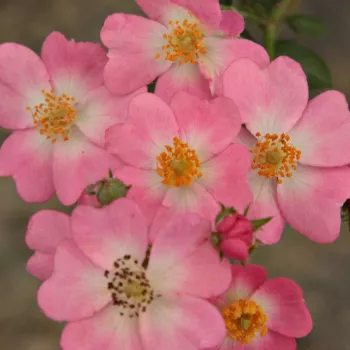
Imagine a low, arching carpet of pastel blooms softening the edges of a path or border: BUDAI LINA EMLÉKE is a pale pink groundcover rose bred for ease and quiet charm rather than showy formality. Its bushy, spreading habit quickly knits together, helping to stabilise beds and cope steadily with coastal breezes and rainfall in exposed British gardens. The single, open flowers are irresistibly bee-friendly, welcoming pollinators to your kitchen garden while the foliage remains reliably healthy with modern disease resistance, so You spend less time spraying and more time enjoying the view. As an own-root shrub it offers reassuring longevity, rebuilding itself from the base if ever cut back hard and holding its ornamental value for years. The naturally low maintenance character makes it suited to busy family plots, while its soft colouring blends gently with cottage-style perennials and clipped hedging for a relaxed, romantic cottage mood.
Usage options
| Target area | Reasoning |
|---|
| Front-of-border groundcover in a family cottage garden |
The bushy, arching habit and 30–60 cm height allow this rose to drape neatly over the front of mixed borders, covering bare soil and suppressing some weeds without dominating taller shrubs or perennials, ideal for relaxed family gardeners who prefer simplicity. |
| Flowing pale-pink carpet along paths or driveways |
With a 60–120 cm spread, plants knit together into a soft, pastel carpet that visually widens paths and driveways, giving a gentle, storybook feel with very little pruning required, well suited to homeowners who favour effortless planting. |
| Low, informal hedge edging kitchen or herb beds |
Regular spacing at 75 cm creates a loose, low hedge that frames kitchen beds without casting too much shade; the even growth and modest thorns make it manageable for occasional trimming, fitting busy cooks who enjoy order. |
| Pollinator-friendly zone near seating or play areas |
Single, open blooms provide easily accessible pollen that attracts bees, bringing gentle movement and life close to terraces and lawns while keeping flower size modest and unobtrusive, appreciated by nature-loving families seeking wildlife. |
| Low-care planting for urban front gardens and verges |
Good resistance to black spot, mildew and rust supports healthy foliage with minimal intervention, making it a dependable option for exposed or overlooked front plots where time and access are limited, a benefit for city households wanting reliability. |
| Soft underplanting around taller shrubs and small trees |
The dense, mid-green, glossy foliage and delicate pale-pink flowers create a calm understorey layer that hides bare stems of larger shrubs without competing strongly, suiting gardeners who like layered planting with harmony. |
| Large container on terrace or at entrance (40–50 L+) |
In a generous 40–50 litre container with good drainage, the compact height and spreading habit offer a long-season display near doors or seating, and own-root growth helps the plant recover well if ever cut back, supporting container gardeners who value resilience. |
| Mass planting for banks, slopes or difficult corners |
Planted at 85 cm intervals, the groundcover form gradually stabilises soil and reduces open ground, coping reliably with typical British downpours and prevailing wind in exposed spots, a reassuring choice for homeowners responsible for slopes. |
Styling ideas
- Kitchen-border drift – weave groups of BUDAI LINA EMLÉKE between herbs and vegetables, letting its soft pink groundcover tie together functional beds – for home cooks who appreciate pretty yet productive plots.
- Romantic path edging – line a gravel or brick path with repeating plants, underplanting with catmint and low lavender for a hazy, scented walkway – for cottage-style enthusiasts who want a gentle, storybook approach.
- Pastel bank tapestry – stabilise a small slope by mass planting, then intersperse dwarf pines and ornamental grasses for texture – for practical owners aiming to tame tricky banks with minimal care.
- Calm courtyard container – place one plant in a 40–50 litre pot with good drainage, combining with trailing thyme for a relaxed, informal container – for busy urban gardeners wanting easy charm by the back door.
- Family lawn transition – soften the edge where lawn meets fence by creating a shallow bed of these roses, punctuated with cottage perennials – for families seeking a gentle visual boundary around play spaces.
Technical cultivar profile
| Parameter | Data |
|---|
| Name and registration |
BUDAI LINA EMLÉKE – pale pink groundcover rose from the Ground cover collection; shrub/groundcover type, commemorating Budai Lina; commercial distribution and authenticity verified for garden use. |
| Origin and breeding |
Garden rose selected by Hungarian breeder Győry Szilveszter around 2000; parentage undocumented; introduced commercially by PharmaRosa® Ltd., with precise registration and introduction dates not fully recorded. |
| Growth and structural characteristics |
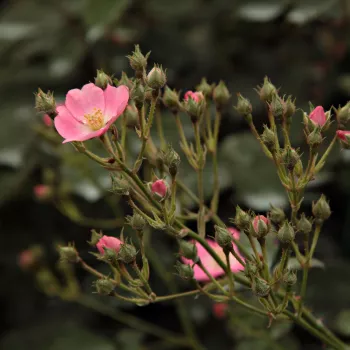
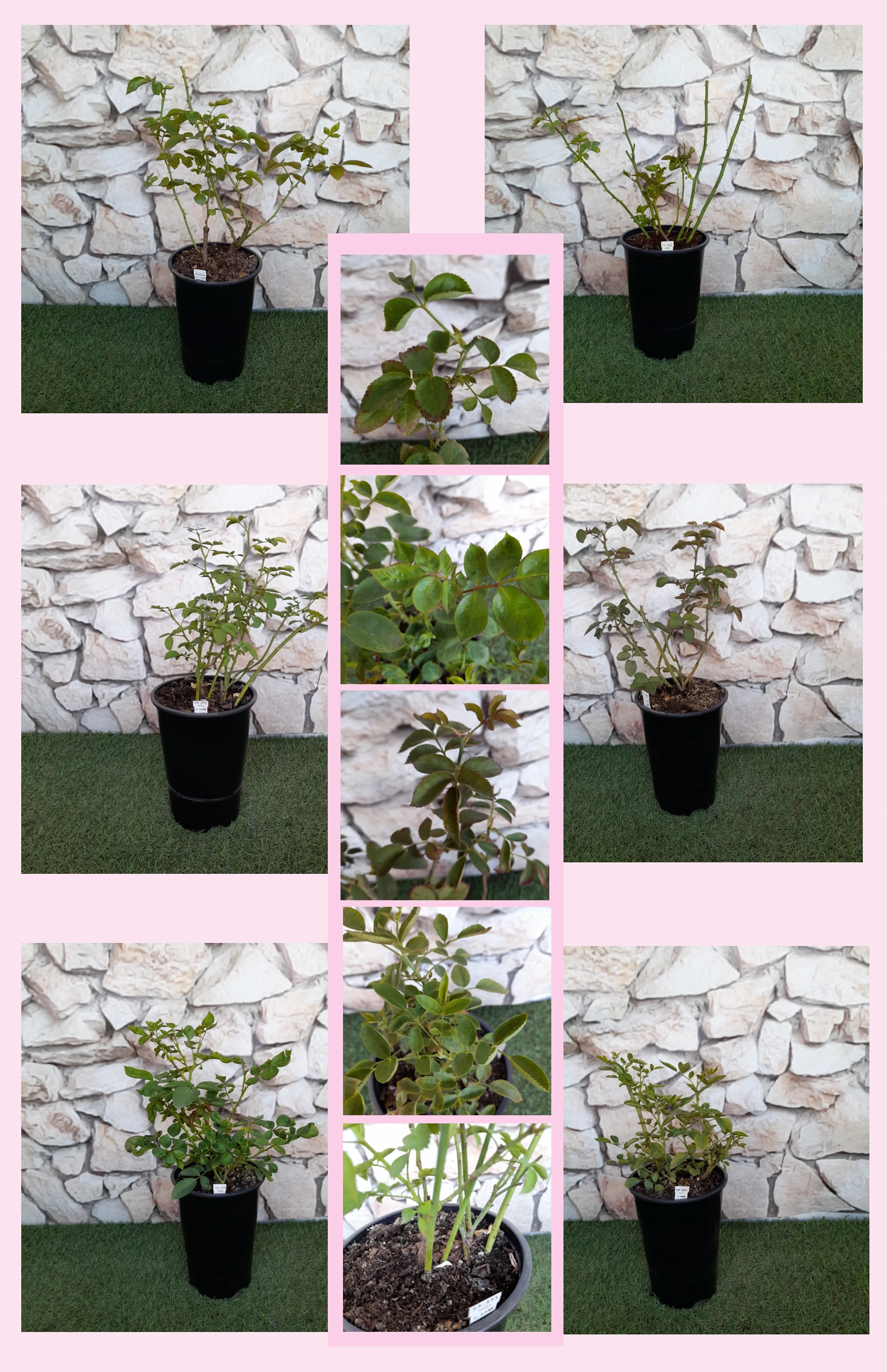
Compact bushy shrub, 30–60 cm high, 60–120 cm wide, with arching shoots and dense, glossy mid-green foliage; moderately thorny stems, suited to groundcover, edging and informal low hedging roles. |
| Flower morphology |
Small, flat, single flowers, approximately 0.5–1.5 inches across, borne in clusters; 5–12 petals per bloom with remontant, abundant repeat flowering that produces a particularly strong second flush in season. |
| Colour data and phenology |
Pale pastel pink blooms, ARS LP, RHS 62C outer, 65D inner, with a whitish opalescent margin; flowers fade towards near-white as they age, creating a soft, light overall effect in the planting scheme. |
| Fragrance and aroma |
No noticeable fragrance; valued primarily for colour effect, form and pollinator appeal rather than scent; suits locations where visual harmony and low maintenance matter more than strong perfume in the planting. |
| Hip characteristics |
Moderately developed spherical red hips, 5–10 mm in diameter; hips follow flowering and can add a light decorative touch and some wildlife interest if spent blooms are not removed during autumn. |
| Resistance and winter hardiness |
Good resistance to powdery mildew, black spot and rust supports reliable foliage; winter hardiness to approximately −21 to −18 °C (RHS H7, Swedish zone 3, USDA 6b) makes it suitable for most UK regions. |
| Horticultural recommendations |
Best in full sun, in fertile, well-drained soil; plant 75–150 cm apart depending on use; low maintenance with occasional light pruning; own-root plants may be rejuvenated by harder cutting if needed over time. |
BUDAI LINA EMLÉKE offers soft pastel groundcover, reliable health and pollinator-friendly flowers in a long-lived own-root form, making it a thoughtful choice for relaxed cottage-style family gardens.