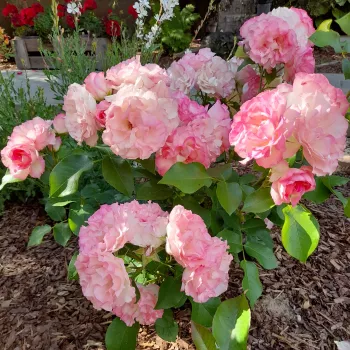
BORDURE ROSE™ – pink floribunda bedding rose – Delbard
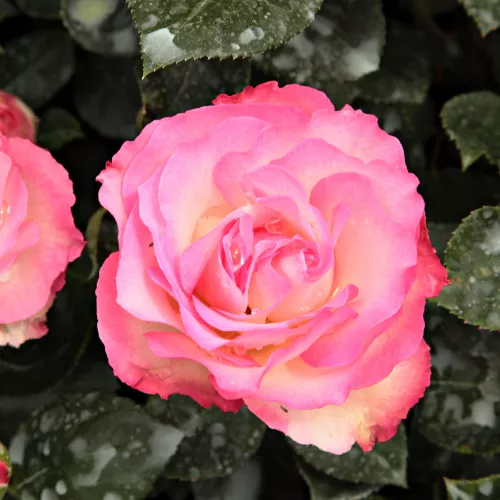
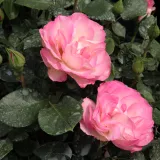
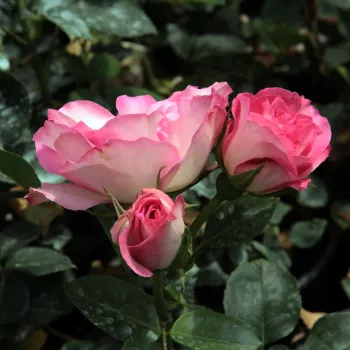
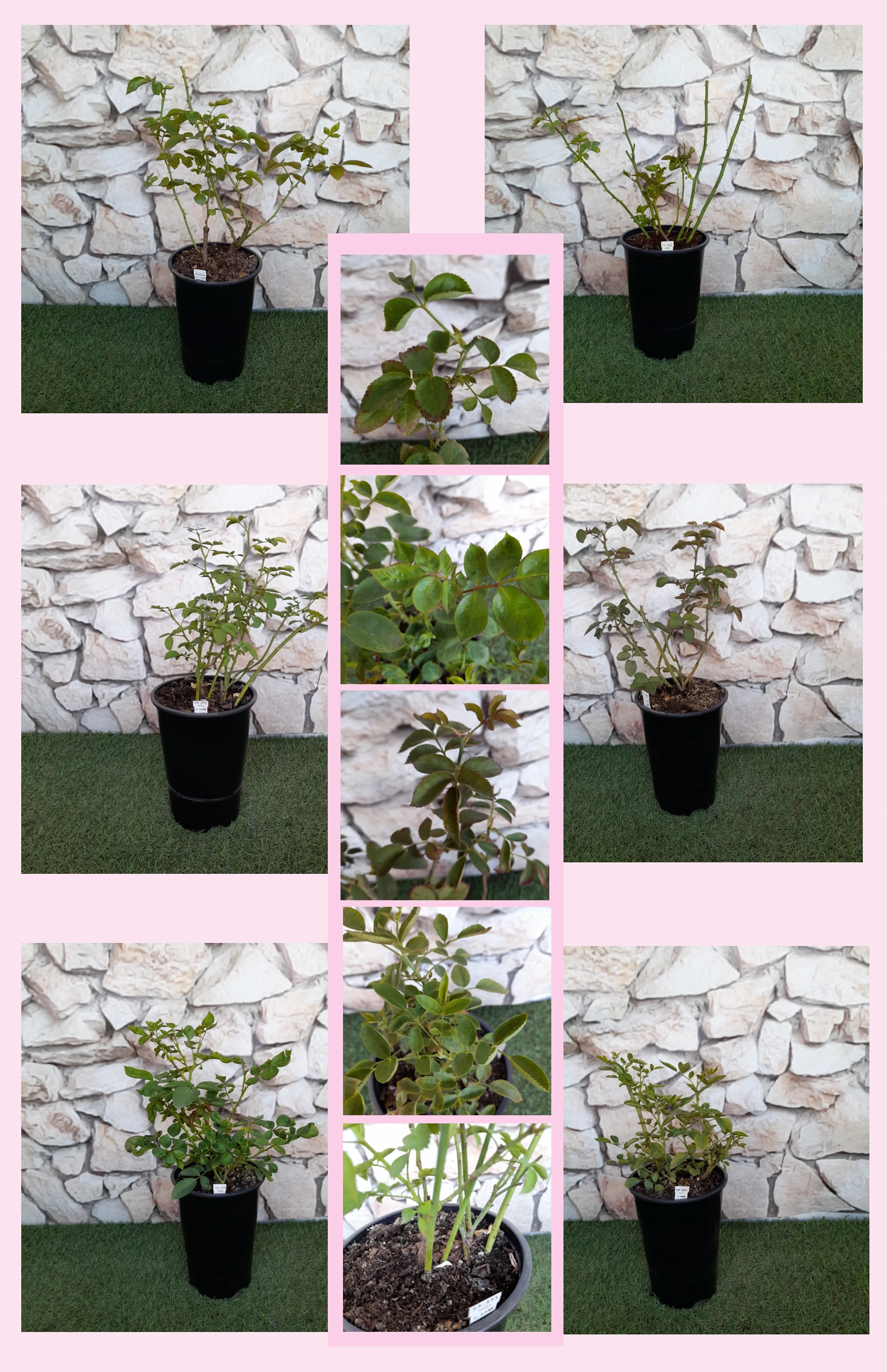
Imagine an summer arbour edged with low, billowing cushions of colour: BORDURE ROSE™ creates exactly that relaxed cottage border feel, with neat, compact growth that fits beautifully into family gardens. Its clusters of cream and pink blooms appear in generous flushes from early summer onwards, giving reliable flowering even when your time for gardening is limited. As an own‑root plant it establishes steadily and can regenerate well after harder pruning, supporting a long, stable lifespan in the border. In the first year it focuses on roots, the second on bushy shoots, and by the third year you enjoy its full ornamental presence. It copes well with typical British conditions, remaining composed even when exposed to regular wind and rainfall near the coast, provided the soil drains reasonably. Versatile in beds, edging and large containers, it offers relaxed maintenance and enduring charm for busy but style‑conscious gardeners.
Usage options
| Target area | Reasoning |
|---|
| Front of mixed border in a family garden |
The compact, cushion‑forming habit keeps the plant low and tidy at the front of beds, giving a soft, romantic edge without overshadowing perennials behind it. Its rounded shape naturally fills gaps, reducing the need for intricate layout planning, which suits busy beginners. |
| Traditional cottage‑style flower bed |
Regular clusters of cream‑and‑pink blooms provide classic cottage‑garden colour, blending well with phlox, bee balm and similar perennials for a “girly”, storybook look. Remontant flowering means the bed keeps its charm through summer, even with only basic feeding and deadheading by hobby gardeners. |
| Low rose hedge along a path or terrace |
Planted at the recommended distances, the even height and dense foliage form a gentle, low hedge that frames paths or patios without becoming overbearing. Own‑root plants anchor firmly over time, so the line stays stable and attractive for years, appealing to family homeowners. |
| Feature rose in a large container (40–50 litres+) |
Its modest size and tidy, rounded habit make it ideal for larger pots where space is limited but a strong colour presence is desired. A 40–50 litre container supports good root volume and easier watering, giving balcony or terrace gardeners a dependable display suited to urban households. |
| Front edge of a kitchen or herb garden |
The compact structure frames vegetable or herb beds without casting too much shade, while the soft pink‑and‑cream flowers bring a decorative, homely feel. Medium maintenance needs and moderate disease resistance are manageable with simple routines for time‑pressed cooks. |
| Coastal or breezy suburban sites |
A naturally low, dense framework helps the plant withstand wind, and it stays presentable in exposed positions when combined with reasonably free‑draining soil, making it a sound choice for gardens that regularly face brisk, moisture‑laden breezes and unsettled weather for coastal residents. |
| Family lawn island bed or corner feature |
Its rounded shape is easy to place as a single focal plant or in a small group, and it responds well to flexible pruning for shape control. As an own‑root rose it can regenerate if cut back hard, reassuring those managing shared spaces used by energetic young families. |
| Small, low‑input rose collection |
As an award‑winning floribunda with repeat flowering and moderate care needs, it adds classic charm without demanding expert pruning or complex spraying programmes. Its predictable dimensions simplify spacing and design choices, supporting confident planting decisions for rose enthusiasts. |
Styling ideas
- Cottage Ribbon – Line the front of a mixed border with BORDURE ROSE™ and intersperse clumps of garden phlox for a colour‑washed, “girly” cottage edge – ideal for traditional‑style family gardens.
- Kitchen Frame – Plant a loose row around a kitchen garden bed, pairing with herbs such as chives and thyme to soften edges while keeping a compact, manageable hedge – perfect for home cooks who like order and romance.
- Pastel Island – Use three plants in a triangle in a small lawn island, underplant with low catmint or hardy geraniums to blur the outline and highlight the cushion habit – suited to beginners wanting easy structure.
- Terrace Accent – Place a single plant in a 50‑litre terracotta pot with trailing lobelia or bacopa to spill over the rim, creating a soft, seasonal focus beside outdoor seating – appealing to balcony and patio users.
- Coastal Drift – Combine with feather reed grass and bee balm in a narrow bed exposed to breezes, letting the grasses add movement around the compact roses – good for seaside gardeners seeking resilience and charm.
Technical cultivar profile
| Parameter | Data |
|---|
| Name and registration |
Floribunda bed rose from the Border roses collection; registered as DELbara, marketed as BORDURE ROSE™ and also known in exhibitions under the name Strawberry Ice. |
| Origin and breeding |
Bred by Georges Delbard in France before 1973 from a complex floribunda lineage, introduced by Delbard; Georges Delbard SA in 1973 and registered in the same year. |
| Awards and recognition |
Highly decorated floribunda with Lyon Gold Medal 1975, Monza Silver Medal 1975 and a further collection of national and international honours, totalling fourteen medals overall. |
| Growth and structural characteristics |
Compact, bushy plant 50–70 cm high and wide, with dense, glossy dark green foliage and moderate thorns; forms a tidy, cushion‑like shape well suited to edges and low hedging. |
| Flower morphology |
Medium‑sized, double, cup‑shaped blooms with 26–39 petals, usually borne in clusters of three to seven per stem; remontant habit ensures a good second flush in suitable conditions. |
| Colour data and phenology |
Petals are cream‑white at the base with intense pink margins, buds medium pink; the edging can fade in strong sun, leaving a softer creamy‑white effect as the blooms age. |
| Fragrance and aroma |
Essentially scentless with no noticeable fragrance, grown primarily for its reliable flowering, colour contrast and structural contribution rather than for perfume or pollinator interest. |
| Hip characteristics |
Occasionally forms small, spherical hips 5–9 mm across, coloured orange‑red (RHS 40A); decorative impact is modest and hips are usually incidental to the plant’s main display. |
| Resistance and winter hardiness |
Winter hardy to about −21 to −18 °C (RHS H7, Swedish Zone 3, USDA 6b); shows moderate resistance to black spot, powdery mildew and rust, needing routine but not intensive care. |
| Horticultural recommendations |
Best in sunny sites with reasonable drainage; spacing varies from 35–65 cm depending on use, giving 5.7–6.5 plants/m² in mass plantings; needs regular watering during extended dry spells. |
BORDURE ROSE™ offers compact structure, repeat flowering and long‑term garden presence in an own‑root form that establishes securely and regenerates well, making it a thoughtful choice for relaxed, romantic borders and containers.