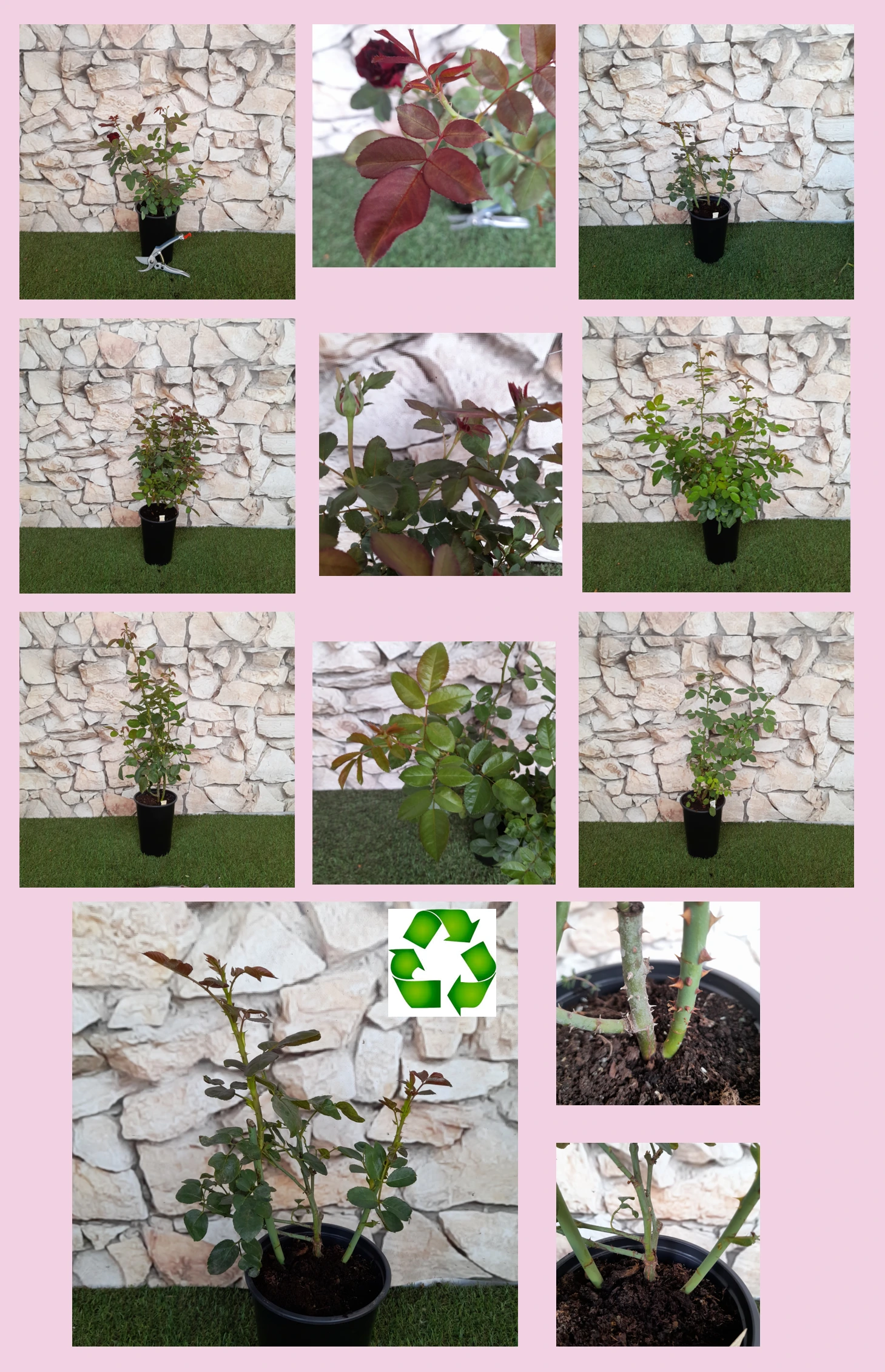
KORDIAM – orange-red hybrid tea rose - Kordes
In a traditional family garden, this upright hybrid tea brings a quietly luxurious sense of elegance to cottage-style borders and small lawns, its high‑centred buds echoing classic cut‑flower roses on a living bush. Large, double blooms in coral‑orange and salmon‑pink unfold in sequence, creating a long season of colour that suits afternoon tea corners and storybook seating nooks. Bred by Kordes, it is valued for its reliable health, standing up well even where damp air and summer showers would normally test a rose. Once planted, its low‑input maintenance fits busy everyday life: simple pruning, basic feeding and routine watering are usually enough. As an own‑root plant, it builds a durable framework and can regenerate strongly from its base, extending the rose’s working lifespan in a family plot. The pharmaROSA® ORIGINAL 2‑litre format offers an easy planting experience, settling quickly into borders or large containers and helping the shrub to anchor securely in soils that may be occasionally buffeted by stronger coastal winds. In its first seasons it concentrates on root establishment before building taller flowering shoots, then reaching its full garden impact over time for a settled, cosy atmosphere.
Usage options
| Target area |
Reasoning |
| Feature rose in a small front garden bed |
The upright, bushy habit and large hybrid tea blooms give clear structure and visual focus without needing a wide planting space, ideal beside a front path or bay window where dependable repeat flowering is appreciated by homeowners. |
| Mixed cottage border near a seating area |
The generous, remontant flowering and high‑centred cut‑rose form supply a steady stream of refined blooms that look “arranged” on the bush, suiting romantic tea corners where people want classic flowers with minimal effort for garden‑lovers. |
| Low‑maintenance family garden planting |
Modern breeding and good resistance to black spot, mildew and rust reduce spraying and fuss, keeping foliage presentable through typical British summers so the rose remains attractive even when time for gardening is limited for busy‑owners. |
| Long‑term structure in established borders |
Own‑root growth allows the shrub to regenerate from its base after harder pruning and to maintain an even, bushy outline over many years, supporting a stable, long‑lived planting plan appreciated by planners. |
| Raised bed on heavier or trickier soils |
The 2‑litre own‑root plant settles quickly in improved soil, rooting steadily and forming a well‑anchored bush that copes better with spots that can be occasionally exposed to brisk, moisture‑laden winds for cautious beginners. |
| Large container on terrace or patio (50–60 L) |
An upright, moderately tall shrub suits a single, statement pot; in a 50–60 litre container with good drainage it produces repeat flushes of showy blooms while remaining easy to prune at a comfortable height for balcony‑owners. |
| Traditional cutting patch in a kitchen garden |
Solitary, long‑stemmed, high‑centred flowers are ideal for vases, and the remontant habit supplies multiple cutting waves through the season, bringing that “home‑grown florist” effect within reach of casual cut‑flower‑enthusiasts. |
| Long‑view focal point in lawn or border |
The vivid coral‑orange to salmon‑pink colour range reads clearly from a distance, fading gently to softer peach‑pink tones that remain harmonious with other planting, giving consistent visual interest for relaxed families. |
Styling ideas
- Cottage‑border focal – Place as a central accent in a mixed border with foxgloves, hardy geraniums and lavender to frame the coral‑orange blooms – ideal for cottage‑style romantics.
- Kitchen‑garden cutting row – Plant in a straight line with easy‑to‑grow annuals like cornflowers and cosmos for handy cutting – suited to home florists and allotment users.
- Elegant entrance – Flank a front path with evenly spaced plants underplanted with heuchera and creeping bugle to soften the base – attractive to homeowners seeking classical welcome.
- Patio statement pot – Grow one plant in a 50–60 litre container backed by a trellis with Japanese creeper for contrasting foliage – perfect for terrace and balcony gardeners.
- Family relaxation nook – Use as a backdrop around a bench or small arbour, mixing with soft ornamental grasses for movement and a storybook feel – appealing to families who linger outdoors.
Technical cultivar profile
| Parameter |
Data |
| Name and registration |
Hybrid tea rose, registered as KORdiam, currently traded as Kordiam Hybrid tea rose KORdiam; American Rose Society exhibition name Holsteinperle, reflecting its elegant, pearl‑like bloom form. |
| Origin and breeding |
Bred by Reimer Kordes at W. Kordes & Sons, Germany, from an unknown seedling crossed with ‘Flamingo’; bred 1984, introduced and registered 1987, now a proven garden classic. |
| Awards and recognition |
Queen of Show at the Western New York Rose Society Show under ARS rules in 2001, confirming the cultivar’s exhibition quality and high‑centred hybrid tea form on suitable stems. |
| Growth and structural characteristics |
Upright, bushy growth to about 100–140 cm high and 50–70 cm spread, with moderately dense, glossy dark green foliage and dense prickling, forming a well‑filled, vertical shrub outline. |
| Flower morphology |
Large, double, high‑centred hybrid tea blooms with 26–39 petals, mainly solitary on stems; flower size typically in the 7–10 cm class, repeating with a generous second flush in season. |
| Colour data and phenology |
Orange‑red overall effect with ARS code op, RHS 28B outer and 29C inner petals; colours shift from vivid coral‑orange and salmon to softer pastel peach‑pink as the blooms mature. |
| Fragrance and aroma |
The blooms are effectively unscented, with no noticeable fragrance reported, making this cultivar more suitable where colour and form are prioritised over scent in planting design. |
| Hip characteristics |
Occasionally forms small, spherical, orange‑red hips, roughly 12–18 mm in diameter; hips are incidental ornamental features rather than a primary decorative or wildlife attraction. |
| Resistance and winter hardiness |
Rated resistant to black spot, powdery mildew and rust; winter hardy approximately to −23 to −21 °C, corresponding to RHS H7, Swedish zone 3 and USDA zone 6a garden conditions. |
| Horticultural recommendations |
Low maintenance needs; suitable spacing 45–90 cm depending on hedging, mass or specimen use; best in fertile, well‑drained soil with regular watering and routine spring pruning. |
Kordiam Hybrid tea rose KORdiam offers upright structure, season‑long flowering and dependable health in a durable own‑root form; consider it where you want enduring colour with straightforward care.