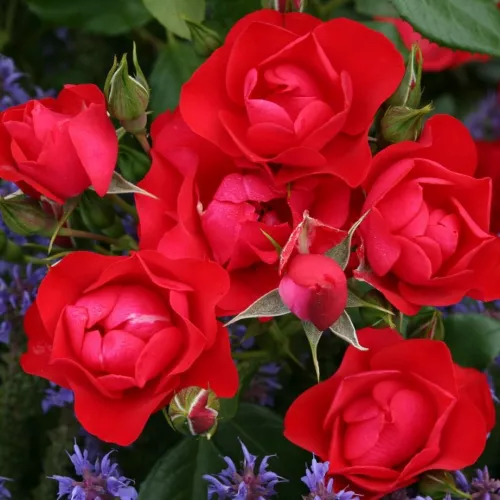
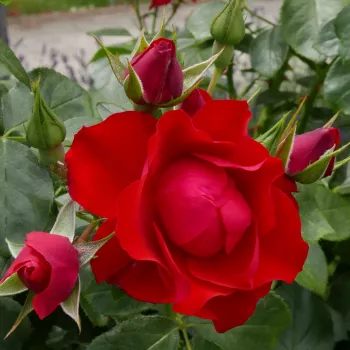
BLACK FOREST ROSE® – red bedding floribunda rose
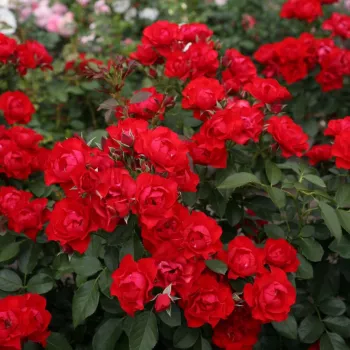
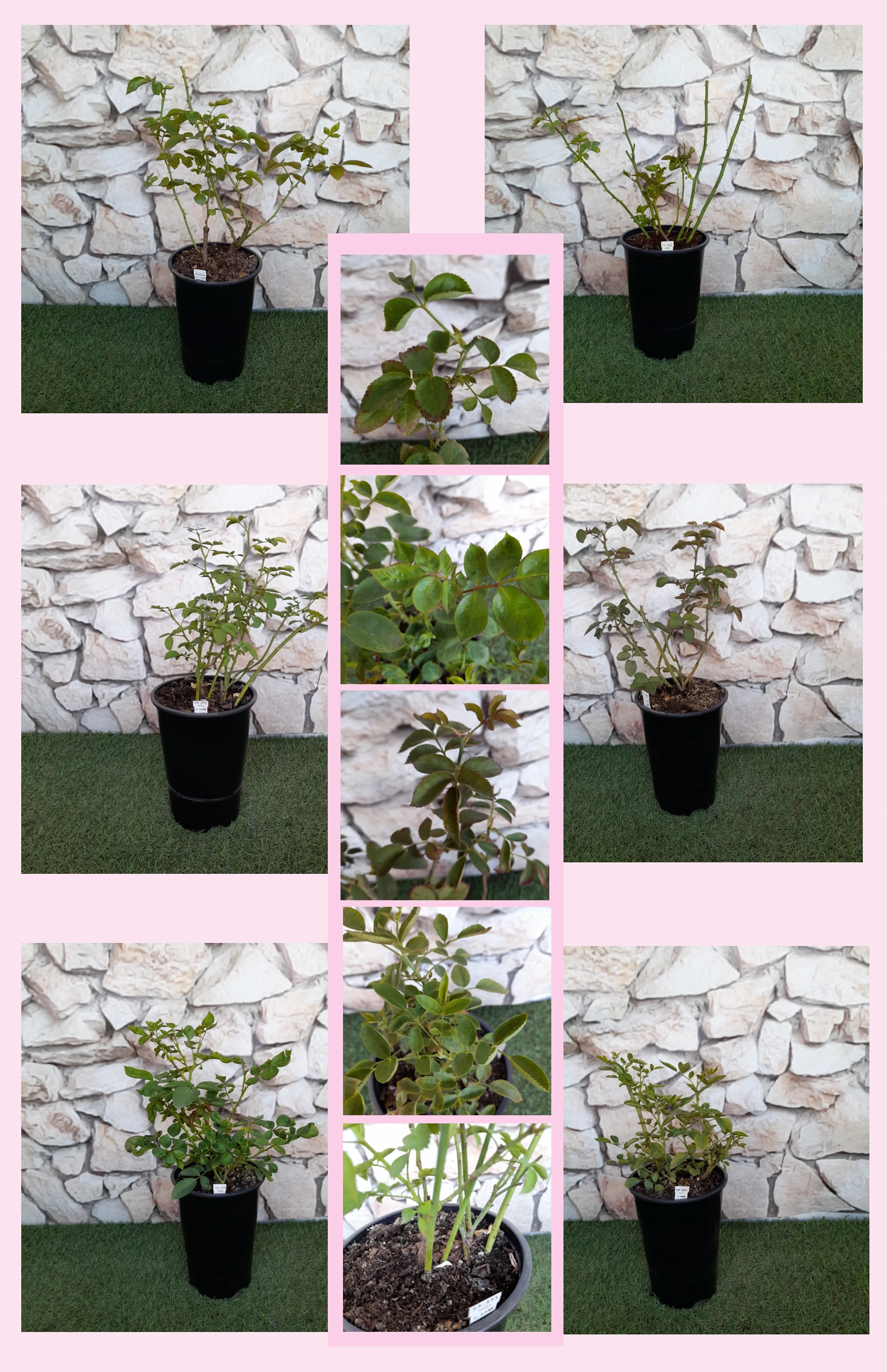
Imagine drawing the curtains on a quiet afternoon and stepping into a cottage-style garden where clusters of vivid red blooms glow above dark green leaves – a bushy, upright floribunda that feels instantly at home in the average British family garden. BLACK FOREST ROSE® is bred for generous, season-long flower clusters rather than fuss, its semi-double blooms dropping cleanly so you spend more time enjoying and less time deadheading. As an own-root plant it develops steadily into a long-lived feature that can regenerate from the base, holding its shape and colour year after year, while coping reliably with exposed, breezy sites and frequent showers near the coast. In a mixed border, low hedge or raised bed, it knits together beautifully over the first seasons – colour that remains strong and unfaded, clusters of flowers that repeat, foliage that stays dense and glossy, and groundcover potential when planted more closely. You can grow it informally with herbs and asters, or clip it lightly for structure; this flexible habit, dependable hardiness to colder winters, medium maintenance needs and responsive pruning make it particularly reassuring for beginners finding their way in a romantic, storybook-style garden.
Usage options
| Target area |
Reasoning |
| Front-of-border flowerbed in a family garden |
The compact bushy habit and medium height make it easy to place at the front or middle of a mixed border without obscuring other plants, while its rounded form naturally fills gaps with repeat colour during the season, reassuring less experienced homeowners. |
| Low, traditional rose hedge along a path |
Planted at the recommended spacing for hedging, the upright growth and branching create a continuous line of foliage and blooms that frames paths or driveways with classic structure, yet stays low enough for easy access, appealing to time-poor gardeners. |
| Season-long bedding and mass planting |
Designed as a floribunda bed rose, it flowers in clusters with a reliable second flush, so wide drifts or formal beds keep their red impact over months, ideal for those who want a strong visual statement without complex succession planning, suiting busy families. |
| Ground-cover style planting on banks or raised beds |
With dense branching and glossy foliage, plants set more closely weave into a low, living carpet that suppresses many weeds and reduces visible bare soil, which helps simplify maintenance for cottage-style spaces cared for by casual gardeners. |
| Mixed cottage border with herbs and perennials |
The bright red, non-fading blooms stand out among softer companions like creeping thyme and dwarf asters, and its reliable repeat flowering means gaps between perennial flushes are bridged, supporting those who prefer an old-fashioned look without complex planning. |
| Family garden with limited time for deadheading |
Good self-cleaning means most spent blooms fall away naturally, keeping the plant neat and encouraging new clusters with only occasional trimming, a practical advantage for hobby growers who want roses to “look after themselves” between weekend visits. |
| Exposed or coastal-style suburban plots |
Its sturdy framework and glossy foliage hold up well in sites with regular wind and rain, helping the plant remain attractive where more delicate roses might look battered, an assurance for householders gardening in open, weather-exposed locations. |
| Colder-winter gardens and long-term plantings |
Rated to H7 and USDA 5b, it tolerates substantial winter cold, and as an own-root plant it can regenerate from the base for a longer lifespan, giving confidence to those planning a durable, storybook rose feature rather than short-lived planting. |
Styling ideas
- Cottage-hedge ribbon – Plant a single curving row along a lawn edge, underplant with creeping thyme to soften the base; for homeowners who like a traditional yet low-effort boundary.
- Kitchen-door welcome – Use three plants in a loose triangle near the back door, interplanted with chives and parsley; suited to cooks who want colour and herbs in one practical space.
- Storybook bed – Combine with blue dwarf asters and a small clematis obelisk behind, creating a romantic, layered look; ideal for lovers of classic cottage borders in modest gardens.
- Family play-frame – Line the side of a play lawn with a short run of bushes, keeping height manageable yet colourful; designed for families wanting charm without overshadowing children’s space.
- Raised-bank glow – Plant closely on a sunny slope or raised bed so foliage knits together as groundcover; helpful for busy urban owners wanting strong colour and minimal weeding.
Technical cultivar profile
| Parameter |
Data |
| Name and registration |
BLACK FOREST ROSE® (KORschwill), floribunda bed rose from the RigoRosen® collection; ARS exhibition name Black Forest Rose, registered cultivar name KORschwill. |
| Origin and breeding |
Bred by Tim-Hermann Kordes, W. Kordes’ Söhne, from unnamed seedling parents; introduced and registered in 2010 in Germany, now widely used as a landscape bedding rose. |
| Awards and recognition |
Holds ADR (Germany, 2010); first prize Baden bei Wien (2010); Gold medals Kortrijk/Courtrai 2011 and 2012; RNRS Trial Ground Certificate (UK, 2011); awards confirm garden reliability. |
| Growth and structural characteristics |
Bushy, upright habit reaching about 65–95 cm high and 55–85 cm wide; dense, dark green glossy foliage and moderate prickles; performs well in beds, edging and massed plantings. |
| Flower morphology |
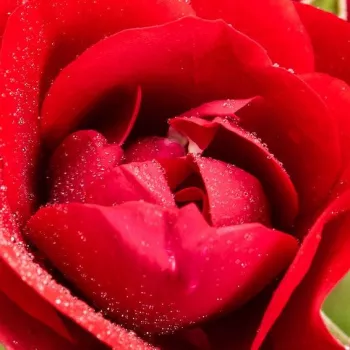
Semi-double, cup-shaped clustered blooms, around 13–25 petals and medium-sized; remontant with plentiful second flush; good self-cleaning so most spent flowers drop cleanly. |
| Colour data and phenology |
Bright, saturated medium red with excellent colour retention; ARS code MR, RHS 46A–46B; colour changes little, deepening slightly to a maroon tone before petals finally fall. |
| Fragrance and aroma |
No noticeable fragrance; semi-double, open flowers provide accessible stamens that can attract some pollinating insects, giving partial pollinator interest alongside strong visual impact. |
| Hip characteristics |
Occasional small spherical hips, about 6–10 mm, orange-red (RHS 40A); numbers typically low due to good self-cleaning, so overall effect remains focused on flowers and foliage. |
| Resistance and winter hardiness |
Hardy to approximately −26 to −23 °C (RHS H7, Swedish zone 4, USDA 5b); good heat tolerance with watering in prolonged drought; moderate mildew, high resistance to black spot and rust. |
| Horticultural recommendations |
Best in sunny positions with well-drained soil; plant about 60 cm apart in beds or 50 cm for hedges; suitable for urban greens, parks and private gardens; occasional pest control may be required. |
BLACK FOREST ROSE® offers vivid, non-fading red clusters, self-cleaning flowers and resilient, bushy growth on a durable own-root plant; an excellent choice if you want a long-lived, easygoing cottage-style rose.