Hybrid tea rose

52-377-1
52-377-2

Baronne E. de Rothschild

Hybrid tea rose

MEIgriso – Marie -Louise Paolino Meilland

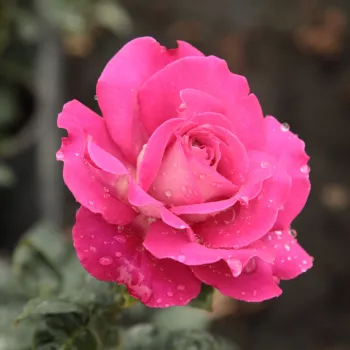
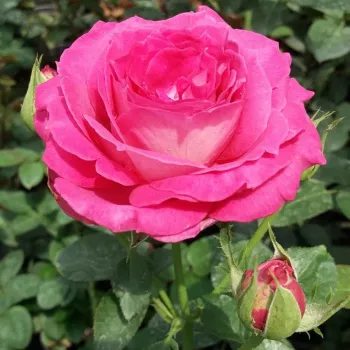
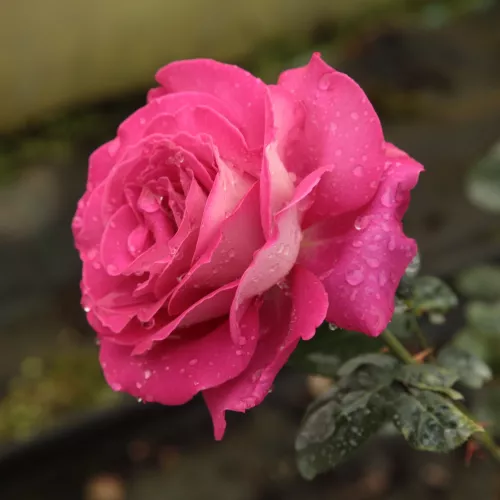
Deep pink inner petals contrast with silvery-white undersides. The two tones are clearly separated and cover a large area. - hybrid tea rose - very strong, garden-filling scented rose - classic damask character

– Striking bicolour blooms with silvery reverse.
Very strong, classic damask fragrance.
– XL high‑centred flowers for cutting.
– Upright, uniform growth with dense foliage.
– Good hardiness and disease resistance.
Special feature: Multi award-winning Meilland classic with Fragrance Cup from Le Roeulx.
Biodiversity – Uniform growth
Baronne E. de Rothschild
darinaROSE® ORIGINAL 2-litre own-root potted rose
23,10 £
Unfortunately, we are currently unable to ship to the United Kingdom; we only deliver to countries within the European Union. For more information, please contact us!
4 (5803)
facebook   twitter

BARONNE E. DE ROTHSCHILD – pink hybrid tea rose – Meilland

Imagine afternoon tea under a leafy arbour as large, perfectly formed blooms of Baronne E. de Rothschild open in rich, two‑tone colour, their fragrance drifting across the garden. This classic hybrid tea combines award‑winning beauty with a practical, upright habit that slips easily into family borders and cottage‑style planting. Its very strong damask scent and repeat flowering make every flush feel like a special occasion, while own‑root vitality means the shrub keeps its character year after year, regenerating reliably from the base. In typical British gardens with clay soils and brisk winds, it rewards simple care and thoughtful watering, settling in as a long‑term feature rather than a short‑lived novelty. Over the first three seasons it develops from establishing roots to building confident shoots and finally delivering its full ornamental display, making the most of both sunny patios and traditional rose borders for relaxed cottage‑garden charm.


Usage options

Target areaReasoning
Main cottage‑style rose border The upright, medium‑tall structure and large, double blooms create a strong vertical accent that slots naturally into mixed cottage borders without overwhelming nearby perennials. Repeat flowering keeps colour moving through summer, while own‑root vigour supports long‑term shape and regrowth after harder pruning if needed, making it a dependable focal plant for those who like traditional structure but want straightforward care for the family gardener.
Feature rose near seating or terrace Its very strong, classic damask scent is most appreciated close to where you sit, so planting one or two near a bench, terrace or arbour lets you enjoy the perfume on warm evenings. The XL blooms and high‑centred form look refined in smaller spaces, with moderate maintenance and own‑root resilience offering years of performance without replanting, which particularly suits smaller, time‑pressed gardens tended by the busy homeowner.
Cutting patch or kitchen‑garden edge Baronne E. de Rothschild was bred as a hybrid tea with exhibition‑grade form, so stems carry large, goblet‑shaped flowers well suited to vases and indoor arrangements. Repeat flushes ensure a steady supply for cutting, while the plant’s capacity to rebuild from its own roots helps it cope with regular stem harvesting, offering reliable, scented stems season after season for the home flower‑arranger.
Specimen rose in lawn or gravel Planted alone with space around it, the uniform, upright habit and glossy dark foliage frame the two‑tone blooms so their magenta and silvery tones read clearly from a distance. Own‑root longevity means the shrub matures into a durable garden ‘character’ rather than a temporary accent, ideal for those who prefer one or two statement roses rather than complex layouts, especially the traditionalist buyer.
Small family front garden Its contained spread and moderate height suit narrow front borders where space is limited but impact matters. The tidy outline and glossy foliage keep the approach smart between flowering flushes, while repeat blooms and good colour retention maintain kerb appeal with little intervention beyond occasional deadheading and seasonal feeding, giving reassuring results for the new gardener.
Roses in heavier or chalky soils Once established, the own‑root system anchors firmly and makes good use of improved planting pockets, helping it cope with typical British clay or chalk where drainage has been enhanced. Regular but not excessive watering supports growth in drier spells, while moderate disease resistance offers steady performance without intensive spraying, fitting well with gardeners seeking resilient planting in challenging ground who still value a refined rose, notably the practical planner.
Coastal or more exposed positions In sites with brisk breezes, its upright but robust framework and dense foliage help the plant hold its shape, while the firm petals and good colour retention reduce weather‑spoiling of the blooms, coping well with blustery, salt‑tinged air and showery days. Own‑root growth allows it to recover if top growth is checked, making it a sound option where you want romance without fuss, especially for the coastal gardener.
Large containers and terrace planters Its neat footprint, glossy leaves and repeated, scented flowering make it well suited to a single‑rose statement in a generous container of at least 40–50 litres. The substantial volume buffers roots from drying out between waterings in dry spells, supporting even growth and steady blooming with simple feeding, while the own‑root constitution provides longer container life and easier rejuvenation pruning, an attractive choice for the patio enthusiast.

Styling ideas

  • Arbour‑side elegance – Train Baronne E. de Rothschild on short supports beside an arbour, underplant with lavender and low nepeta for a scented tea‑time corner – ideal for scent‑loving romantics.
  • Classic cutting row – Line a sunny kitchen‑garden path with evenly spaced plants, backed by espaliered fruit and interplanted with dahlias to create a productive, elegant cutting strip – perfect for home florists.
  • Front‑garden welcome – Pair one or two shrubs with box balls and soft pink geraniums along the front path to give a polished, traditional welcome – suited to neat but time‑poor homeowners.
  • Coastal cottage mix – Combine with hardy grasses, pink gaura and sea‑thrift in improved soil to soften windy plots while keeping a romantic feel – good for gardeners near breezy shores.
  • Patio focal pot – Plant a single rose in a 50‑litre terracotta container with trailing thyme and soft violas at the rim for a compact yet luxurious terrace feature – ideal for balcony and courtyard gardeners.

Technical cultivar profile
ParameterData
Name and registration Hybrid tea rose, registered as MEIgriso, marketed as Baronne E. de Rothschild / Baronne Edmond de Rothschild; ARS exhibition name recognised for show and cut‑flower use.
Origin and breeding Bred by Marie‑Louise Paolino Meilland, Meilland International, France, from (Baccará × Crimson King) × Peace; bred 1968, registered 1968, introduced to commerce from 1969 onwards.
Awards and recognition Highly decorated: multiple 1968 medals including gold at Rome, Le Roeulx and Lyon, fragrance cup at Le Roeulx, silver awards at Geneva, Courtrai and Valbypark for ornamental and scented quality.
Growth and structural characteristics Upright hybrid tea shrub reaching about 95–125 cm high and 70–90 cm wide, with dense, dark bronze‑green, glossy foliage and moderate prickles; self‑cleaning is partial so spent blooms may need removing.
Flower morphology Very large, double, high‑centred blooms with 26–39 petals, typically borne in small clusters; classic cup to goblet hybrid tea form, remontant with abundant second flush under suitable garden conditions.
Colour data and phenology Deep pink to crimson inner petals contrast with silvery‑white reverses; ARS RB, RHS 155D outer and 60A inner; colour holds well, softening to pink in strong sun and deepening in cooler weather.
Fragrance and aroma Very strong, garden‑filling scent with a classic damask character; best appreciated near paths or seating; double blooms limit pollen access so value is primarily ornamental rather than pollinator focused.
Hip characteristics Rose‑hips form only sparsely because double blooms and deadheading remove most spent flowers; any hips are small, spherical, about 8–12 mm across, colouring red for modest late‑season interest.
Resistance and winter hardiness Hardy to around −21 to −18 °C (RHS H7, USDA 6b, Swedish zone 3); resistant to powdery mildew and black spot, moderate against rust; tolerates heat if watered regularly in prolonged dry spells.
Horticultural recommendations Best in full sun with improved, well‑drained soil; spacing 50–90 cm depending on use, 3.2–3.7 plants/m² for massing; medium maintenance, occasional protection helpful; ideal as border, specimen or cut rose.

Baronne E. de Rothschild offers sumptuous, strongly scented blooms, dependable repeat flowering and long‑term own‑root resilience for classic cottage gardens and terraces, making it a thoughtful choice if you favour lasting, romantic structure and perfume.
Detailed product attributes

Product Identification Data

Product Name: BARONNE E. DE ROTHSCHILD – pink hybrid tea rose - Meilland
Product Type: darinaROSE® ORIGINAL - 2-litre own-root potted rose
Cultivar Authenticity: Verified:02.03.2025
Cultivar Quality Rating: premium silver
Item Number: [284] 52-377 (14.02.2026) darinarose.co.uk

Name and Registration

Meaning of Cultivar Name: The name honours Baron Edmond de Rothschild’s wife, Baronne Edmond de Rothschild.
Cultivar Synonym: Baronne Edmond de Rothschild; Baronne de Rothschild
Original Trade Name: Baronne Edmond de Rothschild®
Current Trade Name: Baronne E. de Rothschild Hybrid tea rose MEIgriso
American Rose Society Approved Exhibition Name: Baronne Edmond de Rothschild
Rose Group: Hybrid Tea
Commercial Type: hybrid tea rose
Commercial Group: Hybrid tea rose
Exhibition Category: cut flower; exhibition tea hybrid
Collection: Hybrid tea rose

Origin and Breeding

Initial Distributor: Meilland International (France)
Breeder: Marie -Louise Paolino Meilland
Breeding Company / Institution: Meilland International (France)
Breeding Year: France, 1968
Parentage: (Baccará × Crimson King) × Peace

Awards and Honours

Competition and Show Awards: Rome (Italy) – Gold Medal (1968); Le Roeulx (Belgium) – Gold Medal (1968); Le Roeulx (Belgium) – Fragrance Cup (1968); Lyon (France) – Gold Medal (1968); Geneva (Switzerland) – Silver Medal (1968); Courtrai (Belgium) – Silver Medal (1968); Valbypark (Denm

Growth and Structural Characteristics

Height: 3.1-4.1ft (95-125 cm)
Spread: 2.3-3ft (70-90 cm)
Growth Habit: upright
Foliage: The variety has dense foliage. Its leaves have a glossy surface and a dark bronze-green hue.
Prickliness: moderately thorny
Self-Cleaning Description: Spent flowers often remain on the plant and require subsequent cleaning.
Self-Cleaning Intensity: Self-cleaning moderate

Flower Morphology

Petal Count: 26-39
Flower Fullness: double-flowered
Flower Shape: cup, goblet
Flower Size: XL (3,5 in -)
Inflorescence Type: clustered
Colour Code: ARS code: RB RHS code: 155D (outer), 60A (inner)
Repeat Flowering: Remontant, with an abundant second flowering.

Colour Data and Phenology

Colour: pink
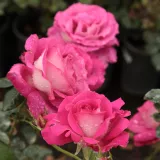
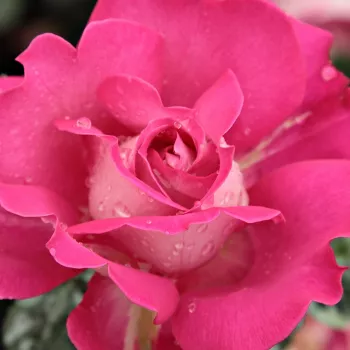
Flower Colour Description: Deep pink inner petals contrast with silvery-white undersides. The two tones are clearly separated and cover a large area.
Closed Bud: Dark crimson bud with a delicate silvery sheen at the tip.
Newly Opened Flower: Deep crimson-red inner surface, the outer side with a silky, silvery sheen.
Full Bloom: The petals of the high‑centred cupped bloom are brilliant magenta‑red inside and remain silvery white on their undersides.
Before Fading: The crimson hue fades to pink while the outer petals' silvery tone intensifies.
Colour Fading Description: In strong sunlight it becomes slightly paler, while in cooler weather it develops a deeper hue.

Fragrance and Aroma

Fragrance Strength: very strong, garden-filling scented rose
Fragrance Character: classic damask character
Pollinator Attraction: Its strongly double, high-centred blooms offer limited stamen accessibility, which reduces their attractiveness to pollinators.
Pollinator-Friendly Rating: Its double, high-centred blooms are poorly accessible to pollinators, so its pollinator-friendliness is limited and it is mainly ornamental.

Hip Characteristics

Hip Shape: spherical
Hip Colour: red
Hip Comment: Rose-hip formation is expected to be minimal due to the removal of double flowers and spent blooms; if formed, the hips are spherical, 8–12 mm in diameter and red.

Resistance and Hardiness

Hardiness (°C): -21–-18 °C
Heat and Drought Tolerance Description: Performs well in hot conditions, but in prolonged dry periods requires regular watering.
Disease Resistance: moderate
  • powdery mildew – resistant
  • black spot – resistant
  • rust – moderate

Horticultural Recommendations

Recommended Planting Distance: for mass planting 55 cm, for hedging 50 cm, as a specimen plant 90 cm
Planting Density: in square planting 3,2 plants/m², in hexagonal arrangement 3,7 plants/m²
Partial Shade Tolerance: Best in full sun
Maintenance Requirement: Maintenance requirement medium; occasionally requires plant protection.
Primary Uses: border, cut flower, specimen

Comments

Strengths: Biodiversity – Uniform growth
Companion Plants: Physostegia virginiana 'Rosea' - Virginia obedient plant Physostegia virginiana 'Crystal Peak White' - Obedient plant Prunus laurocerasus 'Miki' - Cherry laurel
Comment: -
BARONNE E. DE ROTHSCHILD – pink hybrid tea rose - Meilland
Deep pink inner petals contrast with silvery-white undersides. The two tones are clearly separated and cover a large area. - hybrid tea rose - very strong, garden-filling scented rose - classic damask character
Rose Shopping Online - hybrid tea rose - Baronne E. de Rothschild - pink - (3.1-4.1ft (95-125 cm))
Inflorescence: clustered Height: 3.1-4.1ft (95-125 cm) Flower shape: cup, goblet Winter hardiness: - pink - Meilland International (France) hybrid tea rose - Flower size: XL (3,5 in -) Flower size: XL (3,5 in -) - Height: 3.1-4.1ft (95-125 cm) Height: 3.1-4.1ft (95-125 cm) - Flower fullness: double-flowered Baronne E. de Rothschild - Roses in the garden | darinaROSE® Original - premium silver Marie -Louise Paolino Meilland

We showcase the external appearance of the roses available for online purchase from our webshop.


Which product type is right for you?


Information

In what condition do we send the rose from our online webshop?

Let us ask ourselves the question: What do I want to use the rose for?
Flower? - Location? - Cover? - Fragrance? - Height? - Breeder? - Rose hips?

Rose purchase information
Methods of payment - Delivery charges - Delivery - Complaints handling

Care guide

Our product is a rose grown with pharmaROSA®’s unique cultivation technology!

2-litre, own-root, potted rose.
With a shoot system appropriate to the season.
With a root system that thoroughly permeates the growing medium.
Quality compliant with the requirements of the E.N.A. (European Nurserystock Association).
Supplied in unique packaging that prevents damage.
Can be planted during frost-free periods.
True-to-variety rose bush with a unique identifier.

The pharmaROSA® own-root potted rose is a well-rooted plant that supports reliable establishment when planted and cared for properly, so it can be planted whenever the soil is not frozen.


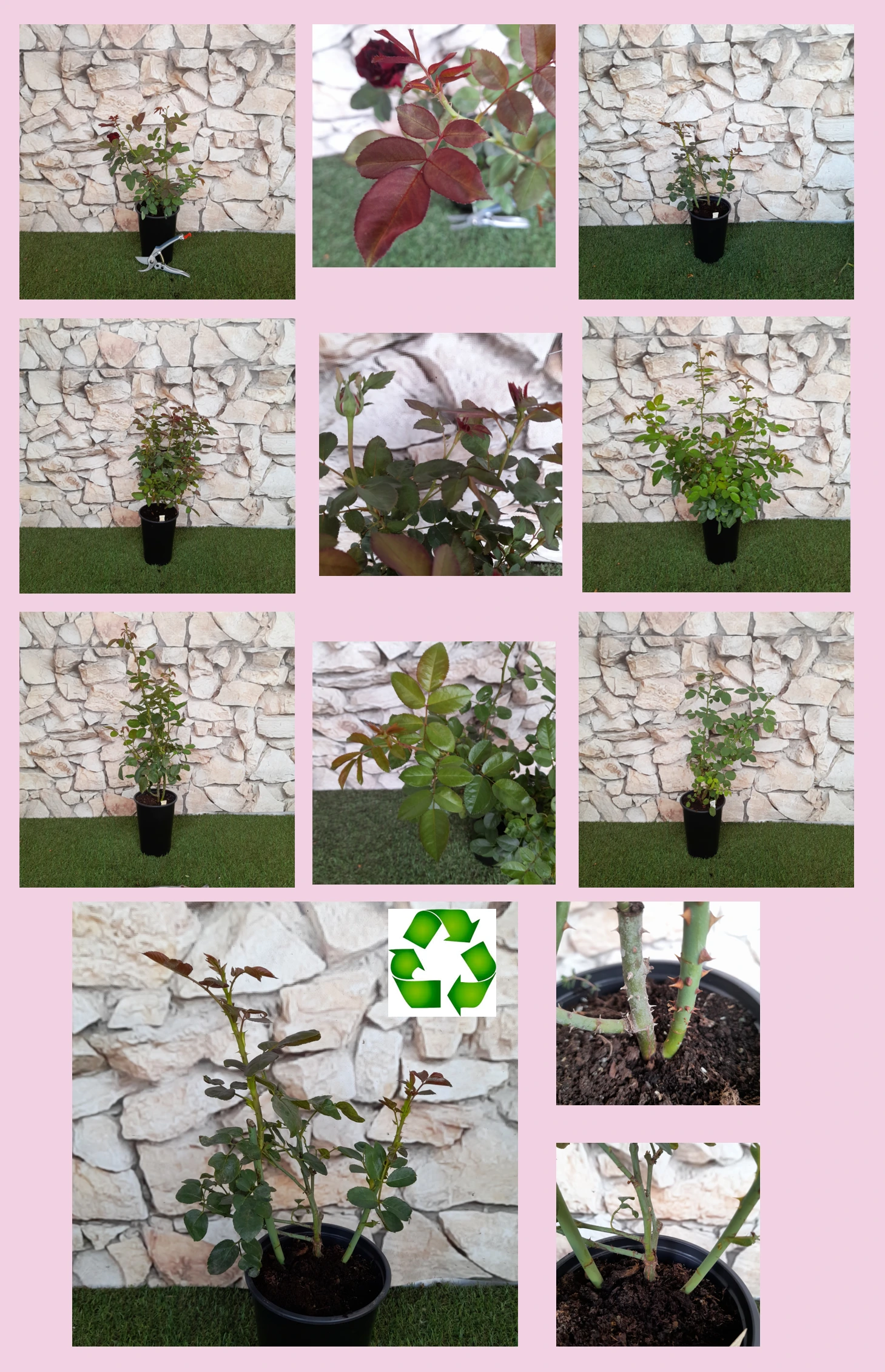
Crop overview: several varieties and growth stages in a short crop section.
Shoot system: intensive growth of fresh basal shoots on a young plant.
Root system: demonstration of a vigorous root system permeating the growing medium, by removing the pot.
Balance: mature plant with root system and shoots in harmony with each other.

Information about the videos
The video series is not a “seasonal showcase”; it illustrates the essence of pharmaROSA® own-root cultivation in a tangible way: how the plant is built up, what the root system is like and how the shoot system regenerates. The recordings were therefore made at different times and with plants at various stages of development, so mixed foliage levels and differing stages of growth may appear in the videos. They are not a ‘sample’ of the batch dispatched, but a visual explanation of how the technology works. The current condition of the rose available to order — typical for the given period and similar to what you can expect to receive in the parcel — is shown in the upper part of the product page.

pharmarosa.compharmarosa.skpharmarosa.ropharmarosa.depharmarosa.co.ukpharmarosa.sipharmarosa.czpharmarosa.atpharmarosa.itpharmarosa.hrpharmarosa.frpharmarosa.plpharmarosa.espharmarosa.bepharmarosa.nlpharmarosa.lupharmarosa.iepharmarosa.grpharmarosa.bgpharmarosa.sepharmarosa.fipharmarosa.lvpharmarosa.ltpharmarosa.eepharmarosa.ptpharmarosa.rupharmarosa.dk

Product types

Pages for private customers
Garden roses for the family garden, with minimal care  → ORIGINAL®
Premium garden roses – instant impact, a truly showpiece garden  → EXTRA®
Pages for professionals and private customers
Roses for public spaces – large areas, sustainable maintenance  → NATURAL®
Roses for projects – hedge and row planting, fast implementation  → RAPID®
For professional partners only
Production – propagation material for garden roses, wholesale  → NEONATAL®

Company details

PharmaRosa Ltd.
Company registration number: 01-09-717479
VAT number: 13075314-2-43
Plant health registration no.: HU130721
Bank account (IBAN):
HU85117631891388688400000000
BIC (SWIFT): OTPVHUHB
Bank name: OTP Bank Nyrt.