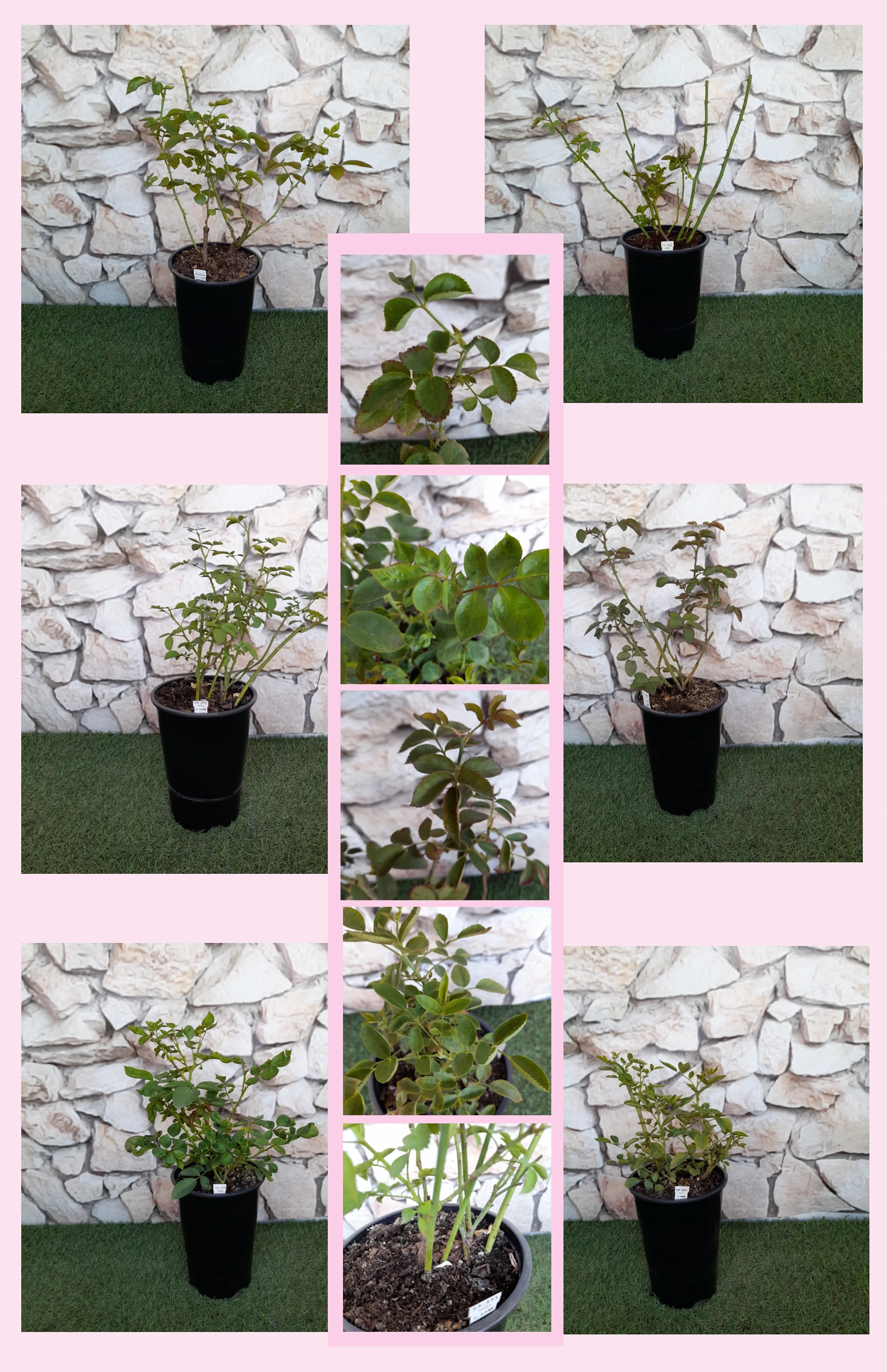
Barkarole® hybrid tea rose TANelorak
In a classic cottage garden where afternoon tea feels at home, Barkarole® brings a richly romantic atmosphere with its deep, velvety dark red blooms and reliable, remontant flowering that keeps the arbour colourful from summer into autumn while standing up well to brisk, coastal breezes and rain. This upright hybrid tea is naturally suited to simple, tidy layouts: linear paths, kitchen-garden beds, or a small, formal rose corner become quietly luxurious with just a few well-placed plants. As an own-root rose, it offers reassuring longevity, steady regrowth after pruning, and a dependable shape without the worry of graft failures, giving your planting plan a stable, long-term anchor. Over the seasons you will notice the calm regularity of its remontant display, the glossy, dark foliage setting off each bud like cut glass around a jewel, and the way a handful of carefully cut stems can transform an indoor table into a storybook scene.
Usage options
| Target area | Reasoning |
|---|
| Feature rose near a seating area or arbour |
The large, velvety dark red blooms and mild, classic scent create an intimate, romantic focal point beside a bench or pergola, ideal for framing afternoon tea moments without dominating a small garden space – perfect for the romantic homeowner |
| Cutting patch for home arrangements |
Long, upright stems with solitary, exhibition-style flowers make Barkarole® excellent for cutting, providing elegant, dark red roses for vases and special occasions from summer through its generous second flush – ideal for the home flower arranger |
| Small mixed cottage border |
Its medium height and dense, glossy foliage integrate well with foxgloves, poppies, and yarrow, adding depth of colour without overwhelming neighbouring perennials, perfect for a relaxed, “girly” English countryside border – suited to the cottage-garden enthusiast |
| Compact rose hedge or line along a path |
Planted at closer spacing, the upright, bushy habit forms a structured, dark green and red ribbon that reads as both decorative and orderly, giving family gardens a clear framework without complex design work – attractive for the practical planner |
| Own-root long-term structural planting |
As an own-root shrub, Barkarole® can mature steadily without suckering or graft worries, maintaining its identity and ornamental value for many years, and recovering reliably after harder pruning if shaping is needed – reassuring for the long-term gardener |
| Roses in heavy or challenging garden soils |
Works well in typical UK conditions when given reasonable drainage, and its moderate disease resistance, especially to black spot, supports healthy foliage even in humid summers with persistent wind and rain in exposed gardens – beneficial to the coastal resident |
| Low-effort seasonal display |
Once established, regular deadheading and occasional cleaning of spent blooms are usually sufficient to secure season-spanning colour, with medium maintenance needs that slot easily into a busy household schedule – convenient for the time-pressed owner |
| Deep container or large planter near the house |
In a 40–50 litre or larger container with good drainage, its upright habit and repeat flowering provide vertical accent and colour close to doors or terraces, keeping the drama of dark red roses within arm’s reach – ideal for the urban balcony-gardener |
Styling ideas
- Evening-bower – Train Barkarole® as a loose vertical accent by an arbour post, underplanted with foxgloves and soft grasses for a dusky, romantic nook – for those creating a storybook seating corner.
- Kitchen-border – Line a kitchen path with alternating Barkarole® and culinary herbs, using the rose for cutting and the herbs for daily use – for home cooks who love garden-to-table rituals.
- Velvet-panel – Plant a short row against a pale fence so the dark blooms read as a living tapestry, softening the boundary and adding depth – for small-garden owners wanting discreet structure.
- Tea-table – Dedicate a tiny cutting bed of Barkarole® near the back door for easy, frequent picking of classic buds to dress indoor tea trays – for hosts who enjoy simple, graceful entertaining.
- Cottage-mosaic – Mix clumps of Barkarole® among yarrow and oriental poppies so bold dark flowers punctuate lighter textures and colours – for cottage-garden lovers seeking a balanced, painterly border.
Technical cultivar profile
| Parameter | Data |
|---|
| Name and registration |
Hybrid tea rose; registered as TANelorak, marketed as Barkarole® Hybrid tea rose TANelorak, with Taboo™ as the approved American Rose Society exhibition name. |
| Origin and breeding |
Bred by Hans Jürgen Evers for Rosen Tantau, Germany, from unnamed seedlings; bred 1987, introduced and registered in 1988, initially distributed by Rosen Tantau in Germany. |
| Awards and recognition |
Holds an ADR recommendation as a hybrid tea rose and has been shown in trials, including entry in the 1988 Monza rose competition, indicating recognised garden and exhibition merit. |
| Growth and structural characteristics |
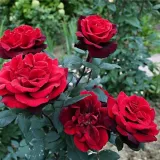
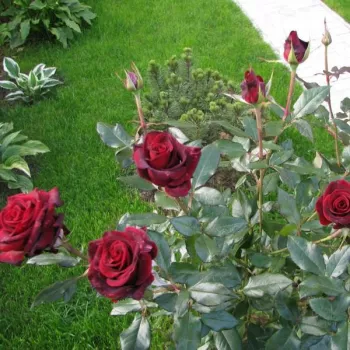
Upright, bushy plant, around 100–140 cm high and 50–70 cm wide, with dense, glossy dark green foliage and moderate prickliness; spent blooms persist, so some manual deadheading is advisable. |
| Flower morphology |
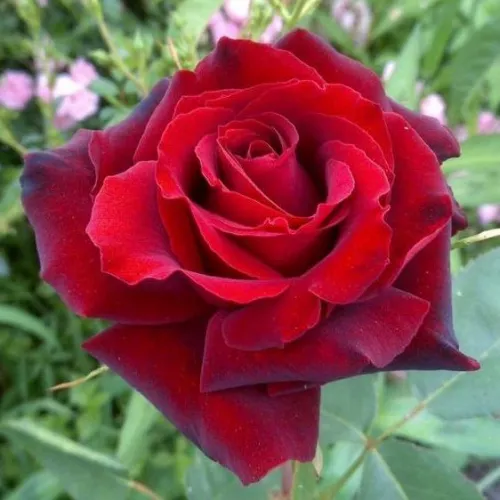
Large, very double, cup to goblet-shaped blooms, typically solitary on strong stems, with more than 40 petals; remontant, offering a generous second flowering phase for extended seasonal display. |
| Colour data and phenology |
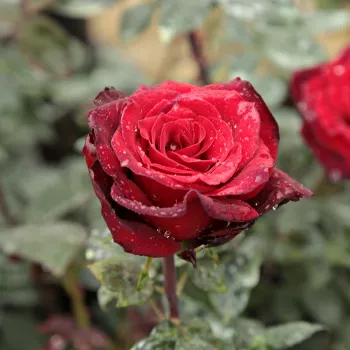
Deep, velvety dark red with a slightly blackish tone; buds almost black-red, colour holding well with only moderate fading, flowers becoming more matte and paler centrally as they age in strong sunlight. |
| Fragrance and aroma |
Gently perfumed with a mild, classic rose fragrance; sufficient for close enjoyment near seating or in cut stems indoors, but not overpowering or dominant in mixed small gardens or near windows. |
| Hip characteristics |
Rose hip production is limited by very double flowers; occasional ovoid orange-red hips, about 10–14 mm in diameter, may appear, but decorative fruiting is not a primary feature of this cultivar. |
| Resistance and winter hardiness |
Rated to around −21 to −18 °C (RHS H7, USDA 6b, Swedish zone 3); moderate disease resistance overall, with good black spot resistance but only moderate tolerance to powdery mildew and rust. |
| Horticultural recommendations |
Best in sunny positions with reasonable drainage; suits beds, specimen use and cutting; medium maintenance with regular watering in dry spells and periodic pest and disease checks in humid seasons. |
Barkarole® Hybrid tea rose TANelorak offers velvety dark red blooms, reliable repeat flowering and enduring own-root performance, making it a thoughtful choice for those planning a long-lived, romantic corner in the garden.