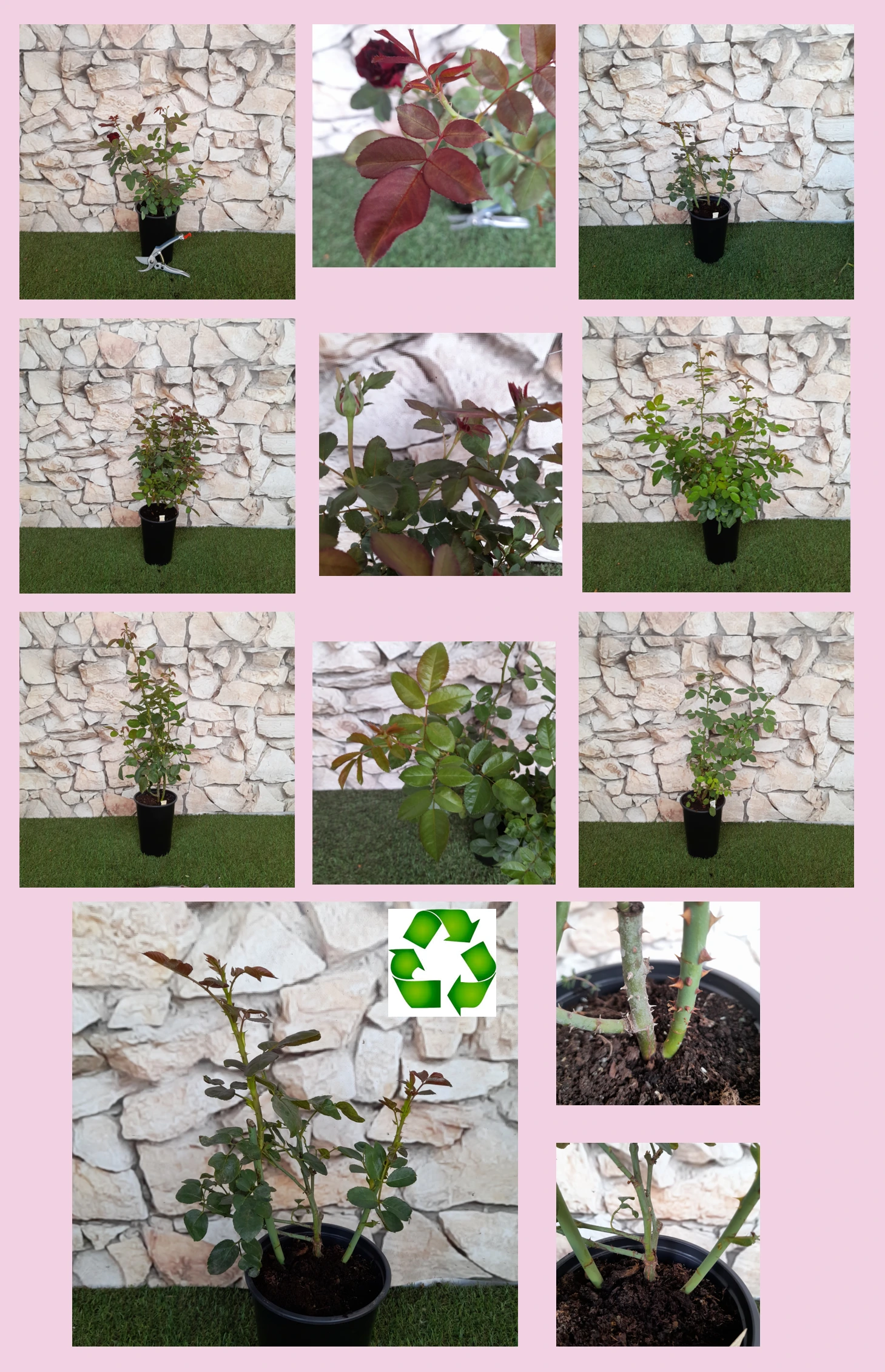
Tess of the d’Urbervilles – crimson English climbing rose (AUSmove)
Imagine settling into your own corner of storybook romance, with rich crimson rosettes trained over an arch and their strong, classic perfume drifting across the lawn. This English climbing rose was bred for atmospheric, cottage-style gardens, bringing upright, easily guided growth that suits arbours, pergolas and house walls alike. Its very double, velvety blooms flower in generous flushes, setting the scene for afternoon tea and family gatherings in a cosy, countryside atmosphere. Planted as a young, own-root shrub in the pharmaROSA® ORIGINAL 2-litre pot, it establishes steadily and securely, especially where good drainage helps it cope with heavier soils and wet, windy coastal conditions. Over time, this own-root habit supports reliable regrowth from the base, dependable flowering and an impressively long-lived structure. With suitable planting distances and simple seasonal care, it develops from a well-rooted youngster into a characterful climber, giving you a long-lasting crimson backdrop to cottage borders, kitchen plots and seating nooks.
Usage options
| Target area | Reasoning |
|---|
| Arbour or arch over a garden path |
The upright, easily trained habit and 150–210 cm height allow this rose to be tied in over a simple arch, creating a romantic tunnel of crimson blooms and strong fragrance in repeat flushes through summer; perfect for those dreaming of a cottage-style entrance homeowners |
| Climbing feature on fences or house walls |
With its medium maintenance needs and moderate disease resistance, this variety will steadily cover fences or walls when tied to supports, giving a dense, leafy screen and long-lasting crimson colour with only occasional deadheading; suited to busy but style-conscious gardeners |
| Pergola by a terrace or seating area |
The strong, classic rose fragrance and very double blooms make it ideal beside seating, where flushes of flowers can be appreciated up close, while the own-root form supports long-term performance and graceful regrowth; a good choice for family-focused outdoor spaces |
| Traditional mixed border in a family garden |
Planted at the recommended spacing, the dense mid-green foliage and upright habit add structure at the back of a border, with clusters of crimson rosettes repeating above perennials and herbs, bringing cottage charm with manageable care for weekend-only gardeners |
| Feature rose in a large container |
In a 40–50 litre or larger pot with a sturdy support, this rose can be grown as a contained climber on patios or balconies, where regular watering and feeding are straightforward and the own-root system offers stable growth in limited space; ideal for small-plot owners |
| Romantic hedge or boundary planting |
Used at about 140 cm apart, it forms a loose, flowering hedge with repeated flushes and moderate height, giving both privacy and colour; own-root planting supports a long-lived boundary that can be renewed from basal shoots, appealing to long-term planning families |
| Cut flowers for indoor arrangements |
The large, very double rosette blooms in rich crimson, combined with their strong, classic fragrance, make this rose suitable for cutting, bringing a traditional English rose atmosphere indoors whenever flushes peak; a delight for lovers of scented bouquets |
| Cottage garden focal point in cooler, exposed plots |
With H7 hardiness and good anchoring once established, it copes well in typical British gardens, even where winds and wet spells are frequent, especially if planted with mindful drainage in heavier soils; over three seasons it moves from root-building to full ornamental presence for time-pressed but quality-focused buyers |
Styling ideas
- Arbour romance – Train it over a simple metal or wooden arch, underplant with lavender and catmint to echo the crimson blooms and fragrance – for homeowners wanting a storybook path into the garden
- Kitchen-border – Let it climb a fence behind herbs, runner beans and cottage perennials, giving a crimson backdrop to productive beds – for families who like a pretty yet practical kitchen garden
- Courtyard-pergola – Grow it up the posts of a small pergola with pots of thyme and salvias beneath, creating a scented outdoor “room” – for urban gardeners creating a cosy entertaining corner
- Crimson-hedge – Plant a loose flowering line, interspersed with ornamental grasses such as Stipa and low honeysuckle, for a soft, romantic boundary – for those seeking privacy with a traditional look
- Container-parlour – In a 50 litre tub with a slim obelisk, combine it with trailing thyme and dwarf grasses for a movable focal point – for balcony and patio owners wanting English-rose charm in limited space
Technical cultivar profile
| Parameter | Data |
|---|
| Name and registration |
English Rose climber from the David Austin collection; registered as AUSmove, marketed as Tess of the d’Urbervilles, also referenced as Ausmove English Rose AUSmove in trade lists. |
| Origin and breeding |
Bred by David C. H. Austin, United Kingdom, from ‘The Squire’ × unknown seedling; raised in Albrighton, registered 1999 and introduced after 1999 by David Austin Roses Ltd. |
| Growth and structural characteristics |
Medium-tall, upright climber reaching about 150–210 cm high and 120–180 cm wide, with dense, slightly glossy mid-green foliage and moderate thorns; weak self-cleaning, so spent blooms benefit from removal. |
| Flower morphology |
Large, very double rosette blooms with over 40 petals, borne in clusters; remontant with a generous second flush, providing extended flowering periods through the season on well-established plants. |
| Colour data and phenology |
Deep, velvety crimson-red flowers (RHS 53A–53B); buds dark and glossy, then rich crimson, later lightening slightly and finally ageing towards a muted brownish-purple; colour generally holds well in typical garden light. |
| Fragrance and aroma |
Strong, classic old-rose fragrance with long-lasting scent value, especially in still, warm conditions; very double form means it is appreciated primarily for decorative and sensory impact rather than pollinator support. |
| Hip characteristics |
Produces moderate numbers of spherical hips, about 11–19 mm in diameter, in orange-red shades; ornamental interest may appear in late season if some spent blooms are left uncut. |
| Resistance and winter hardiness |
Rated H7, hardy to roughly −26 to −23 °C (USDA 5b, Swedish Zone 4); moderate resistance to black spot, powdery mildew and rust, best performance with good air movement, watering and basic hygiene. |
| Horticultural recommendations |
Suited to borders, arches, pergolas, fences, walls and cutting; prefers well-drained soil, regular watering in drought and partial shade tolerance; allow space per planting distances for long-term, own-root garden performance. |
Tess of the d’Urbervilles (AUSmove) offers richly scented crimson blooms, versatile climbing use and long-term own-root reliability; consider it if you wish to create a romantic, enduring focal point in your garden.