Rich, warm golden-yellow-toned petals. - english rose - strong, long-lasting scented rose - rich, reminiscent of old roses, damask character
– Strong, long-lasting old rose fragrance
– Warm golden-yellow blooms in rich clusters
– Reliable repeat-flowering from summer to autumn
– Vigorous, upright shrub for hedges or arches
– Proven garden value, multiple international awards
– Special feature: Chosen as a WFRS Hall of Fame “World’s Favourite Rose”.
Sustainable garden design – Long-lasting plant
darinaROSE® ORIGINAL 2-litre own-root potted rose
21,00 £
Unfortunately, we are currently unable to ship to the United Kingdom; we only deliver to countries within the European Union. For more information, please contact us!
5(8562)
AUSMAS – yellow English rose - Austin
Set the scene for romantic afternoon tea with this classic English shrub rose, whose warm golden blooms bring a feeling of cosiness to even the smallest family garden. Bred by David Austin and supplied as a robust own‑root plant, it establishes steadily for a long, reliable life with minimal fuss. Its upright, medium‑tall habit suits fences, arches and mixed borders, while very double, cupped flowers repeat generously through summer and early autumn, keeping cottage‑style plantings looking storybook. Strong old‑rose fragrance drifts across lawns and patios, especially in still evening air, enhancing informal seating areas and paths. Well‑branched growth helps it anchor itself so it copes reassuringly with typical British breezes and wet weather in exposed gardens near open countryside. In containers of at least 40–50 litres it forms a substantial, repeat‑flowering feature by the front door or on a sunny terrace without demanding constant attention. Own‑root growth means it regenerates well after harder pruning or weather damage and holds its ornamental value year after year. Within a few seasons it matures from quiet starter plant into a full, glowing presence in your cottage‑style border.
Graham Thomas in full bloom, showing rich golden-yellow rosette flowers.
Usage options
Target area
Reasoning
Family cottage border in a small to medium garden
The upright shrub habit and 130–180 cm height give good presence without overwhelming an average border, while repeat flowering ensures warm golden colour across summer with only seasonal pruning and feeding – ideal for a low‑effort focal rose for busy homeowners
Feature by an arch, arbour or light support
Long, flexible stems can be fanned along a fence, arch or arbour, giving cascades of rosette blooms and fragrance over seating or paths, yet remain manageable without specialist training – a romantic archway solution for cottage‑garden lovers
Mixed planting with kitchen‑garden herbs and perennials
The rich yellow flowers partner beautifully with soft purples and greens, while moderate disease resistance and own‑root vigour allow it to sit among herbs and perennials without high spray regimes, suiting informal mixed plots for rural kitchen‑garden keepers
Large container on terrace, balcony or front doorstep
In a 40–50 litre or larger container it develops a well‑anchored root system and upright, compact canopy, offering repeat blooms and fragrance near the house with straightforward watering and feeding – a contained yet generous rose for urban patio gardeners
Low‑maintenance fragrant seating corner
Strong, old‑rose fragrance and generous clusters of full blooms create an intimate, enclosed feel around benches or small terraces, with only moderate maintenance needed once established – perfect for relaxed evening use by scent‑seeking families
Informal hedge or boundary marker
Planting at 110–120 cm intervals forms an airy, flower‑lined boundary that softens fences and divides garden spaces, while its medium density foliage and moderate thorniness balance security with access – a practical yet pretty line for traditional‑style owners
Exposed or breezy garden site
Upright canes and medium‑dense foliage give a stable, wind‑resistant shrub that copes far better than very tall, lax climbers, helping it look composed even where gardens regularly endure blustery showers and unsettled weather for coastal‑edge residents
Long‑term planting in a family garden plan
The own‑root form supports regeneration and long life, building a strong framework and steady flowering that can accompany a maturing garden over many years, with simple pruning options as needs change – a future‑proof choice for long‑view planners
Styling ideas
Tea‑time Arbor – Train Ausmas up a light metal arch above a bistro set, underplant with chives and low catmint for a soft, scented tea nook – ideal for relaxed afternoon gardeners
Kitchen‑Garden Edge – Place as a repeating accent along a vegetable plot, underplanted with Echinacea ‘Delicious Nougat’ and herbs to blur the line between productive and ornamental – suited to home‑growers
Storybook Front Path – Plant a pair near the gate and mix with low Lonicera nitida ‘Maigrün’ and lavender for a welcoming yellow‑and‑green entrance – perfect for cottage‑style homeowners
Patio Feature Pot – Grow one plant in a 50‑litre terracotta container, with trailing thyme at the rim, to bring fragrance and colour right to the seating area – for balcony and courtyard users
Soft Boundary Sweep – Create an informal hedge with staggered spacing, interspersed with tall ornamental alliums for vertical accents and light movement – fitting for families wanting gentle screening
Technical cultivar profile
Parameter
Data
Name and registration
AUSmas, marketed as Ausmas English Rose AUSmas, exhibition name ‘Graham Thomas’; shrub‑type English Rose in the Romantic rose commercial group, for ornamental garden use.
Origin and breeding
Bred by David C. H. Austin, United Kingdom, from ‘Charles Austin’ × (‘Iceberg’ × unnamed seedling); introduced and registered in 1983 by David Austin Roses Ltd.
Awards and recognition
RHS Award of Garden Merit (1993); World Federation of Rose Societies Hall of Fame, World’s Favourite Rose (2009); Henry Edland Medal for fragrance (2000), confirming broad garden value.
Growth and structural characteristics
Upright shrub, typically 130–180 cm tall and 100–150 cm wide, with medium‑density, medium green foliage and moderate prickliness; suited to beds, hedges, arches and specimen planting schemes.
Flower morphology
Very double, rosette‑shaped blooms with 40+ petals, usually in clusters; large flower size around 7–10 cm, with good remontant character and abundant second flush after the main summer flowering.
Colour data and phenology
Rich golden yellow buds (RHS 65C–65D) opening to deep golden centres and buttery outer petals, fading gently to softer yellow; colour lightens in strong sun yet remains warm‑toned through repeated flushes.
Fragrance and aroma
Strong, long‑lasting fragrance with classic old‑rose, damask character, carried well in still air; decorative, fully double form reduces pollen access, so primarily valued for scent and visual effect rather than pollinators.
Hip characteristics
Sparse production of small, spherical golden‑yellow hips, typically 12–18 mm in diameter; hips are a modest, secondary feature rather than a major ornamental or wildlife attribute in most plantings.
Resistance and winter hardiness
Hardy to approximately −26 to −23 °C (RHS H7; USDA 5b, Swedish zone 4); moderate resistance to powdery mildew, black spot and rust; tolerates heat but not extended drought, needing regular watering in dry spells.
Horticultural recommendations
Best at 110–120 cm spacing in hedges or 180 cm as a specimen; partial shade tolerant; medium maintenance with occasional plant protection; suitable for beds, parks, fences, arches and fragrant cutting.
AUSmas – yellow English rose - Austin offers rich fragrance, repeat golden blooms and long‑term own‑root resilience; a cultivated, time‑tested choice if you favour romantic structure with straightforward care.
Detailed product attributes
Product Identification Data
Product Name:
AUSMAS – yellow English rose - Austin
Product Type:
darinaROSE® ORIGINAL - 2-litre own-root potted rose
Competition and Show Awards:
Henry Edland Medal – Fragrance Award (2000); Royal Horticultural Society Award of Garden Merit (1993); World Federation of Rose Societies Hall of Fame – 'World’s Favourite Rose' (2009)
Foliage:
The variety has foliage of medium density. The leaf surface characteristics are not clearly classifiable and the leaves are a medium green colour.
Closed Bud:
Deep, warm golden yellow with amber-tinged tips.
Newly Opened Flower:
The inner petals are an intense golden yellow; the outer whorl of petals lightens to a buttery yellow.
Full Bloom:
High-contrast bloom: deep golden at the centre, blending outward into sunny yellow and then buttery yellow.
Before Fading:
The yellow tone fades, mellowing from deep gold to a softer shade.
Colour Fading Description:
As the flower opens, the deep golden yellow gradually fades to sunny yellow and then to buttery yellow; in strong sunlight it lightens further.
Pollinator Attraction:
The cultivar's heavily double flower form (double rather than single or semi‑double) and reduced stamen accessibility make it poorly attractive to pollinators.
Our product is a rose grown with pharmaROSA®’s unique cultivation technology!
2-litre, own-root, potted rose.
With a shoot system appropriate to the season.
With a root system that thoroughly permeates the growing medium.
Quality compliant with the requirements of the E.N.A. (European Nurserystock Association).
Supplied in unique packaging that prevents damage.
Can be planted during frost-free periods.
True-to-variety rose bush with a unique identifier.
The pharmaROSA® own-root potted rose is a well-rooted plant that supports reliable establishment when planted and cared for properly, so it can be planted whenever the soil is not frozen.
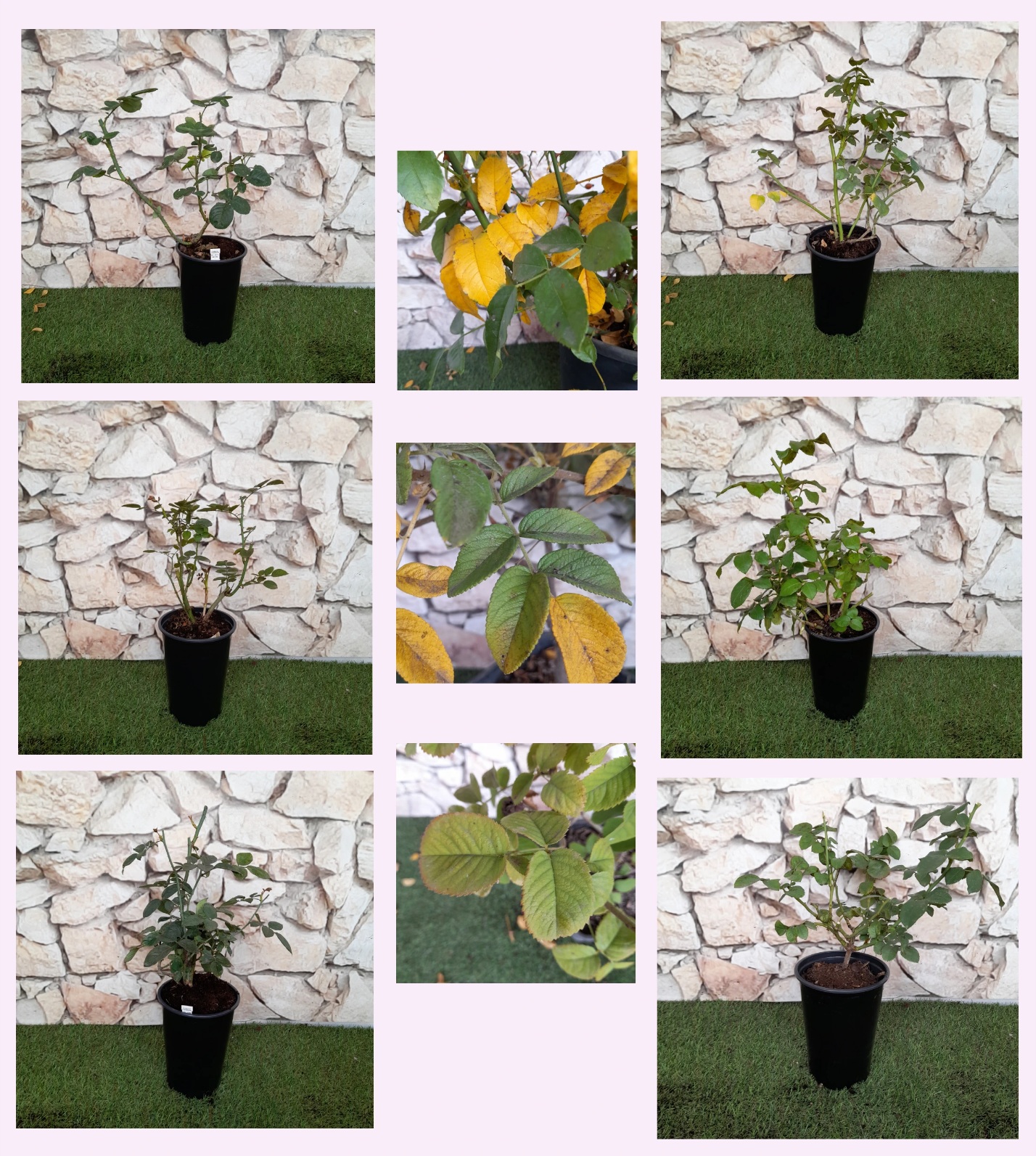
Crop overview: several varieties and growth stages in a short crop section.Shoot system: intensive growth of fresh basal shoots on a young plant.Root system: demonstration of a vigorous root system permeating the growing medium, by removing the pot.Balance: mature plant with root system and shoots in harmony with each other.
Information about the videos
The video series is not a “seasonal showcase”; it illustrates the essence of pharmaROSA® own-root cultivation in a tangible way: how the plant is built up, what the root system is like and how the shoot system regenerates. The recordings were therefore made at different times and with plants at various stages of development, so mixed foliage levels and differing stages of growth may appear in the videos. They are not a ‘sample’ of the batch dispatched, but a visual explanation of how the technology works. The current condition of the rose available to order — typical for the given period and similar to what you can expect to receive in the parcel — is shown in the upper part of the product page.
Pages for private customers Garden roses for the family garden, with minimal care → ORIGINAL® Premium garden roses – instant impact, a truly showpiece garden → EXTRA® Pages for professionals and private customers Roses for public spaces – large areas, sustainable maintenance → NATURAL® Roses for projects – hedge and row planting, fast implementation → RAPID® For professional partners only Production – propagation material for garden roses, wholesale → NEONATAL®
Company details
PharmaRosa Ltd. Company registration number: 01-09-717479 VAT number: 13075314-2-43 Plant health registration no.: HU130721 Bank account (IBAN): HU85117631891388688400000000 BIC (SWIFT): OTPVHUHB Bank name: OTP Bank Nyrt.