AUSLEAP – apricot-pink English rose – Austin
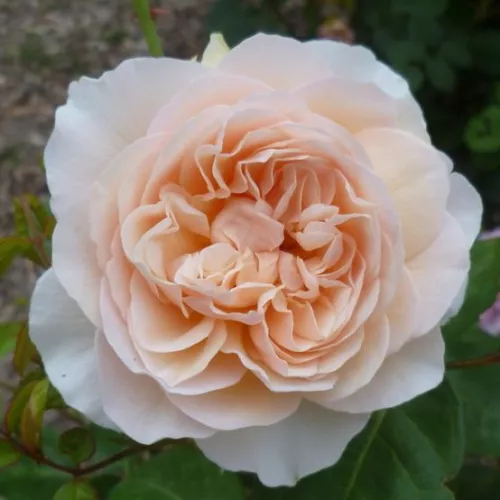
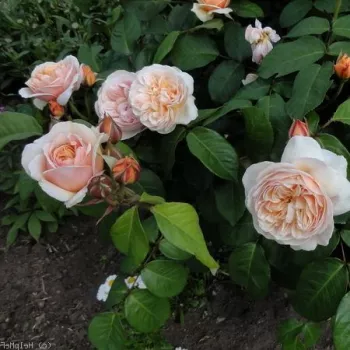
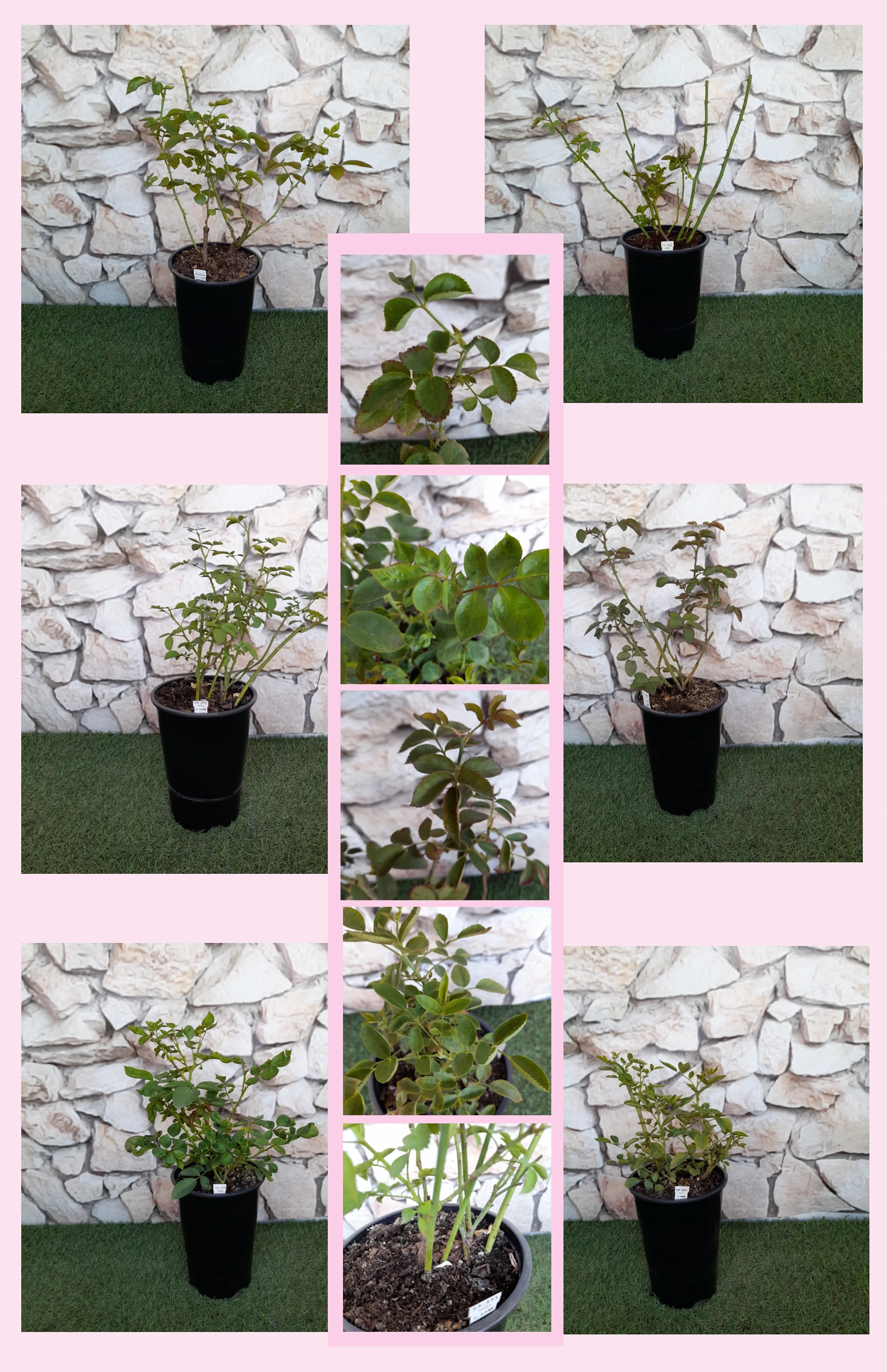
Softly romantic and beautifully structured, this English shrub rose settles confidently into typical British family gardens, even where breezes roll in from the sea and heavy soils benefit from thoughtful drainage. Its warm peach-pink blooms open in neat cups, filled with over forty petals that release a richly sweet, fruity perfume ideal for afternoon tea moments and leisurely garden strolls. As an own-root plant it is bred for stability and quiet endurance, building a long-lived framework that regrows reliably from the base after pruning or weather damage. The elegant, upright habit forms a dense, mid-green backdrop that flatters cottage-style perennials, while its remontant flowering keeps borders and arbours coloured for much of the summer. In its pharmaROSA ORIGINAL 2-litre form you receive an established, easy-to-handle shrub that is straightforward to plant and kind to beginners.
Usage options
| Target area | Reasoning |
|---|
| Main cottage-style flower bed by the terrace |
The strong, fruity fragrance and warm peach-pink colour create a welcoming focus from the house, working well with traditional paving and outdoor seating. Its remontant flowering gives steady colour through the season, with tasks limited mainly to light deadheading and a winter tidy, suiting those who enjoy relaxed, regular pottering in view of the kitchen window, including busy homeowners. |
| Informal flowering hedge along a boundary |
Dense, mid-green foliage and an upright habit make it effective as a soft, flowery screen between neighbouring gardens. Planting at the suggested hedging distance lets each shrub knit into a loose, romantic line rather than a rigid barrier, giving privacy while staying in scale with smaller plots and shared fence lines, especially appreciated by urban families. |
| Solitary specimen in a lawn or front garden |
Used as a single specimen on its recommended spacing, the rounded, upright framework and repeated pastel flushes give a storybook presence without dominating a modest front garden. The own-root form matures steadily into a long-lived feature shrub that can be reshaped if needed, reassuring those planning a garden to grow alongside young children. |
| Large container on patio or roof terrace |
In a generous 40–50 litre container with good drainage, this variety’s upright habit and medium height suit compact patios and roof terraces. Regular watering keeps it comfortable in sunnier, more exposed urban spots, and the scented blooms are raised close to seating areas, bringing cottage-garden character to spaces used by balcony gardeners. |
| Mixed border with herbs and kitchen-garden edges |
The warm apricot-pink tones blend easily with soft blues, purples and edible herbs at the edge of a kitchen garden. Its moderate maintenance needs pair well with the gentle rhythm of tending vegetables and cutting flowers, adding long-season romance without demanding specialist skills from hobby gardeners. |
| Romantic archway or arbour partner planting |
Planted at the base of an arch or beside an arbour, the scented clusters frame seating areas and pathways with layered colour while remaining structurally upright. Over successive seasons the shrubs thicken into a dependable, own-root framework that can be pruned more or less hard according to taste, appealing to cottage-style lovers. |
| Feature group of three in an open lawn |
A loose triangle of three shrubs on the recommended mass-planting spacing produces a coherent, billowing mound of colour that reads as one generous feature from the house. This grouping shows good visual impact within a couple of years while continuing to refine naturally over time, ideal for design-conscious owners. |
| Coastal or wind-exposed family garden corner |
Its sturdy, upright framework and dense foliage give useful anchoring and structure in more exposed gardens where breezes are frequent and soils can be heavy, provided drainage is sensibly improved at planting. With moderate disease resistance and straightforward seasonal care, it suits low-fuss gardeners. |
Styling ideas
- Tea-Table Border – Line a terrace with AUSLEAP underplanted with catmint and low lavender, placing a small bistro set nearby for scented afternoon tea – perfect for relaxed weekend hosts.
- Storybook Hedge – Create an informal boundary by alternating AUSLEAP with white foxgloves and soft grasses, giving a romantic, layered edge – ideal for families wanting privacy with charm.
- Kitchen-Garden Edge – Soften vegetable beds by repeating AUSLEAP between clumps of chives and dwarf sage, letting the pastel blooms bridge utility and beauty – suited to home cooks who love cutting flowers.
- Cottage Trio – Plant three shrubs in a triangle and weave in hardy geraniums and pink Lychnis for a full, tapestry effect – attractive to those seeking instant cottage character in a small lawn.
- Patio Focal Pot – Grow AUSLEAP in a 40–50 litre terracotta container with trailing thyme at the rim, positioning it by a favourite chair – appealing to balcony and courtyard gardeners short on borders.
Technical cultivar profile
| Parameter | Data |
|---|
| Name and registration |
English shrub rose from the English Rose Collection; registered as AUSleap, also traded as Sweet Juliet; Romantic rose type for garden and exhibition shrub use. |
| Origin and breeding |
Bred by David Charles Henshaw Austin in the United Kingdom in 1989 from ‘Graham Thomas’ × ‘Admired Miranda’; introduced after 1993 by David Austin Roses Ltd. |
| Awards and recognition |
Recognised for fragrance with a Belfast Fragrance Award in 1992, highlighting its strong, sweet, fruity scent value for gardeners who prioritise perfumed, traditional-style roses. |
| Growth and structural characteristics |
Upright shrub reaching about 110–170 cm in height and 90–150 cm spread, with dense, mid-green, glossy foliage and moderate prickliness, forming a substantial yet manageable garden framework. |
| Flower morphology |
Medium-sized, very full, cup-shaped flowers with more than forty petals in cluster-flowered heads; remontant habit gives abundant second flush; spent blooms may require manual deadheading. |
| Colour data and phenology |
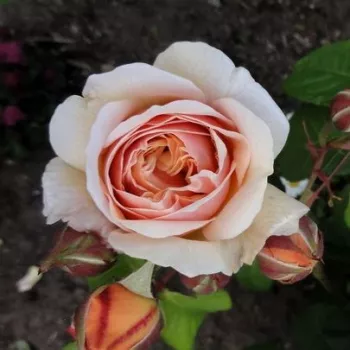
Closed buds deep peach-orange, opening salmon-peach with pink edges, then soft peach-pink with golden tones, eventually lightening to creamier, yellowish shades; medium colour retention in strong sun. |
| Fragrance and aroma |
Strong, rich fragrance with a sweet, fruity character; abundant petals form rosettes that concentrate scent around seating areas, though their double form limits overall pollinator appeal. |
| Hip characteristics |
Rose hips form sparsely due to very double blooms; occasional ellipsoidal, bright red hips of roughly 9–15 mm may appear, adding small seasonal accents rather than heavy autumn display. |
| Resistance and winter hardiness |
Moderate resistance to black spot, powdery mildew and rust; tolerates heat with regular watering, weakening in prolonged drought; reliably hardy to about −21 to −18 °C (RHS H7, USDA 6b). |
| Horticultural recommendations |
Best in sunny positions with well-prepared soil and adequate moisture; space at 120 cm for groups, 110 cm for hedging, or 180 cm as a specimen; suited to medium-maintenance family gardens. |
AUSLEAP offers romantic, strongly fragrant peach-pink blooms on a stable, upright shrub in practical own-root form, giving long-lived charm with manageable care; a thoughtful choice if you want enduring cottage-garden character.