ARTHUR BELL – yellow bedding floribunda rose - McGredy
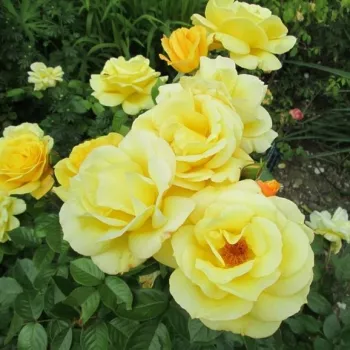
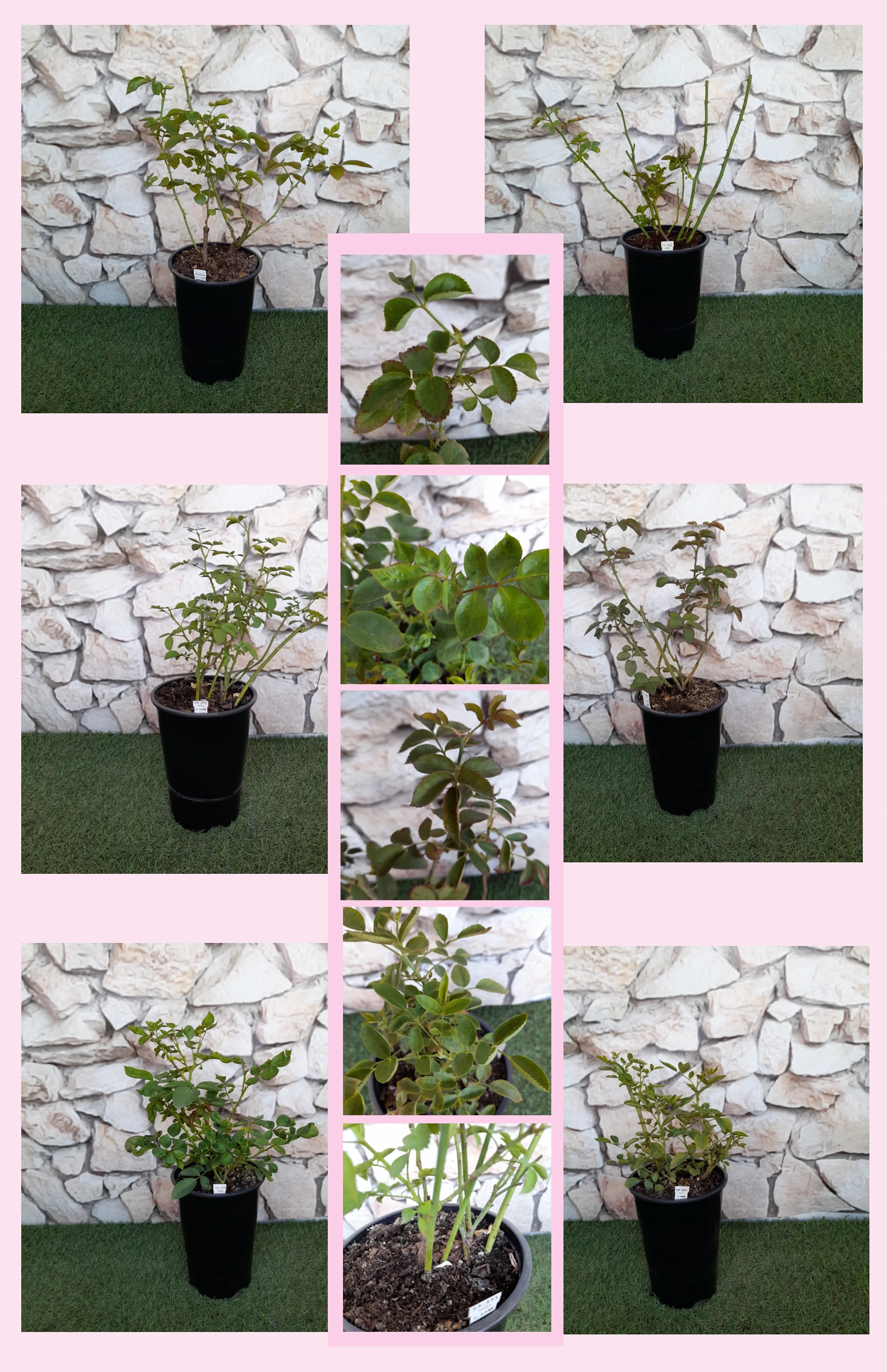
Set the scene for afternoon tea in a cosy, cottage-style corner with Arthur Bell, a classic floribunda whose bright yellow clusters bring dependable colour from early summer well into autumn. This own-root plant arrives already well established in its 2‑litre pot, meaning you can simply plant, water and enjoy, without intricate pruning or specialist care. Over time the plant develops a strong framework and deep root system, giving impressive long-term performance, steady flowering and a reassuring ability to bounce back after harsh winters. Its strong, far-reaching fragrance adds a gentle romance around paths, arches or a small seating area, while the glossy dark foliage and good self-cleaning habit keep the bush looking fresh without constant deadheading. Especially useful in typical British gardens, it copes well with exposed spots where frequent rain and wind can batter more delicate roses, remaining visually reliable through changeable weather. In an average family plot it forms a neat, upright, densely foliaged shrub that works just as well in a raised bed over heavier soils as in a mixed cottage border, giving you low-fuss, high-impact structure. For those who like to grow in generous containers, it will thrive in a 40–50 litre pot with regular watering, providing fragrance and flowers beside the back door or patio table. As an own-root rose it is bred for longevity: if pruned harder or damaged, it regenerates from its own base rather than unreliable grafted wood, preserving both shape and character for many years.
Usage options
| Target area | Reasoning |
|---|
| Front-of-border cottage bed in a small family garden |
The compact, upright habit and repeated clusters of golden-yellow blooms create a clear focal point at the front of a mixed cottage border without overwhelming nearby perennials. Its own-root form gradually builds a durable, woody base that stays true to type, giving a long-lived, low-fuss backbone for hobby gardeners. |
| Exposed or breezy spots near paths and seating |
Arthur Bell’s sturdy stems carry clusters that hold up well in unsettled weather, so flowers stay presentable even in gardens where frequent rainy, gusty days can spoil more delicate varieties. Over successive seasons the plant anchors itself firmly, so you gain a stable, reliable shrub in changeable conditions for busy homeowners. |
| Traditional flowerbed or edging along a lawn |
The even height, dense foliage and continuous flowering make this floribunda ideal for edging a lawn or path in a classic, storybook layout. Its own-root strength allows flexible pruning: keep it low and tidy, or let it bulk up slightly, without worrying about losing the authentic variety, which suits traditionalists. |
| Raised beds or improved heavy-clay borders |
In heavier soils, Arthur Bell settles well when given reasonable drainage in a raised bed or improved border, steadily building roots and shoots into a solid, resilient plant. Across the first few years it shifts from establishing roots to producing fuller top growth and, by the third season, offers confident ornamental value for patient gardeners. |
| Large patio container or courtyard (40–50 litre pot) |
Its manageable height and upright form are well suited to cultivation in a generous container, where the repeated flowering and strong scent can be enjoyed at close quarters. In a 40–50 litre pot, the own-root system fills the volume evenly, helping the shrub remain stable and productive over many seasons for balcony-owners. |
| Near doors, terraces or garden benches for fragrance |
The strong, far-scented, slightly sweet fruity fragrance carries well, especially in the evening, making it ideal beside a terrace, bench or kitchen-door step. Because the bush renews itself reliably from its own base, you can rejuvenate it by periodic harder pruning to keep fragrant blooms at nose height for scent-lovers. |
| Mixed wildlife-friendly cottage planting |
Semi-double flowers offer moderate appeal to pollinators, contributing to a more animated border when combined with other nectar-rich plants. As an own-root shrub that maintains shape and floral quality for many years, it provides a stable, repeating nectar source within a small family garden ecosystem for nature-minded owners. |
| Low-maintenance family border with limited gardening time |
The good self-cleaning habit means many spent blooms drop away on their own, so the plant remains pleasing without meticulous deadheading after every flush. Combined with dependable repeat flowering and durable structure, this reduces ongoing effort while still delivering strong visual impact for time-poor beginners. |
Styling ideas
- Cottage-curve border – Line a gently curving path with Arthur Bell and interplant lavender and catmint to soften edges, giving a romantic, storybook feel – ideal for traditional cottage-style enthusiasts.
- Kitchen-garden accent – Position a pair of shrubs at the entrance to a vegetable plot, underplanting with herbs like chives and sage for a productive yet ornamental gateway – perfect for rural kitchen-garden keepers.
- Patio-fragrance pot – Grow one plant in a 40–50 litre terracotta pot with trailing thyme and violas to enjoy scent and colour around a small seating area – suited to compact urban terraces.
- Golden-hedge strip – Plant a loose row along a lawn edge, spacing evenly to form a low, flower-rich hedge that defines play areas without tall barriers – great for family gardens with children.
- Storybook arch companion – Underplant a light-coloured climbing rose or clematis on an arch with Arthur Bell at the base, filling the lower level with yellow clusters and fragrance – appealing to romantic arbour dreamers.
Technical cultivar profile
| Property | Data |
|---|
| Name and registration |
Floribunda bed rose marketed as Arthur Bell, verified cultivar authenticity; used as a shrub and cut-flower variety in garden settings, falling within the bedding rose collection category for versatile domestic use. |
| Origin and breeding |
Bred by Samuel Darragh McGredy IV in Ireland from ‘Cläre Grammerstorf’ × ‘Piccadilly’; introduced 1965 after registration in 1964 by McGredy Roses International and initially distributed by Samuel McGredy & Son. |
| Awards and recognition |
Holds the RHS Award of Garden Merit (1993), RNRS Certificate of Merit (1964) and the R. J. Frizzell Award for Most Fragrant Rose at the 1967 Belfast Rose Trials, confirming proven, long-term garden and fragrance performance. |
| Growth and structural characteristics |
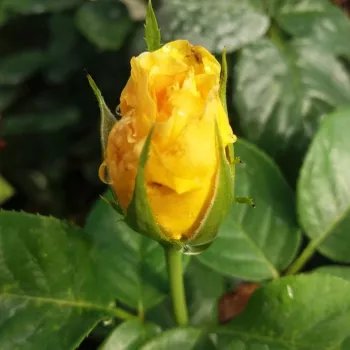
Forms an upright, densely foliaged shrub 75–105 cm high and 65–95 cm wide, clothed in glossy dark green leaves with dense prickles; many spent flowers drop naturally, keeping plants neater with reduced manual deadheading. |
| Flower morphology |
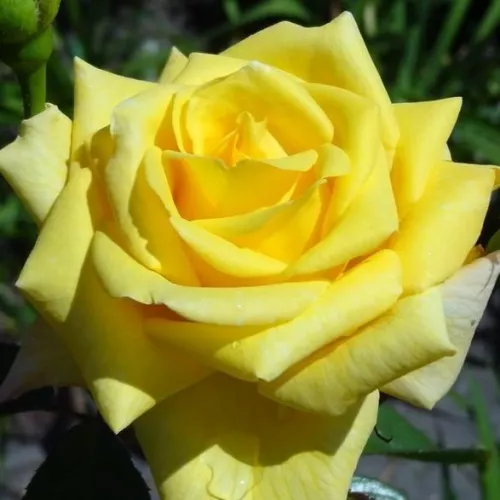
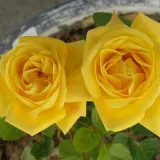
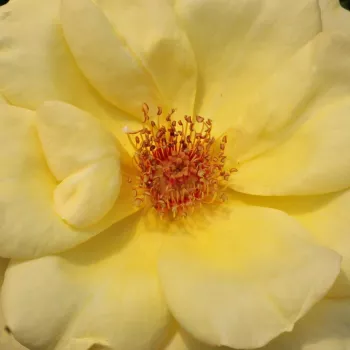
Produces large, cup-shaped clusters of semi-double blooms with 13–25 petals, classified remontant with a notably abundant second flush; flowers are typically borne in clusters on sturdy stems suitable for informal cutting and display. |
| Colour data and phenology |
Golden-yellow blooms (ARS DY; RHS 12A outer, 10C inner) open bright and sun-yellow, then soften through lemon and cream-yellow tones, fading more in heat yet holding colour better in cooler periods; flowering repeats freely in waves. |
| Fragrance and aroma |
Exhibits a strong, far-reaching fragrance with a slightly sweet, fruity character; scent is readily noticeable around seating areas and paths, enhancing ornamental effect and contributing to its historical recognition for fragrance in trials. |
| Hip characteristics |
After flowering, produces moderate quantities of small, spherical red hips about 10–14 mm across, adding a discrete autumn and early winter feature if not deadheaded, with visual interest against the dark, glossy foliage in cooler months. |
| Resistance and winter hardiness |
Hardy to approximately −26 to −23 °C (RHS H7; Swedish Zone 4; USDA 5b); disease resistance is moderate to powdery mildew, black spot and rust, and the plant tolerates typical conditions but benefits from regular watering in dry spells. |
| Horticultural recommendations |
Best in sunny positions for maximal flowering; recommended spacings range from 50–55 cm in beds to 90 cm for solitary planting, giving 3.2–3.7 plants/m² in massed schemes; care is medium, occasionally requiring targeted pest or disease control. |
Arthur Bell offers long-season yellow colour, strong fragrance and low-effort self-cleaning on a durable own-root framework, making it a thoughtful, enduring choice for your family garden or patio planting.