Bedding rose

52-973-1
52-973-2

Aprikola®

RigoRosen®

KORorbe – W. Kordes & Sons

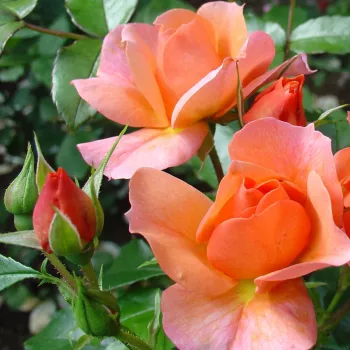
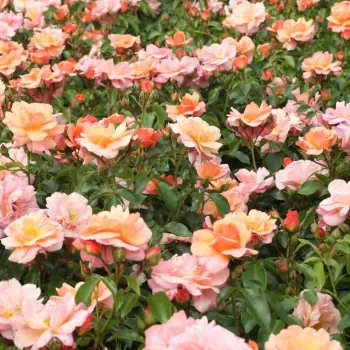
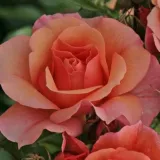
Warm, uniform peachy-orange tone with a slight rosy tint. - bedding floribunda rose - mild, subtle-scented rose - fresh, fruity character

– Warm peach-orange blooms in elegant clusters
– Reliable repeat flowering from summer to autumn
– Compact, upright shrub for beds and borders
– Good heat and moderate drought tolerance
– Proven performance with ADR (2001) award
Special feature: Forms decorative orange-red hips after flowering.
Water-wise – Neat composition
Aprikola®
darinaROSE® ORIGINAL 2-litre own-root potted rose
23,00 £
Unfortunately, we are currently unable to ship to the United Kingdom; we only deliver to countries within the European Union. For more information, please contact us!
4.5 (6561)
facebook   twitter

APRIKOLA® – peach-orange bedding floribunda rose – Kordes

APRIKOLA® brings an inviting, cottage-garden atmosphere to family plots, combining reliable flowering with compact, easy-to-place structure. Its warm peach-orange clusters sit above dense, glossy foliage, creating a colour accent that feels both cheerful and romantic, just right beside a lawn, kitchen garden path or simple seating corner. This floribunda is bred for dependable, repeat displays and copes well where breezes and showers roll in from the coast, offering reassuring resilience in typical British weather. In an own-root, 2-litre form it settles gradually, with roots first, then stronger woody growth, and by the third season a full garden presence with little fuss. Good natural self-cleaning keeps it looking orderly between occasional deadheading rounds, while moderate maintenance demands suit those who prefer relaxed, once-over care. Its low, upright habit works equally well in mixed borders, neat front-garden lines or large containers, giving you long-lived, versatile planting options that fit a homely, storybook setting. With a mild, fresh-fruity scent and modest hip display in autumn, APRIKOLA® offers multi-season interest without complicating your weekend gardening routine.


Usage options

Target areaReasoning
Front-of-border cottage bed Its low, upright habit and dense, glossy foliage create a tidy front layer that frames perennials and herbs without swamping them. Regular repeat flowering means the peach-orange clusters stitch colour through the season in a classic cottage mix. Best for those who like a romantic look with simple, occasional pruning for beginners.
Informal flowering hedge Planted at hedge spacing, APRIKOLA® forms a softly upright, coherent line, giving gentle structure along paths, driveways or vegetable garden edges. The compact height keeps views open while the warm-toned blooms add a welcoming, lived-in feel. Suits households wanting a low hedge that needs only light shaping for busy-owners.
Family lawn edge or play area The moderate height and neat spread sit comfortably by lawns or play zones, providing colour without creating an overpowering thicket. Self-cleaning flowers reduce the amount of visible dead blooms, keeping the space smart between occasional tidy-ups. Ideal for family gardens where maintenance time is limited for homeowners.
Large container on terrace or patio In a 40–50 litre pot, the upright, bushy shape reads as a compact shrub, giving season-long colour beside outdoor seating or a back-door step. Own-root growth supports long-term stability in containers when watered and fed regularly. A sound choice for smaller plots or paved spaces used by urban gardeners.
Small rose bed in front garden Use as a single-variety bed to achieve an even, harmonious block of peach-orange, easy to coordinate with house brickwork or gravel drives. Moderate disease resistance and good drought tolerance, once settled, help keep the display presentable in exposed front gardens. Well suited to those preferring low-effort kerb appeal for families.
Mixed border with shrubs and grasses APRIKOLA® holds its own in front of medium shrubs and among fine-textured grasses, its clear colour and compact form preventing the planting from feeling muddled. The gradual development from a small, rooted plant into a fuller shrub over three years rewards patient, relaxed gardeners.
Coastal or wind-exposed spot This floribunda maintains sturdy flowering stems and tidy foliage where salt-laden winds and passing showers are common, staying presentable in blustery, changeable weather. Good heat and moderate drought tolerance further support a resilient, low-fuss display for coastal-region buyers.
Kitchen garden and cutting corner The warm peach-orange tones combine easily with herbs and productive beds, softening edges around vegetable plots while providing small bunches for the table. Semi-double blooms and mild fragrance lend a relaxed, country-house feel without dominating the practical layout for rural-style enthusiasts.

Styling ideas

  • Cottage-Ribbon Border – Run a drift of APRIKOLA® along a narrow path, interspersed with pink verbena and catmint to echo its peach tones – ideal for lovers of soft, romantic front gardens.
  • Peach-Tea Corner – Place three plants in a triangle near a bistro set, underplant with thyme and small lavender for a scented “afternoon tea” nook – perfect for those who relax outdoors with a book.
  • Warm-Hued Hedge – Create a low flowering hedge and back it with blue ceanothus for contrast, blending structure with long-season colour – suited to families wanting definition without harsh fencing.
  • Patio-Harvest Pot – Grow APRIKOLA® in a large terracotta container beside potted herbs and salad leaves, so cut flowers and ingredients sit together – appealing to keen home cooks with limited space.
  • Storybook Mix – Combine APRIKOLA® with old-fashioned pink roses, foxgloves and ornamental grasses to evoke an English country tale – for romantically minded gardeners favouring a slightly wild charm.

Technical cultivar profile
CharacteristicData
Name and registration Floribunda bedding rose marketed as APRIKOLA® (RigoRosen® collection), registered as KORorbe; ARS exhibition name APRIKOLA®; fanciful trade name referencing its apricot-peach flower colour.
Origin and breeding Bred by W. Kordes & Sons, Germany, from Bernstein-Rose® × unknown seedling; bred before 1999, registered 1999, introduced 2000 by W. Kordes’ Söhne into international ornamental rose markets.
Awards and recognition Holds the ADR 2001 award, indicating tested garden merit under reduced chemical treatments, with emphasis on ornamental effect, growth quality and general robustness in Central European trial conditions.
Growth and structural characteristics Compact, upright shrub 60–85 cm tall and 50–70 cm wide, densely foliated with mid-green, glossy leaves; moderately thorny canes; good natural self-cleaning as most spent blooms drop unaided.
Flower morphology Semi-double, cup-shaped clusters of medium-sized blooms (about 4–7 cm), opening fairly flat; 13–25 petals per flower; floribunda habit with repeated flushes and a generously remontant second flowering.
Colour data and phenology Peach-orange flowers (ARS OB, RHS 24A outer, 24C inner) shifting to apricot-pink and then pinkish tones; central glow creamy-yellow; buds deep peach-orange with golden tip; colour lightens in strong sun.
Fragrance and aroma Fresh, fruity fragrance of mild strength, noticeable at close range rather than at distance; scent adds refinement without overwhelming nearby seating or windows when planted around patios or entrances.
Hip characteristics Produces spherical orange-red hips, around 7–10 mm in diameter, in moderate numbers; small decorative effect in late season, without significantly affecting the shrub’s overall compact garden presentation.
Resistance and winter hardiness Hardy to about −26 to −23 °C (RHS H7, Swedish Zone 4, USDA 5b); moderate resistance to black spot and powdery mildew, rust resistant; good heat tolerance with irrigation during prolonged dry spells.
Horticultural recommendations Best in sunny, well-ventilated beds or borders; avoid enclosed, humid courtyards unless prepared for disease control. Space at 35–65 cm depending on use, plant 5–6 per m² for massed or hedge effects.

APRIKOLA® offers compact structure, repeat peach-orange flowering and reassuring weather resilience on a durable own-root framework, making it a thoughtful, long-term choice for your cottage-style garden.
Detailed product attributes

Product Identification Data

Product Name: APRIKOLA® – peach-orange bedding floribunda rose - Kordes
Product Type: darinaROSE® ORIGINAL - 2-litre own-root potted rose
Cultivar Authenticity: Verified:22.08.2025
Cultivar Quality Rating: premium silver
Item Number: [43] 52-973 (14.02.2026) darinarose.co.uk

Name and Registration

Meaning of Cultivar Name: The name is a fanciful trade name; 'apricot' is a playful form that refers to an apricot colour.
Cultivar Synonym: Apricot Vigorosa; Rigo Aprikola®; Summer Beauty
Original Trade Name: Aprikola®
Current Trade Name: Aprikola® RigoRosen® KORorbe
Rose Group: Floribunda
Commercial Type: bedding floribunda rose
Commercial Group: Bed rose
Exhibition Category: shrub rose / exhibition floribunda
Collection: RigoRosen®

Origin and Breeding

Initial Distributor: W. Kordes’ Söhne (Germany)
Breeder: W. Kordes & Sons
Breeding Company / Institution: W. Kordes’ Söhne (Sparrieshoop, Germany)
Breeding Year: Germany, 1999 before
Parentage: Bernstein -Rose® × unknown seedling

Growth and Structural Characteristics

Height: 2-2.8ft (60-85 cm)
Spread: 1.6-2.3ft (50-70 cm)
Growth Habit: upright
Foliage: The variety has dense foliage. Its leaves have a glossy surface and a mid-green shade.
Prickliness: moderately thorny
Self-Cleaning Description: The majority of spent blooms drop off naturally.
Self-Cleaning Intensity: self-cleaning good

Flower Morphology

Petal Count: 13-25
Flower Fullness: semi-double
Flower Shape: cup-shaped, flat-opening
Flower Size: M (1,5-2,75 in)
Inflorescence Type: cluster-flowered
Colour Code: ARS code: OB RHS code: 24A (outer), 24C (inner)
Repeat Flowering: It is remontant and produces a plentiful second flowering.

Colour Data and Phenology

Colour: peach-orange
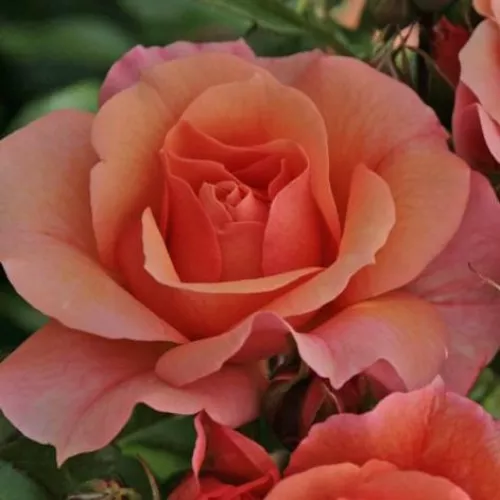
Flower Colour Description: Warm, uniform peachy-orange tone with a slight rosy tint.
Closed Bud: Deep peach-orange with a golden-yellow tint at the tip.
Newly Opened Flower: Intense peachy-orange petals, paler in the centre with a yellowish glow.
Full Bloom: Soft peach colour, with a subtle orange‑pink veil along the edges of the outer petals.
Before Fading: Fading apricot pink, with a creamy-yellow centre and a pale orange rim.
Colour Fading Description: In strong sunlight it gradually lightens, fading to a pinkish shade.

Fragrance and Aroma

Fragrance Strength: mild, subtle-scented rose
Fragrance Character: fresh, fruity character
Pollinator Attraction: Semi-double (13–25 petals) flowers moderately attract pollinators, as the semi-double form and partially obscured stamens reduce access to nectar and pollen.

Pollinator-Friendly Rating: Semi-double (13–25 petals) flowers moderately attract pollinators, so the variety is only partially pollinator-friendly.

Hip Characteristics

Hip Shape: spherical
Hip Colour: orange-red
Hip Comment: Spherical orange-red rosehips, 7–10 mm in diameter, produced in moderate quantities.

Resistance and Hardiness

Hardiness (°C): -26–-23 °C
Heat and Drought Tolerance Description: Performs well in warm conditions; tolerates moderate drought but requires irrigation during prolonged drought.
Disease Resistance: moderate
  • powdery mildew – moderate
  • black spot – moderate
  • rust – resistant

Horticultural Recommendations

Recommended Planting Distance: for mass planting 40 cm, for hedging 35 cm, as a specimen plant 65 cm
Planting Density: in square planting 5 plants/m², in hexagonal arrangement 6 plants/m²
Partial Shade Tolerance: Preferably for sunny locations
Maintenance Requirement: Maintenance requirement moderate; thrives in a well‑ventilated position, but in enclosed, humid urban courtyards expect pest and disease control.
Primary Uses: flower bed, park, urban green space, border

Comments

Strengths: Water-wise – Neat composition
Companion Plants: Verbena hastata ‘Pink Spires’ - Dense‑flowered verbena pink Ceanothus thyrsiflorus - California lilac Helichrysum italicum - Italian strawflower
Comment: -
APRIKOLA® – peach-orange bedding floribunda rose - Kordes
Warm, uniform peachy-orange tone with a slight rosy tint. - bedding floribunda rose - mild, subtle-scented rose - fresh, fruity character
Rose Shopping Online - bedding floribunda rose - Aprikola® - peach-orange - (2-2.8ft (60-85 cm))
Inflorescence: cluster-flowered Height: 2-2.8ft (60-85 cm) Flower shape: cup-shaped, flat-opening Winter hardiness: - peach-orange - W. Kordes’ Söhne (Germany) bedding floribunda rose - Flower size: M (1,5-2,75 in) Flower size: M (1,5-2,75 in) - Height: 2-2.8ft (60-85 cm) Height: 2-2.8ft (60-85 cm) - Flower fullness: semi-double Aprikola® - Roses in the garden | darinaROSE® Original - premium silver W. Kordes & Sons

We showcase the external appearance of the roses available for online purchase from our webshop.


Which product type is right for you?


Information

In what condition do we send the rose from our online webshop?

Let us ask ourselves the question: What do I want to use the rose for?
Flower? - Location? - Cover? - Fragrance? - Height? - Breeder? - Rose hips?

Rose purchase information
Methods of payment - Delivery charges - Delivery - Complaints handling

Care guide

Our product is a rose grown with pharmaROSA®’s unique cultivation technology!

2-litre, own-root, potted rose.
With a shoot system appropriate to the season.

With a root system that thoroughly permeates the growing medium.
Quality compliant with the requirements of the E.N.A. (European Nurserystock Association).
Supplied in unique packaging that prevents damage.
Can be planted during frost-free periods.
True-to-variety rose bush with a unique identifier.

The pharmaROSA® own-root potted rose is a well-rooted plant that supports reliable establishment when planted and cared for properly, so it can be planted whenever the soil is not frozen.


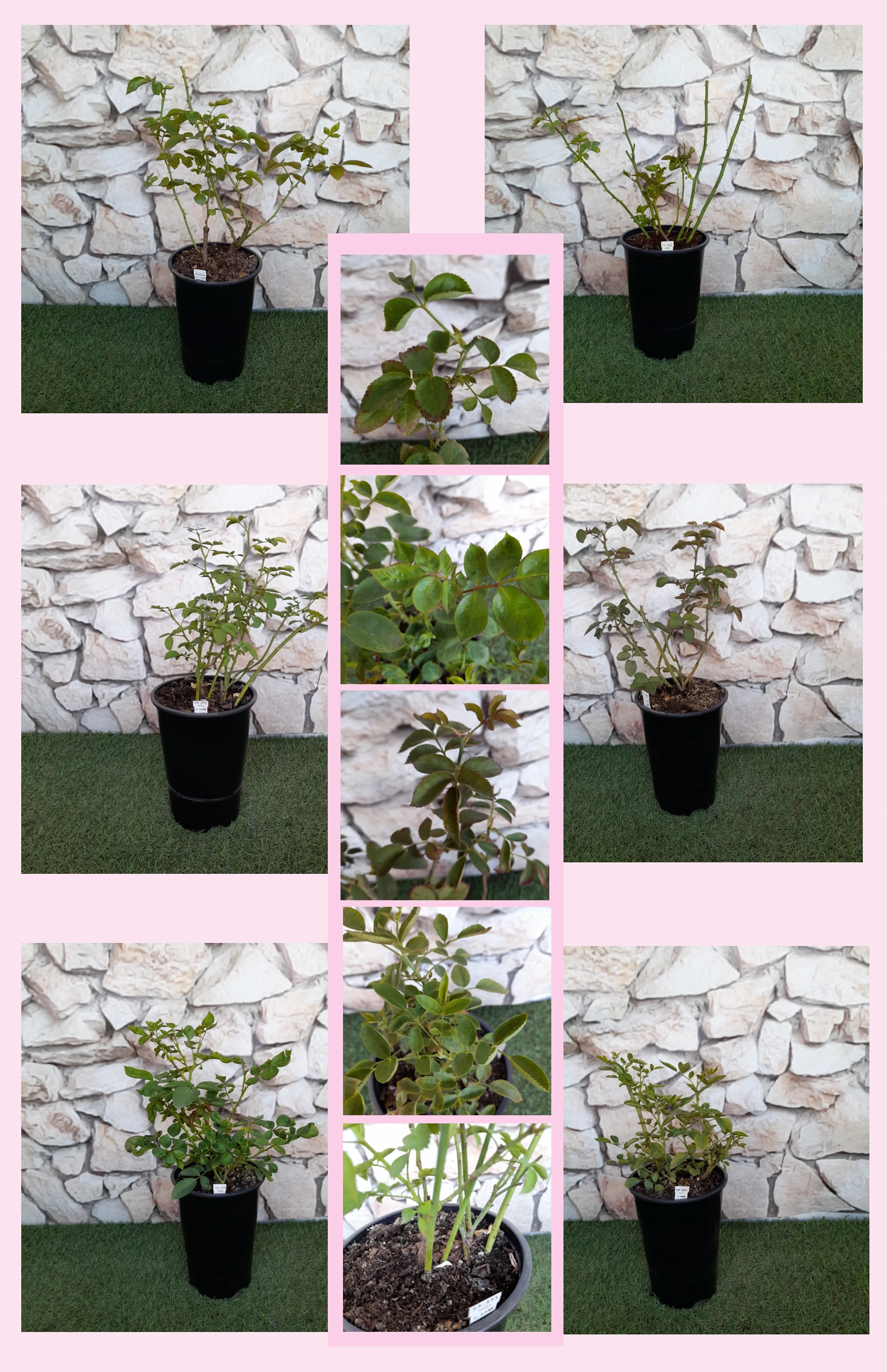
Crop overview: several varieties and growth stages in a short crop section.
Shoot system: intensive growth of fresh basal shoots on a young plant.
Root system: demonstration of a vigorous root system permeating the growing medium, by removing the pot.
Balance: mature plant with root system and shoots in harmony with each other.

Information about the videos
The video series is not a “seasonal showcase”; it illustrates the essence of pharmaROSA® own-root cultivation in a tangible way: how the plant is built up, what the root system is like and how the shoot system regenerates. The recordings were therefore made at different times and with plants at various stages of development, so mixed foliage levels and differing stages of growth may appear in the videos. They are not a ‘sample’ of the batch dispatched, but a visual explanation of how the technology works. The current condition of the rose available to order — typical for the given period and similar to what you can expect to receive in the parcel — is shown in the upper part of the product page.

pharmarosa.itpharmarosa.ptpharmarosa.sepharmarosa.fipharmarosa.eepharmarosa.compharmarosa.atpharmarosa.co.ukpharmarosa.czpharmarosa.depharmarosa.ropharmarosa.sipharmarosa.skpharmarosa.hrpharmarosa.frpharmarosa.grpharmarosa.bepharmarosa.dkpharmarosa.nlpharmarosa.iepharmarosa.plpharmarosa.lupharmarosa.espharmarosa.bgpharmarosa.ltpharmarosa.lvpharmarosa.ru

Product types

Pages for private customers
Garden roses for the family garden, with minimal care  → ORIGINAL®
Premium garden roses – instant impact, a truly showpiece garden  → EXTRA®
Pages for professionals and private customers
Roses for public spaces – large areas, sustainable maintenance  → NATURAL®
Roses for projects – hedge and row planting, fast implementation  → RAPID®
For professional partners only
Production – propagation material for garden roses, wholesale  → NEONATAL®

Company details

PharmaRosa Ltd.
Company registration number: 01-09-717479
VAT number: 13075314-2-43
Plant health registration no.: HU130721
Bank account (IBAN):
HU85117631891388688400000000
BIC (SWIFT): OTPVHUHB
Bank name: OTP Bank Nyrt.