ALFRED MANESSIER™ – yellow-red bedding shrub rose - Massad
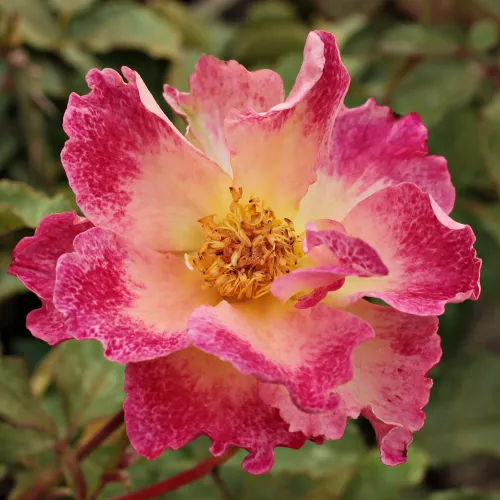
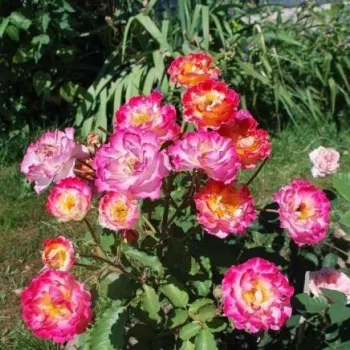
ALFRED MANESSIER™ paints a romantic, storybook corner in your garden with its changing, painterly blooms that drift from golden yellow to soft, blushed pastels. In a typical family plot it forms a bushy, medium-height shrub that works beautifully beside a kitchen garden path or beneath a simple arch, bringing a gentle sense of afternoon-tea cosiness. Its semi-double flowers offer open centres that visiting bees can easily reach, adding quiet pollinators to the life of the garden. As an own-root plant it is bred for long-term regeneration, quietly rebuilding from the base if weather or pruning are less than perfect, so You keep a stable look over many seasons. The pharmaROSA® ORIGINAL 2-litre container gives a strong, ready-to-grow start that You can plant from spring to autumn with reassuring flexibility, even where improving drainage is wise after prolonged winter rainfall and wind. In its first years the roots settle, then the framework fills out, and by the third season the full ornamental value of its colour-shifting blossoms becomes part of Your daily view. Use it as an expressive, single specimen near a seating area or repeat it in a drift along a low hedge to bring painterly harmony to a modest suburban garden.
Usage options
| Target area | Reasoning |
|---|
| Front-of-border cottage bed near a seating area |
The medium height and bushy habit allow ALFRED MANESSIER™ to sit perfectly at the front or mid-front of a mixed cottage border, where its painterly colour changes create day-to-day interest close to eye level without dominating the view for busy beginners. |
| Romantic flowerbed around a small lawn |
Planted in small groups at the recommended spacing, its golden-yellow and crimson-edged blossoms fade to soft pinks, giving a richly layered, storybook palette that frames a family lawn with warmth while still leaving enough air and light around play space for family gardeners. |
| Feature shrub beside a kitchen garden path |
Used as a solitary specimen, its bushy structure and shifting colours lend gentle structure to vegetable beds and herb rows, blurring the line between productive and ornamental space in the relaxed style of an English countryside kitchen garden for cottage-style lovers. |
| Small rose arbour or informal archway |
Though not a climber, its height lets You train a few strong stems onto a low arch or obelisk, creating a semi-framed sitting spot where soft pastel tones gather overhead and suggest an afternoon tea corner suited to romantic homeowners. |
| Pollinator-friendly corner in a family garden |
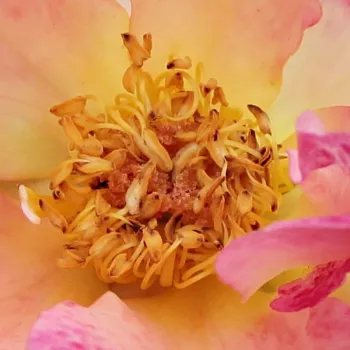
The semi-double flowers offer open centres and accessible stamens, so even in a traditional rose bed You are providing nectar and pollen alongside visual charm, helping bees and hoverflies find their way through Your garden for wildlife-conscious families. |
| Large patio container near the back door |
In a 40–50 litre pot with good drainage, its compact spread and dense foliage suit a doorstep container, keeping colour and fragrance close to daily life while the own-root habit supports long-term performance without complex replanting for urban balcony-owners. |
| Mixed hedge with shrubs and perennials |
Combined with low hedging and cottage perennials, its bushy frame and harmonious colour softening create a gentle transition between formal hedges and looser planting, echoing countryside boundaries and offering screening that feels friendly to traditionalists. |
| Raised bed in cooler, wind-exposed gardens |
In raised beds with improved drainage, its hardy framework and stable own-root base help it anchor well in sites occasionally buffeted by Atlantic weather, coping reliably where soil stays heavy after prolonged rainy, windy spells for coastal gardeners. |
Styling ideas
- Painters-Border – Repeat ALFRED MANESSIER™ with soft pink foxgloves and airy grasses so its changing flower tones echo a watercolour border – ideal for cottage-style enthusiasts.
- Kitchen-Path – Line a vegetable path with alternating bushes and low herbs, letting its warm yellow-red blooms soften the edges of raised beds – perfect for home growers.
- Pastel-Hedge – Mix this shrub with pale lavender and white roses to form an informal hedge where its fading pastels weave gentle colour shifts – suited to traditional garden owners.
- Tea-Corner – Place a pair in large containers by a small bench, underplanted with violas, to create a cosy afternoon-tea nook – appealing to romantic couples.
- Wildlife-Stripe – Combine with pollinator-friendly perennials like salvias and catmint so its semi-double blooms sit within a continuous nectar run – attractive for nature-focused families.
Technical cultivar profile
| Parameter | Data |
|---|
| Name and registration |
Shrub rose from the Les Églantelles® collection; registered as MASalmen, marketed under the trade name Alfred Manessier™ with verified cultivar authenticity for discerning garden use. |
| Origin and breeding |
Bred in France by Dominique Massad in 2012 from complex shrub and floribunda parentage, introduced via specialist French rose collections with a focus on expressive garden shrubs. |
| Growth and structural characteristics |
Bushy shrub reaching about 100–150 cm high and 80–120 cm wide, with dense, mid-green, slightly glossy foliage and moderate thorns, forming a full, rounded outline in mixed plantings. |
| Flower morphology |
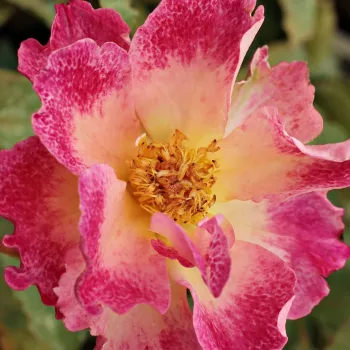
Semi-double, medium-sized cup to goblet blooms carried in clusters, 13–25 petals, repeating with a notably abundant second flush that extends ornamental interest well into late season. |
| Colour data and phenology |
Golden-yellow petals edged and speckled crimson-red; buds deep golden with red tips, flowers gradually fading through creamy pink to soft rose-pastel, giving continuously shifting colour effects. |
| Fragrance and aroma |
Very light scent with a subtle fruity character; fragrance is present but discreet, making it suitable near doors, windows and seating where stronger perfumes might be overwhelming. |
| Hip characteristics |
Moderate production of small, 9–12 mm ovoid hips in orange-red tones, adding a modest autumn accent and potential wildlife interest once the main flowering period has passed. |
| Resistance and winter hardiness |
Hardy to approximately −21 to −18 °C (RHS H7, Swedish zone 3, USDA 6b); foliage shows sensitivity to powdery mildew and rust, with moderate black spot tolerance, so regular care is advisable. |
| Horticultural recommendations |
Best in full sun, in well-drained soil; allow 55–65 cm in groups or 120 cm as a specimen, monitor disease and apply timely protection, pruning flexibly to maintain shape and flowering. |
ALFRED MANESSIER™ offers painterly, colour-changing blooms, a compact bushy habit and long-term stability from its own-root form; consider it if You enjoy romantic borders and are prepared to give it a little extra care.