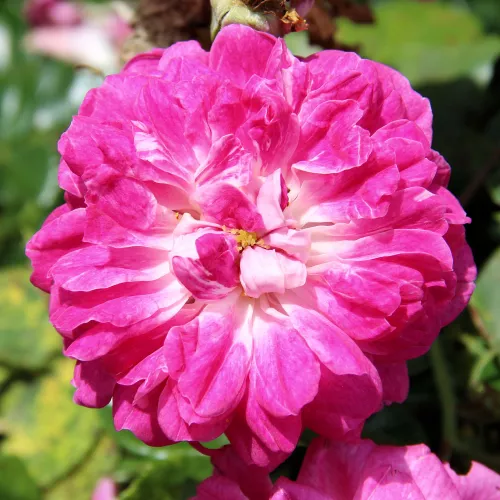
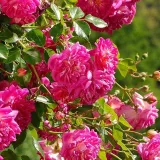
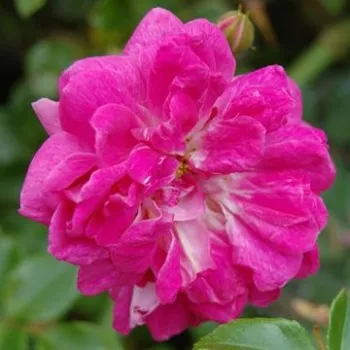
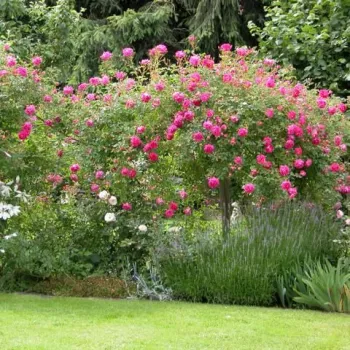
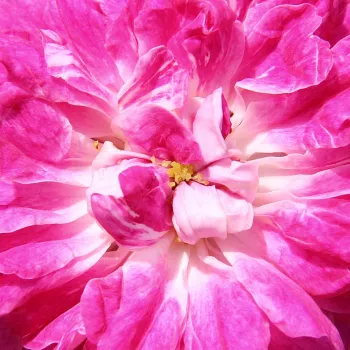
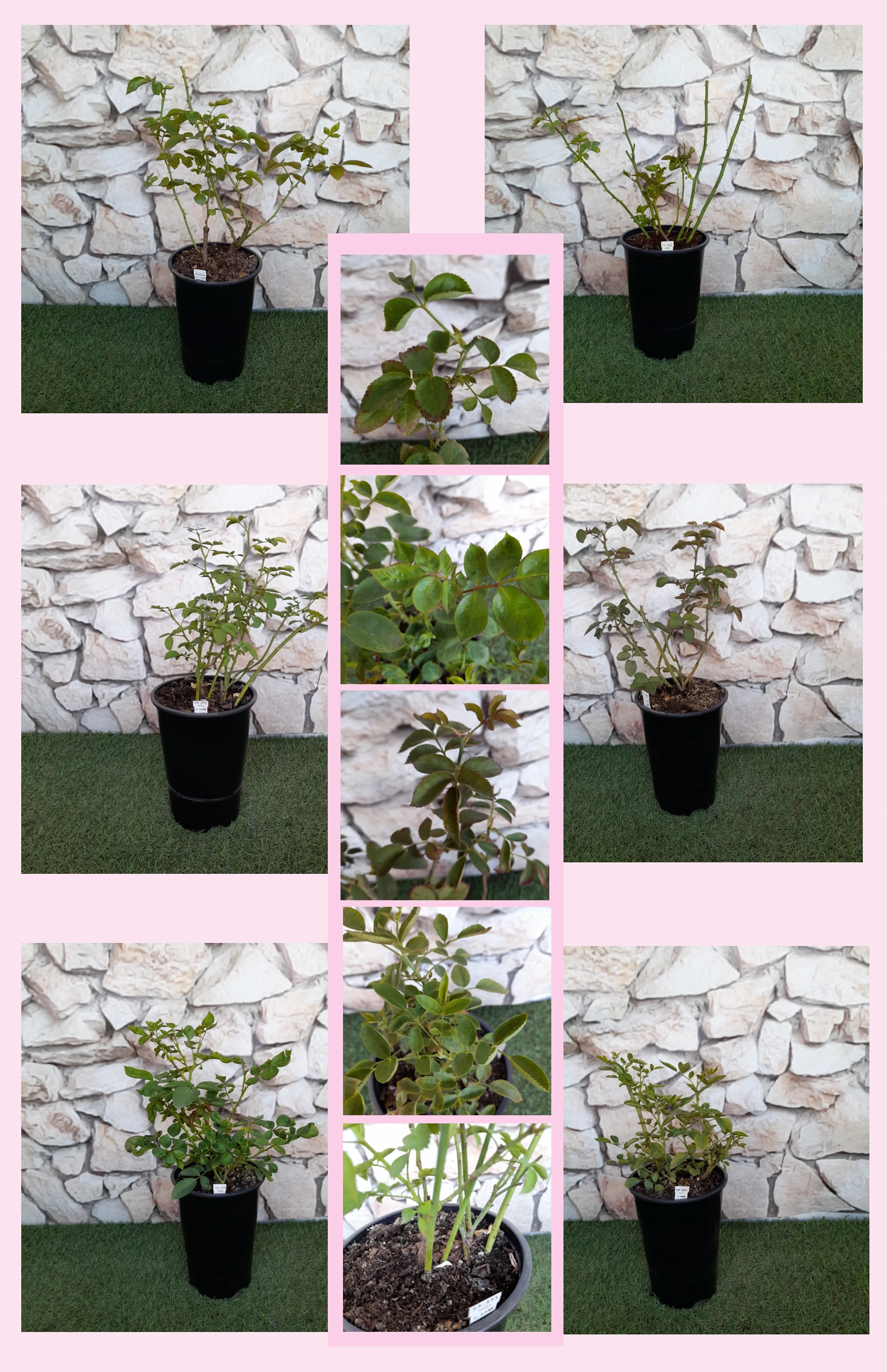
ALEXANDRE GIRAULT – pink rambler climbing rose - Barbier
Imagine settling down for afternoon tea beneath an arching tunnel of petals, where cascading clusters of cherry-pink flowers create a truly romantic arbour setting. ALEXANDRE GIRAULT is a classic Barbier rambler that builds a storybook backdrop over the years, thriving even in breezy, damp gardens with good drainage and a little shelter from harsh coastal winds. Once established, its long, supple stems and dense, glossy foliage form a generous screen that softens walls, fences and old trees with effortless charm. The strong, fruity fragrance drifts across the garden on summer afternoons, while the variety’s impressive hardiness and own-root stamina support a long-lived planting that suits busy, low-input family plots. In its first seasons the plant focuses on roots, then steadily builds flowering shoots, before reaching full ornamental impact as a mature, free-flowering rambler – an easy-care, romantic centrepiece for cottage-style gardens.
Usage options
| Target area |
Reasoning |
| Family pergola or tea arbour |
Ideal for clothing a wooden pergola or tea arbour with one glorious summer flush of fragrant clusters, creating a shaded, storybook seating area for children and adults alike. Its once-flowering habit rewards simple winter pruning, with no intricate shaping needed for the beginner. |
| House wall or sunny outbuilding |
Long, flexible rambling shoots and dense, glossy foliage provide generous coverage for plain house walls or garages, softening brick and render into a cottage-style façade. Own-root plants anchor strongly and age gracefully, giving a stable, long-lived display that suits the settled homeowner. |
| Training into mature trees |
Traditional rambler growth allows it to be threaded into old apple or ornamental trees, where it will send down curtains of cherry-pink bloom without needing heavy support. Barely thorny stems are easier to handle when weaving through branches, appealing to the hands-on but time-limited gardener. |
| Park-style boundary or tall screen |
With potential to reach well over six metres, this rambler forms a lofty, romantic screen for garden boundaries, hiding sheds or neighbouring views. Its robust root system and own-root resilience mean a dependable, long-term structure that particularly benefits the privacy-seeking family. |
| Partial-shade cottage border backdrop |
Suitable for partial shade, it copes well on east- or north-facing aspects where many climbers underperform, still producing scented trusses above mixed cottage perennials. Moderate disease resistance responds well to light, routine care, suiting the relaxed, informal-style enthusiast. |
| Clay and chalky soil gardens |
Once planted into improved soil with good drainage, it adapts reliably to heavier clays and typical chalk gardens, building strong roots that support tall, arching growth. This combination of tolerance and vigour makes planning easier for owners of challenging-ground plots. |
| Large containers on patios or terraces |
Can be grown short-term in a very large container of at least 40–50 litres with a sturdy obelisk or frame, allowing renters or small-garden owners to enjoy a romantic rambler. The strong perfume and nostalgic character particularly appeal to the patio-focused collector. |
| Low-maintenance, long-term plantings |
As an own-root rambler with outstanding hardiness and Award of Garden Merit recognition, it offers a reliable, long life with simple annual pruning and occasional plant protection. It matures steadily into a durable feature that suits busy, low-maintenance-minded households. |
Styling ideas
- Arbour-Romance – Drape it over a timber arbour, underplant with lavender and soft pink campanulas for a scented tea corner – for lovers of classic cottage charm and afternoon gatherings.
- Kitchen-Hedge – Let it scramble along a rustic fence behind herbs and raised vegetable beds, pairing with Penstemon ‘Husker Red’ for foliage contrast – for families with productive, informal kitchen gardens.
- Storybook-Wall – Train it flat against a sunny brick wall with a vintage bench below, adding old-fashioned foxgloves and hardy geraniums – for homeowners seeking a romantic, lived-in look.
- Tree-Garland – Thread its stems through an old apple or ornamental tree and echo the pink tones with a red-leaved dwarf smoke bush – for creative gardeners who enjoy naturalistic, vertical layering.
- Pergola-Allee – Plant at intervals along a pergola to form a rose tunnel, backing borders of cottage perennials and ornamental grasses – for those planning a long, immersive garden walkway.
Technical cultivar profile
| Parameter |
Data |
| Name and registration |
Trade name ALEXANDRE GIRAULT – pink rambler climbing rose - Barbier; ARS exhibition name ‘Alexandre Girault’; unregistered cultivar; rambler, Hybrid Wichurana climbing rose for garden use. |
| Origin and breeding |
Bred by René Barbier, Barbier Frères & Compagnie, France, from Rosa lucieae × ‘Papa Gontier’; bred around 1907, introduced 1909, historically distributed by Barbier in France. |
| Awards and recognition |
Holds the Royal National Rose Society Award of Garden Merit (2012), confirming reliable garden performance and ornamental value under typical British conditions for informed amateur gardeners. |
| Growth and structural characteristics |
Very vigorous rambling climber, around 6–9.5 m high with 2.8–4.6 m spread; dense, dark green glossy foliage, barely thorny shoots; best suited to strong supports, trees, pergolas or walls. |
| Flower morphology |
Medium-sized, very double, flat flowers with over 40 petals; produced in substantial clusters on laterals; non-remontant rambler giving one main, spectacular summer flush on mature wood each year. |
| Colour data and phenology |
Cherry-pink blooms, RHS 53C outer and 57A inner; buds pale pink with brighter tips; colour remains rich at full bloom, later softening to lighter pink with whitish petal edges before fading. |
| Fragrance and aroma |
Strong, long-lasting fruity fragrance, especially noticeable in still, warm weather; primarily ornamental, with heavily double flowers that largely conceal stamens and offer low value to pollinators. |
| Hip characteristics |
Rose-hip production generally sparse due to very double blooms; where formed, hips are small, spherical, around 8–12 mm in diameter, ripening to a decorative red late in the season. |
| Resistance and winter hardiness |
Hardy to around −21 to −18 °C (RHS H7; Swedish zone 3; USDA 6b); moderate tolerance of heat and drought; moderate resistance to black spot, powdery mildew and rust in average seasons. |
| Horticultural recommendations |
Best on fertile, well-drained soil with space for long canes; plant 2.2–4.0 m apart depending on use; suitable for partial shade; routine pruning of older flowering stems maintains flowering wood. |
ALEXANDRE GIRAULT offers one magnificent flush of fragrant cherry-pink blossom, impressive height for arches or trees, and long-lived own-root reliability; a thoughtful choice if you dream of a romantic, enduring garden feature.