ALBÉRIC BARBIER – cream-white historic rambler, climbing-spreading rose - Barbier
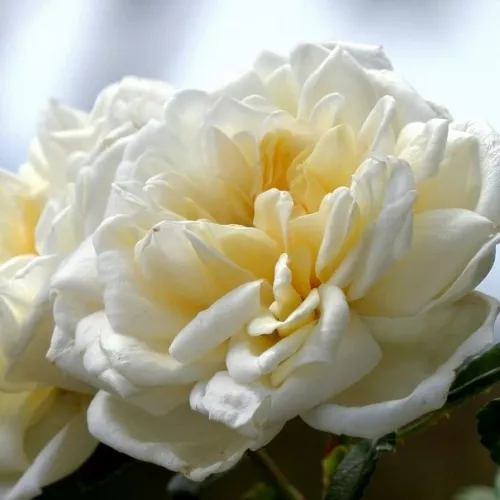
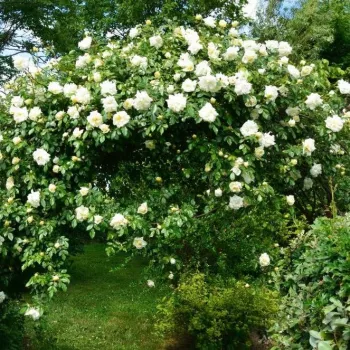
With its softly cascading, cream-white rosettes and glossy foliage, Albéric Barbier creates an instant storybook ambience around arbours, pergolas and old garden walls, settling beautifully even where summers bring more wind and salt-laden showers. This historic rambler covers supports generously yet remains surprisingly manageable thanks to its flexible, sparsely thorned canes, making training over arches or into trees far less of a chore. Once its roots are established, this own‑root rose rewards you with dependable growth and ornamental longevity, quietly rebuilding from the base if stems are pruned hard or damaged. The strongly sweet, fruity‑almond fragrance turns an ordinary seating area into an afternoon‑tea retreat, while its tolerance of partial shade lets you clothe the cooler side of a house or a mature tree canopy. Plantable throughout the season as a 2‑litre own‑root container rose, Albéric Barbier offers a forgiving, stabilising presence in the family garden as its character deepens year after year with minimal fuss and only moderate plant protection.
Usage options
| Target area |
Reasoning |
| Pergola or arbour in a family seating area |
Albéric Barbier’s long, supple canes and dense, glossy foliage quickly drape pergolas and arbours, creating a shaded retreat scented with strong, sweet, fruity‑almond blossom in early summer; ideal for transforming a simple structure into a romantic afternoon‑tea corner for busy homeowners. |
| House wall or garage wall (with support) |
This rambler tolerates partial shade and copes well with typical British exposure, so it performs reliably on cooler or breezier house walls when given trellis or wires; its once‑a‑year flowering is abundant, then foliage remains attractive, offering an easy‑care, long‑term vertical accent for time‑pressed gardeners. |
| Climbing into a mature tree |
The creeping, flexible growth habit and sparse prickles make it well suited to training into established trees, where it can ramble through branches and shower creamy rosettes from above without heavy pruning demands, adding high‑level cottage charm for informal garden lovers. |
| Freestanding rose arbour in heavy soil |
As an own‑root rambler with strong structural growth, Albéric Barbier anchors well over time and copes with less‑than‑perfect ground if drainage is improved, offering a stable, long‑lived feature that needs only occasional shaping once established for practical family gardeners. |
| Large container on terrace or courtyard |
In a substantial 40–50 litre container with a sturdy obelisk or arch, this variety becomes a romantic focal point for smaller spaces, combining strong fragrance and lush foliage with moderate maintenance needs, suiting urban balcony and patio owners. |
| Traditional cottage‑style boundary or fence |
Trained along a fence, Albéric Barbier delivers a curtain of cream‑white blossom followed by glossy, dark green leaves that provide structure for the rest of the year, fitting seamlessly into cottage borders with herbs and perennials for lovers of classic style. |
| Park‑style or large rural garden planting |
Given room at its recommended spacing, this historic rambler forms an impressive, low‑maintenance landscape presence, its vigorous habit and good heat tolerance allowing it to thrive with only occasional pruning and basic care, appealing to estate and country‑garden owners. |
| Mixed family garden with variable light and wind |
Its medium disease resistance, tolerance of partial shade, and ability to cope with breezier, salt‑touched conditions along coasts make Albéric Barbier a reassuring, forgiving choice where light and exposure vary across a typical plot for beginning rose enthusiasts. |
Styling ideas
- Tea‑time Arbour – Train Albéric Barbier over a wooden arbour with a small bistro set beneath, adding catmint and low herbs at its feet for a scented afternoon retreat – ideal for couples who enjoy quiet garden moments.
- Storybook Wall – Cover a sunny or lightly shaded brick wall with this rambler, underplanting with old‑fashioned foxgloves and hardy geraniums for a soft, historical look – perfect for lovers of period‑style homes.
- Tree‑Top Cascade – Let the rose climb into a sturdy apple or ornamental tree so creamy flowers spill from the canopy, with meadow‑style grasses below – suited to relaxed, naturalistic gardeners.
- Courtroom Romance – In a 50‑litre container by the back door, pair Albéric Barbier on an obelisk with low mounding catmint for fragrance and movement – great for small‑space urban families.
- Boundary Bower – Weave its canes along a wire‑strung fence, mixing in New Zealand flax and California lilac for evergreen structure and contrast – attractive to owners of longer, narrow gardens.
Technical cultivar profile
| Parameter |
Data |
| Name and registration |
Albéric Barbier is a historical rambler rose of the Hybrid Wichurana group, marketed as a climbing and creeping ornamental; it has no separate registered cultivar name and is sold under this trade name. |
| Origin and breeding |
Bred by René Barbier of Barbier Frères & Compagnie in France around 1900, from a cross of Rosa wichurana with the yellow tea hybrid ‘Shirley Hibberd’; introduced commercially in the same year. |
| Awards and recognition |
Holder of the Royal Horticultural Society’s Award of Garden Merit since 1993, indicating reliable performance, good garden value and sound ornamental quality under typical United Kingdom growing conditions. |
| Growth and structural characteristics |
Very vigorous, creeping to climbing habit reaching about 5–7.5 m high with a 2.5–5 m spread; canes are flexible and sparsely thorned, foliage is dense, glossy and dark green, producing a well‑clothed framework. |
| Flower morphology |
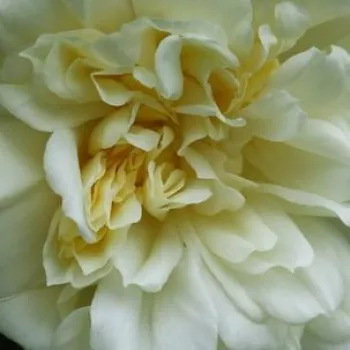
Medium sized, double rosette blooms with roughly 26–39 petals; flowers are usually solitary along the stems, produced once per season in a heavy flush rather than repeating, creating a concentrated early summer display. |
| Colour data and phenology |
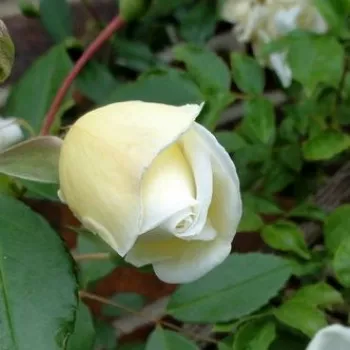
Buds show hints of pink and cream, opening cream‑yellow then quickly fading to cream‑white and finally near white; RHS tones around 155C outer and 11D inner, with colour lightening more rapidly in strong sunlight. |
| Fragrance and aroma |
Strong and noticeable fragrance with a sweet, fruity character and distinct almond notes; best appreciated when planted near paths, doors or seating areas where the early summer flowering can be enjoyed at close range. |
| Hip characteristics |
Due to the fully double flower form, hip set is generally sparse; where produced, hips are small, about 6–10 mm in diameter, globose and orange‑red, adding only a modest autumn accent to the plant. |
| Resistance and winter hardiness |
Rated to around −20 to −15 °C (RHS H6, roughly USDA 7b); good heat tolerance with irrigation in prolonged drought; generally resistant to powdery mildew, with medium susceptibility to black spot and rust in damp seasons. |
| Horticultural recommendations |
Suited to pergolas, arches, walls, fences and tree training; prefers well‑drained soil and benefits from partial shade in hot areas, moderate pruning after flowering, and occasional plant protection where fungal pressure is high. |
Albéric Barbier offers vigorous, romantically scented coverage with glossy foliage, reliable wall and arbour performance, and the long‑term resilience of an own‑root rambler rose; a thoughtful choice if you value enduring structure with gentle maintenance needs.